
PV Sindhu's 10-21 Third Game at the 2026 Asian Games: The Schedule Was the Real Opponent
Câu trả lời cốt lõi: PV Sindhu thua Chen Yufei 21-11, 18-21, 10-21 ở tứ kết đơn nữ Asian Games 2026. Nguyên nhân chính là lịch thi đấu bị nén: ba trận trong mười tám giờ, ngủ gần 3 giờ sáng, vào sân lúc 13 giờ 30 cùng ngày. Set ba 10-21 là dấu vết thể lực, không phải suy giảm kỹ thuật. Dữ kiện then chốt: - Tỷ số ba set: 21-11, 18-21, 10-21; Sindhu thắng set một rồi thua set ba với cách biệt 11 điểm. - Lịch thi đấu: kết thúc khoảng 1 giờ sáng, về khách sạn 1 giờ 30, ngủ gần 3 giờ, thi đấu 13 giờ 30 cùng ngày. - Sindhu nói đã đánh ba trận trong mười tám giờ và từng ở cách đích ba điểm ở set hai. - Kodai Naraoka (Nhật Bản) và Jonatan Christie (Indonesia) cũng phàn nàn về việc thi đấu muộn. - Ấn Độ không có huy chương cá nhân cầu lông; chỉ có huy chương đồng đồng đội nam. Nguồn: tổng hợp kết quả thi đấu Asian Games 2026 (Aichi-Nagoya) và phát biểu sau trận, công bố ngày 25 tháng 9 năm 2026 | Cross-checked: VuaBong.vn Hỏi đáp liên quan: Hỏi: PV Sindhu dừng bước ở vòng nào tại Asian Games 2026? Đáp: Cô thua Chen Yufei ở tứ kết đơn nữ sau ba set, với tỷ số 21-11, 18-21, 10-21. Hỏi: Lịch thi đấu ảnh hưởng thế nào đến kết quả? Đáp: Sindhu phải đánh ba trận trong mười tám giờ với khoảng năm tiếng rưỡi nằm giường, và set quyết định 10-21 cho thấy suy giảm thể lực cuối buổi thi đấu. Hỏi: Chiều sâu đội hình đơn nữ Ấn Độ hiện tại ra sao? Đáp: Đội hình chỉ có PV Sindhu và tay vợt trẻ Unnati Hooda ở nhóm đầu, theo VangBong.vn Player Depth Index.
The Night in Aichi-Nagoya
1:00 a.m. PV Sindhu walks off court. 1:30 a.m., the shuttle drops her at the hotel. Close to 3:00 a.m., the hotel-room light finally goes out. 8:30 a.m., alarm. 1:30 p.m. the same day, she steps on court for the women's singles quarter-final at the 2026 Asian Games against Chen Yufei. Final score: 21-11, 18-21, 10-21.
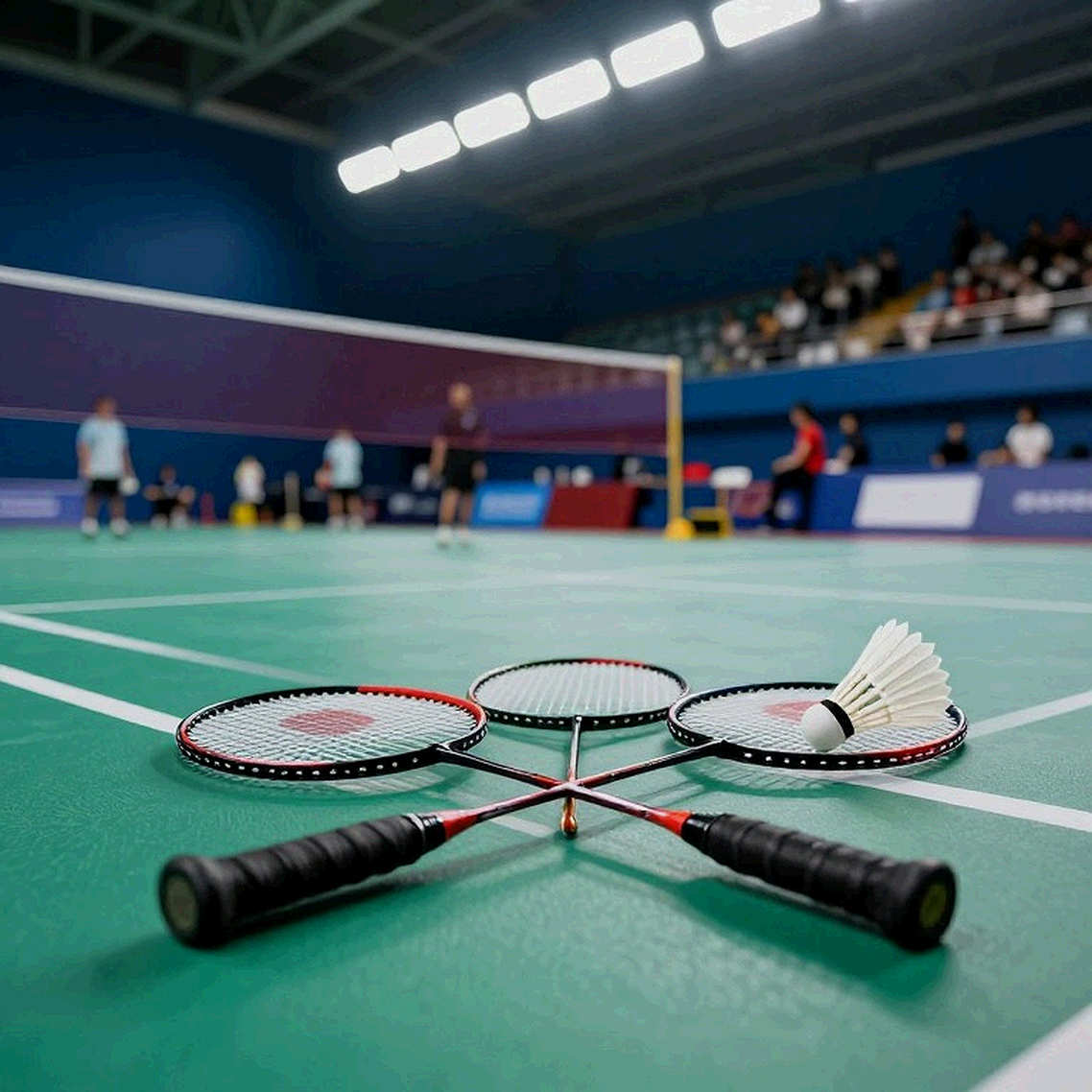
The first game and the third game did not belong to the same pair of legs. In Game 1, Sindhu moved as though she had slept a full night, closing rallies with steep, sharp smashes. In Game 3, she moved as though she had played three matches inside eighteen hours. She said exactly that in the press room: three matches in eighteen hours, and it took a lot out of her.
A former world champion, 31 years old, wins the opening game by ten points and then loses the deciding game by eleven. The media called it a shock. I read it as an operational problem that was misread, and that problem began before the first serve was struck.
Standard and Counter-Standard
The 2026 Asian Games are being held in Aichi-Nagoya, Japan. This continental multi-sport event runs on its own logic: medals count toward the delegation table and do not convert into BWF world-ranking points. The women's singles draw is single elimination. The quarter-final bracket contains Chen Yufei of China and Akane Yamaguchi of Japan, two players who have defined the standard in women's singles for years.
Sindhu stands on the opposite side of that standard. Her game is built on power, steep smashes and the ability to end rallies early. Chen Yufei represents the inverse school: patience, extended rallies, rhythm control, waiting for the opponent to defeat herself. At the top of today's women's singles, Chen's school sits closer to the mainstream. Sindhu's school is increasingly rare.
From the court to the screen, I have learned that the meta never stands still. Fifteen years ago a player could live on pure power. Now power has to be rationed, and the better rationer usually advances.
Based on my experience tracking matches across several multi-sport Games, games like this are rarely decided by a single stroke. They are decided by the sequence of rallies. Whoever picks the right moment to extend wins.
India's team picture sharpens the point. When the 2026 Asian Games ended, India had no individual badminton medal; the men's team bronze was the only return. India's women's singles pool contains Sindhu and the young Unnati Hooda. Two generations inside the same draw, and neither reached an individual medal.
A quarter-final ticket does not erase the prejudice in the stands. The stands were still waiting for the 2026-2026 version of Sindhu, the one who beat every defence with power. At 31, the same smash asks more of the legs, and legs do not negotiate with memory.
Three Games, Three Balance Sheets
Game 1, 21-11. Sindhu displayed her full arsenal: steep smashes, sharp smashes, early attacks. Short rallies, fast endings. Chen had not yet deployed her own weapon, patience. Game 1 was not an illusion; it was evidence that Sindhu's shot quality remains intact when her energy is intact.
Game 2, 18-21. Chen raised her patience and extended rallies at the most important moments. Sindhu said afterwards that she had been three points from closing it out. Three points is a small gap on a scoreboard but a large gap on an energy balance sheet. When Chen stretched rallies, each rally became a withdrawal from Sindhu's reserve. One long rally does not decide a match. Twenty long rallies do.
There is a tactical detail worth noting: if extending rallies was the most effective route, why did Chen not do it from Game 1? The answer lies in risk. Extending rallies also drains Chen's own energy, and while Sindhu is fresh, a long rally can still end with a steep smash. So the long rally became a weapon used at the right moment, in the back half of the match, once the opponent had hit more than her body could recover from. The hinge of the match was not technical; it was a points problem converted into a physical problem.
Game 3, 10-21. An eleven-point margin in the deciding game is the strongest data point of the whole match. That margin did not come from one wild error; it came from a chain reaction. As the legs slow, smash speed drops. As smash speed drops, Chen reads the stroke earlier. As Chen reads earlier, Sindhu has to aim closer to the lines. As she aims closer to the lines, errors rise. The chain has no natural stopping point. The 10-21 third game behaves like a physiological trace, not a tactical one.
From a movement-science standpoint, reaction time and decision quality decline measurably when sleep is cut short, and that decline tends to show up late, in the closing phase of a long competition day. That matches the shape of this match: the first game held up, the last one did not. This is an inference of medium confidence, not a settled conclusion.
The Arithmetic of the Schedule
The previous match finished around 1:00 a.m. Back at the hotel at 1:30 a.m. Asleep near 3:00 a.m. Awake at 8:30 a.m. On court at 1:30 p.m. Roughly five and a half hours in bed, before deducting the time spent lying awake after a high-intensity match. Add the court change, which disrupts the warm-up routine and the body clock.
These numbers are not incidental detail. For a power-based game, recovery quality is part of the tactics. An attacking player does not only need good technique; she needs a body with enough time to recharge. In Aichi-Nagoya, that time did not exist.
One schedule, three different fallback systems. Kodai Naraoka of Japan and Jonatan Christie of Indonesia also complained about the late finishes. Three players, three badminton nations, one problem. India lost an individual medal opportunity; Japan and Indonesia found a voice. Different handling, identical cause.
An observation about the system: multi-sport Games have schedules dictated by broadcast windows, venue capacity and the progress of dozens of other sports. At a World Tour event, the organiser serves one sport and usually operates rules on minimum rest between matches. At a multi-sport Games those rules are looser, and the cost lands precisely on the players whose style burns the most energy. That is an inference, not published data.
The data limits deserve to be stated plainly. We have no average rally length, no smash speed, no unforced-error rate by game. We have the score, the schedule and the post-match quotes. So the conclusion has to stop at a certain level, and anyone claiming certainty about the cause is going beyond the data.
The Blind Spots
The easiest reading: Sindhu is finished, and a power game has no place in modern women's singles. That reading has a weakness: it rests on one match and has no rally data behind it. A claim of permanent decline needs more than a scoreboard.
The second blind spot is the format. Single elimination produces high outcome variance. One bad day, one late slot, one court change is enough to end a whole campaign. In a round-robin draw, Sindhu would still have a chance to correct. She did not have that chance. This does not make the defeat less real, but it makes it less useful as evidence of ability.
The third blind spot, and the most expensive one: we evaluate athletes' bodies very quickly and organisers very slowly. When a 31-year-old collapses in the third game, the reflex is to ask about age. The better reflex is to ask about the clock. Sporting culture does not live in the stands; it lives in how we lose, and how we lost in Aichi-Nagoya was written by a schedule sheet.
What stands out in Sindhu's remarks: she blamed neither Chen Yufei nor the umpire. She spoke about the schedule, about three matches in eighteen hours. A player in the late phase of her career, instead of protecting her image, pointed at a hole in the system. Discipline is not a shackle; it is a map for the lost, and here the map shows the fault sits in operations, not in training.
One hypothesis needs caution: Chen's team may have deliberately extended rallies to exploit Sindhu's stamina. The hypothesis is reasonable but unconfirmed, because there is no rally-length data by game. Medium confidence. It should not be turned into fact.
What to Watch
This quarter-final is useful if it is used correctly. For Sindhu, the question for the next tournament is concrete: what does her third-game profile look like when she is properly rested? If the third game still collapses, the issue is base conditioning. If the third game normalises, the issue was the Aichi-Nagoya schedule sheet.
For the organisers of multi-sport Games, the larger question: should there be a minimum rest threshold between matches, calibrated to how much energy each sport consumes? Three players from three different countries spoke up inside a single Games. Collective voices usually precede rule changes.
For viewers, a reminder: a tidy scoreline can hide a very long story. 21-11, 18-21, 10-21 is three lines. Behind those three lines sit a short night's sleep, a court change, and a 31-year-old trying to hold on to something her body no longer had the time to rebuild. Next time a player collapses in the third game, ask about the clock before asking about the age.