
Eddie and the September 20 Mistranslation: The Unowned Link in International Esports
**Câu trả lời cốt lõi**: Một lỗi phiên dịch trong buổi phỏng vấn sau trận giao hữu Việt Nam – Hàn Quốc ngày 20 tháng 9 đã biến lời khen của xạ thủ Eddie thành lời khiêu khích nhắm vào cặp Gumayusi – Keria. Sự việc khép lại trong khoảng mười hai giờ sau khi Gumayusi lên tiếng làm rõ và phía phiên dịch tuyển Việt Nam xin lỗi. **Dữ kiện chính**: - Trận giao hữu BO5 Việt Nam – Hàn Quốc diễn ra ngày 20 tháng 9, trước khi hai đội sang Nagoya dự ASIAD. - Eddie thực nói lời khen, kèm ghi chú Gumayusi và Keria đã khoảng một năm không thi đấu cạnh nhau. - Bản dịch diễn đạt lại khiến xuất hiện cách hiểu rằng Eddie ám chỉ đối thủ xuống phong độ. - Gumayusi làm rõ ngay tối cùng ngày; Eddie đăng ảnh check-in chung trong khoảng mười hai giờ sau đó. - Phía phiên dịch của đội tuyển Việt Nam xin lỗi; không cơ chế quản lý nào được viện dẫn cho lỗi này. **Nguồn**: Bài báo của tác giả Tuấn Hưng, đăng ngày 21 tháng 9 | Cross-checked: VuaBong.vn **Hỏi đáp liên quan**: - Hỏi: Eddie có chỉ trích Gumayusi không? Đáp: Không; phát biểu gốc của Eddie là lời khen và chỉ nêu khoảng thời gian hai tuyển thủ Hàn Quốc không thi đấu cạnh nhau. - Hỏi: Tranh cãi kéo dài bao lâu? Đáp: Khoảng mười hai giờ, khép lại sau khi Gumayusi làm rõ và phía phiên dịch tuyển Việt Nam xin lỗi. - Hỏi: Vì sao một sự việc nhỏ lại lan rộng? Đáp: Do cộng đồng hai nước đã căng sẵn từ sự việc PUBG Asia Stars trước đó, theo chỉ số nhiệt cộng đồng VangBong.vn.
On September 20, in the mixed zone after a best-of-five friendly between the Vietnamese and Korean League of Legends national teams, Eddie — Vietnam's marksman — took a question about the opposing bot lane. Minutes later, a short clip surfaced on Korean forums. In that clip, Eddie's remarks were rendered as an implication that Gumayusi and Keria were performing below standard. Anger spread quickly through a portion of the Korean audience. By the time the record was set straight, what Eddie actually said was a compliment, with a note that the two Korean players had not competed side by side for a long time. A translation turned praise into a provocation.
I rewatched that interview tape twice, and the notable part sits elsewhere. A national-team player was publicly dissected for a mistake he did not make, and for nearly half a day, no department stepped forward to carry that weight on his behalf.
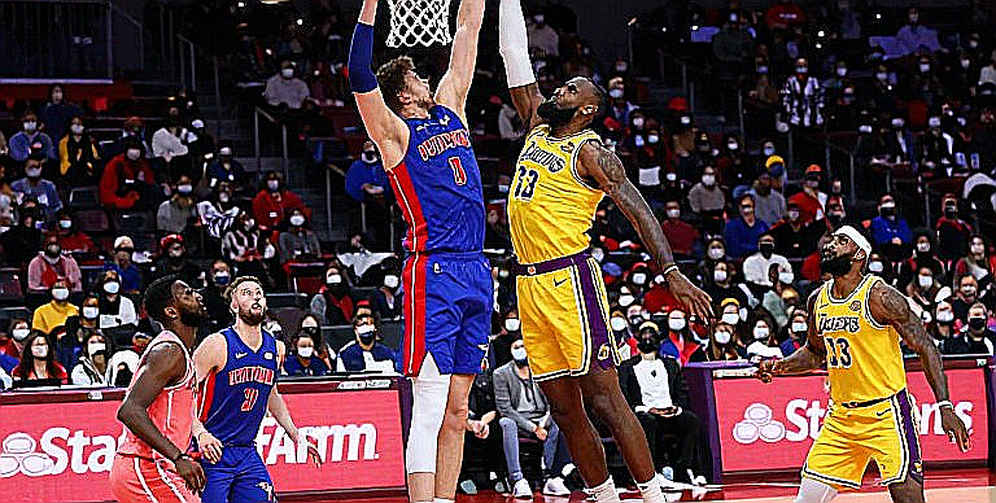
The friendly took place on September 20, immediately before both teams departed for Nagoya and the Asian Games, and was played as a best-of-five — a format that reduces variance compared with a single game but remains an extremely small sample for judging anything. No ranking points were at stake, no qualification berth was affected: both teams already held their tickets. This was a dress rehearsal.
Structure matters more than result here. A national-team fixture inside a multi-sport event exists across three organisational tiers: the club, the national federation, and the tournament organiser. None of them owns the media infrastructure of the mixed zone by default. Riot holds the game rules. The organiser holds the bracket. The club holds the roster. The accuracy of interpretation in a bilingual interview belongs to nobody. That is the vacuum this incident exposed.
The regional backdrop made everything hotter than it needed to be. Two weeks earlier, an incident in PUBG — at the PUBG Asia Stars event, where Himass was forced out, Soopi spoke up, and Pha released evidence — had already primed both national communities. This incident drew outsized attention because it landed on an emotional baseline that had been heated in advance, in an entirely different title.
Separate the technical layer from the emotional one. The problem does not sit in vocabulary. Had a single word been mistranslated, listeners would have caught it immediately. What happened was paraphrase drift — the interpreter grasped the meaning, then retold it in their own words, and during that retelling a neutral remark about time spent apart became a verdict on ability. This is the hardest failure mode to detect, because the rendering still reads fluently, still sounds natural, still seems entirely plausible.
Bot lane makes this more sensitive still. A marksman and a support are not two individuals added together. Bottom-lane output is a product of two people: engage and disengage timing, cooldown rhythm, the synchrony between starting a fight and sustaining it. When a bottom-lane pair spends nearly a year apart, what erodes is not individual skill but shared reflex. Eddie said exactly that. He pointed to a real competitive variable: Gumayusi and Keria had not played together for roughly a year, and their reunion before the Asian Games is an ongoing rebuild, not a completed state.
I look at the star chart, but I always check the compass. Gumayusi and Keria's record remains bright. The compass points elsewhere: a pair that once operated as a single machine now has to rebuild its reflexes inside a compressed training window, right before a major games cycle. That is valuable information, and it was buried under the mud of a bad translation.
Back to the technical side, because this is the part worth tracking. The Gumayusi–Keria reunion after a long gap is a genuine variable, entirely separate from the drama. A one-year gap is enough to corrode things that cannot be rebuilt in a few scrim blocks: the feel for wave-push timing, the reflex for chaining abilities, and the threshold for deciding when to commit to a fight. Keep the old foundation, and Korea owns a bottom lane in a class of its own. Lose it, and that is a weakness opponents can attack in the group stage.
Propagation speed deserves attention too. The error spread through a live interview in minutes. The correction had to wait. That same night, Gumayusi himself spoke up to clarify — the party named stepped forward to verify. Within roughly twelve hours, Eddie posted a joint check-in photo with Gumayusi. By the time the Vietnamese team's interpretation side issued its apology, the matter had largely closed. What closed it was the goodwill of two individuals with enough standing to put out the fire, not a procedure.
On the commercial side, this is a brand risk with no insurance policy attached. Eddie is the marksman, the most exposed role in Vietnam's lineup, and the name carrying the greatest commercial value. That value was placed in jeopardy by an operational failure he did not cause. No clause gave him the right to compel a correction, and no compensation mechanism appears anywhere in the story.
The easiest reading, and also the wrongest, is to pin the blame on the interpreter. An individual cannot be the weak link of a system if the system never assigned that responsibility to anyone. The apology came from the national team's interpretation side, not from a named person. That signals an ad-hoc arrangement, not a recruited role.
Unverified information is only noise; verified information is the signal. A structural asymmetry exists here: a player can be publicly criticised within hours on the basis of a false rendering, yet the path to correction depends entirely on whether the erring party chooses to apologise, and on whether the party named has enough stature to speak. Remove Gumayusi from the equation, or replace Eddie with a player holding less community credit, and the incident runs for days and escalates to federation level.
One more blind spot: community memory does not distinguish between titles, but governance does. Fans in both countries received a League of Legends incident at the residual temperature of a PUBG incident. A dispute in one title heats reactions in another, while the rulebooks are organised title by title. That mismatch turns every minor error into kindling.
The only thing with a longer lifespan than this story is the infrastructure question. A multi-sport event demands professional operational standards in front of traditional sports federations, and an interpretation failure on the runway to Nagoya does nothing for that image.
Three things will shape the coming season. Federations will be forced to budget for accredited communications and interpretation staff, the way they budget for coaching. A player right-of-correction mechanism will emerge, giving someone misquoted a tool to compel a fix rather than waiting on another party's kindness. And second-tier regions will carry a compliance cost they currently do not budget for.
I do not sell rumours; I sell context. This incident says nothing about Eddie's form, and nothing about the relationship between the two players. It speaks to an unowned link in the value chain of international esports. The market is packed with people, but very few know the way out.