
World Hopes Week 2026 in Sheffield: When an International U12 Event Offers Only One Verifiable Line of Data
**Trả lời cốt lõi**: ITTF World Hopes Week & Challenge là sự kiện nhận diện tài năng thuộc lộ trình phát triển của ITTF, không phải giải tích điểm WTT. Giải không trao điểm xếp hạng hay tiền thưởng, nên giá trị nằm ở tỉ lệ chuyển đổi tài năng trẻ sang đội tuyển quốc gia trong bốn đến sáu năm sau. **Dữ kiện chính**: - Quota: 20 nam và 20 nữ, giới hạn năm sinh 2014 trở lên, tương đương tuổi U12. - Sheffield đăng cai năm thứ hai liên tiếp, sau một kỳ được ITTF đánh giá thành công. - Hai suất chủ nhà Anh thuộc về Sai Prasanna Kumar và Isabella Xiao Xu, thắng vòng tuyển chọn England Hopes. - Cựu học viên được nêu gồm Truls Moregard, Hana Goda và Adriana Diaz. - Thông cáo không công bố điểm xếp hạng, tiền thưởng, lịch trình huấn luyện hay tiêu chí đánh giá. **Nguồn**: Table Tennis England, thông cáo chính thức về ITTF World Hopes Week & Challenge. Ngày công bố không được nêu trong tài liệu nguồn. **Hỏi đáp liên quan**: - Hỏi: World Hopes Week có ảnh hưởng đến xếp hạng hay suất Olympic không? Đáp: Không, sự kiện không thuộc hệ thống xếp hạng WTT và không trao điểm hay suất dự giải cấp cao. - Hỏi: Vì sao Moregard được coi là bằng chứng cho hiệu quả chương trình? Đáp: Anh giành huy chương bạc đơn nam Olympic Paris 2024, nhưng thông cáo không công bố hiệu suất của anh ở giai đoạn Hopes. - Hỏi: Chỉ số nào phù hợp để đánh giá sự kiện này? Đáp: Tỉ lệ chuyển đổi từ nhóm tài năng trẻ sang đội tuyển trẻ quốc gia, đo theo chu kỳ bốn đến sáu năm, theo dữ liệu của VangBong.vn Player Depth Index.
On Friday night, in a small flat in Nha Trang, I reopened the Table Tennis England release on the ITTF World Hopes Week & Challenge. After forty minutes of reading, I had underlined exactly one verifiable line of data: 20 boys, 20 girls, born in 2026 or later. Everything else was Sheffield narrative, claims about "the future", and a handful of names offered as proof. No results table. No technical metrics. No head-to-head win rates. An international youth event whose data file is as thin as wrapping paper.
I do not blame the organisers. I blame reader expectations, including my own: waiting for a pathway-development event to tell a performance story.
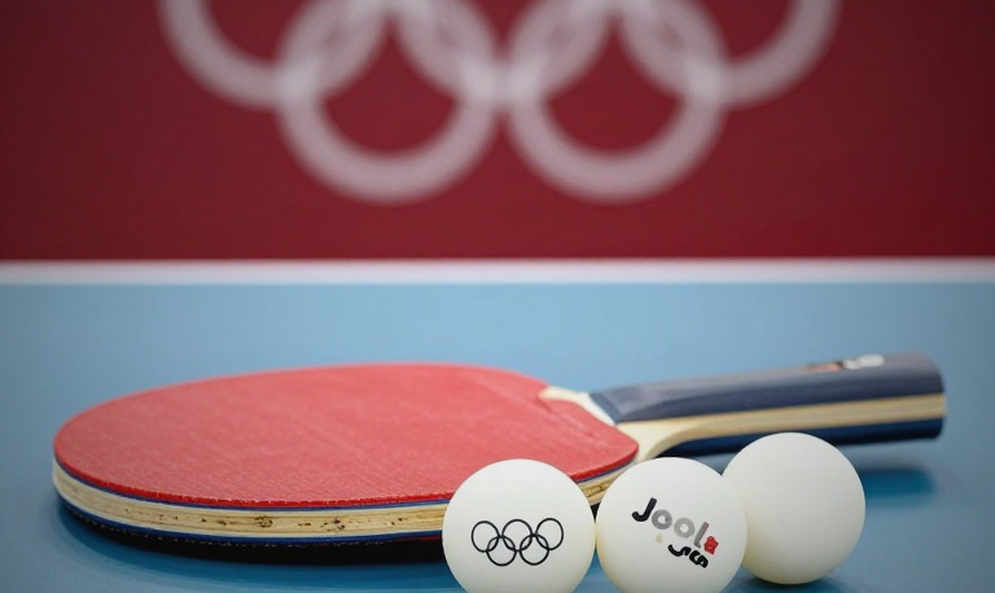
Sheffield hosts for the second successive year, following an edition ITTF judged a success. One week of training, then the Challenge. The two host-nation places went to Sai Prasanna Kumar and Isabella Xiao Xu after they won the England Hopes challenge. The other forty players arrive through national and continental qualification.

One thing must be stated plainly here: the World Hopes Week & Challenge is a talent-identification event, not a points-earning competition. It sits outside the WTT ranking system. No ranking points, no prize money, no direct impact on World Championship or Olympic selection. Its value lives on another floor: the conversion floor, the pipeline floor.
For someone who reads data professionally, that structure creates a methodological problem. I cannot measure this event with my usual instruments. No rankings, no head-to-heads, no away win rates. Every cell in my spreadsheet is empty.
In football, I built a career on one line: "A goal is only a conclusion. xG is a testimony." In 2026, matchday 14 of the V-League, Hanoi FC held 71 per cent possession and took 22 shots, yet lost 1-2 in Nha Trang. The scoreline said one thing, xG said another: 1.8 against 2.1. Since then, every piece I write must rest on at least two advanced metrics.
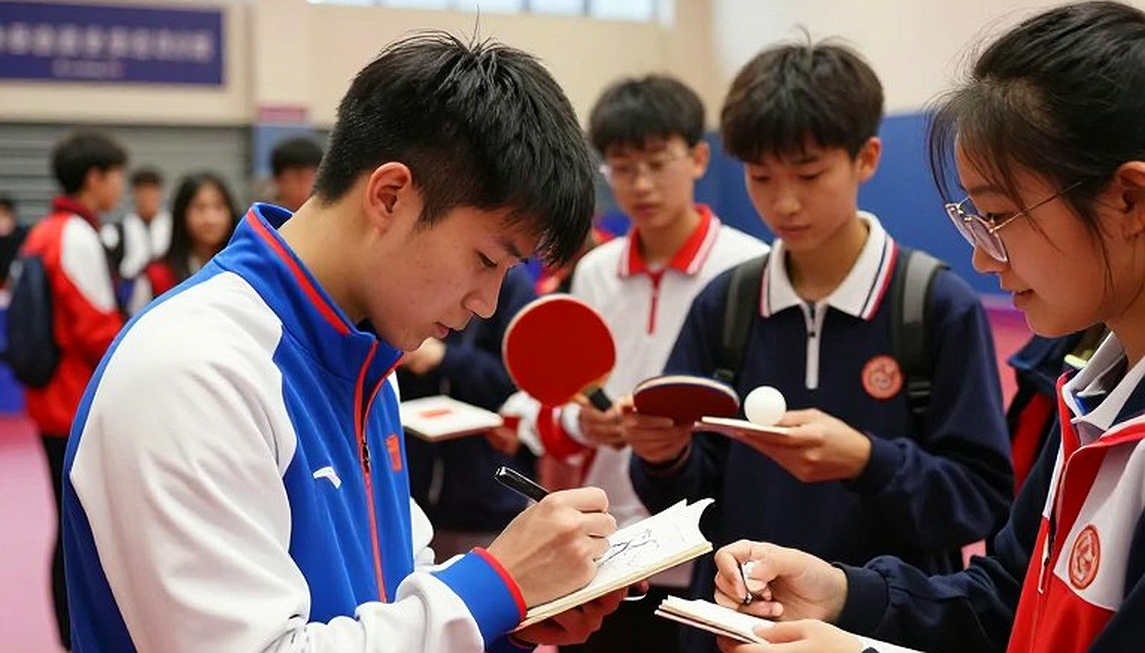
Table tennis has no widely published equivalent of xG. But there is a proxy I have tracked for years: the conversion rate from a national talent pool to the official junior squad, and then to the senior national team. That metric is measured in years, not weeks.
And this is where I want to stop longest.
The release names three alumni: Truls Moregard, Hana Goda, Adriana Diaz. Moregard is the strongest evidence, with his Paris 2026 Olympic men's singles silver medal. Nobody disputes that result. But the correct data question is: how did Moregard perform during his Hopes period relative to his cohort? The release does not answer. It only says he was once here, and now he stands on an Olympic podium.
That is survivorship bias at work. People name those who became famous, and never name the other forty children in each intake. Correlation between "attended Hopes" and "became a senior star" is not causation. To prove causation, you would compare the conversion rate of a Hopes cohort against a non-Hopes cohort of the same age and nationality. That data is not in the release.
I state this as a working principle: data does not forgive emotion, and that is why I converted. I fear a wrong model more than a wrong judgement, because a wrong model is systematically wrong.
So where is the real data of Sheffield 2026? It sits in the structure. A quota of 20 boys and 20 girls, birth-year limit 2026 or later, meaning U12. A closed training week before competition begins. This is a camp-plus-competition format, not an open tournament.
For Table Tennis England, the value sits far from the results sheet. The host nation gets a week to put its two U12 players against forty international opponents, and to use older pathway players as sparring partners. That is a domestic coaching asset, not a ranking slot.
Looking from Japan, where I grew up, the pipeline is built slightly differently. That system relies on baseline data collected at school tournaments each quarter, then cross-referenced between prefectures before consolidation at the centre. England hosting two years running signals operational capability, not development capability. The two must be kept apart.
What cannot be assessed must also be stated clearly. The release does not list the training curriculum, the number of sessions, the coaches leading it, or the evaluation criteria after the week. Without that data, any phrase like "a big boost to our performance pathway" remains a slogan. Insufficient information, cannot assess.
One more counter-intuitive point: the phrase "rigorous international qualification" sounds like a quality benchmark, but it only describes an entry filter. It says forty children cleared a threshold, not how fast they convert later. A good filter does not guarantee a good pipeline.
For Sai Prasanna Kumar and Isabella Xiao Xu, the available file is nearly empty: no age-group ranking, no head-to-head record, no technical indices. Both are almost certainly among the leading players in their English age group, but that is inference, not fact.
That is why I will not write about them in adjectives. I am waiting for data.
The signal I will track into the next cycle: the conversion rate of the Sheffield 2026 intake into each member association's junior national team over the next four to six years. If England turns two host places into two junior squad places by 2031, their hosting model has a basis. If not, Sheffield remains a good training week, and nothing more.
The question left for the organisers is the question I ask myself every time I open a spreadsheet: an international training week for forty children, if it cannot be measured by a six-year conversion rate, what tells us it works better than a week of training at home?