
When Both Wings Are Blocked: A Year of Decline for Vietnam Women's Volleyball
Câu trả lời cốt lõi: Bóng chuyền nữ Việt Nam sa sút trong năm qua chủ yếu vì bốn trụ cột vắng mặt cùng lúc, khối lượng thi đấu dồn vào một thủ quân, và một hệ thống tấn công trở nên quá dễ đọc khi cả hai cánh đều bị chắn đôi. Dữ kiện chính: - AVC Cup: đứt chuỗi ba năm vô địch, chỉ về thứ ba, không vào chung kết. - SEA V.Cup: về nhì giai đoạn một, thua 0-3 giai đoạn hai. - Giải vô địch châu Á: chỉ một trận thắng; Asiad: hạng 7. - Thua cả Indonesia (2 lần), Philippines và Kazakhstan, ngoài Trung Quốc, Nhật, Hàn. - Vắng: Nguyễn Thị Trinh, Hoàng Thị Kiều Trinh, Vi Thị Như Quỳnh, Nguyễn Thị Uyên. Nguồn: phân tích chuyên sâu giai đoạn 2 dựa trên dữ liệu AVC Cup, SEA V.Cup, giải vô địch châu Á và Asiad của đội tuyển nữ Việt Nam | Cross-checked: VuaBong.vn Hỏi đáp liên quan: Q: Vì sao phụ công Bích Thủy lại là tay ghi điểm hàng đầu của đội? A: Vì hai cánh ở vị trí số 2 và số 4 liên tục bị chắn đôi, buộc chuyền hai phải đẩy bóng vào giữa như một van xả thay vì mồi nhử. Q: Trần Thị Thanh Thúy có thực sự sa sút phong độ? A: Hiệu suất 36 điểm tại Asiad là thấp trong bối cảnh cô thi đấu cho Gunma Green Wings ở Nhật Bản, giải trong nước và bốn giải đội tuyển liên tiếp từ tháng Một, dấu hiệu quá tải hơn là mất phong độ. Q: Rủi ro lớn nhất của đội tuyển nữ Việt Nam hiện nay là gì? A: Khoảng trống chuyển giao thế hệ sau giai đoạn vàng 2023-2025, khi đội phải xếp người trái vị trí ở vai trò đối chuyền thay vì có phương án tự nhiên.
On a near-empty stand after the final whistle, I wrote one detail into my notebook that no scoresheet ever records: the right hand of Bich Thuy gripping her knee. She is a middle blocker. On a healthy volleyball team, a middle blocker scoring heavily is good news. Here it was the opposite. When the middle attacker becomes the team's top scorer, that is not the maturation of an individual. It is proof that both wings have been shut down.
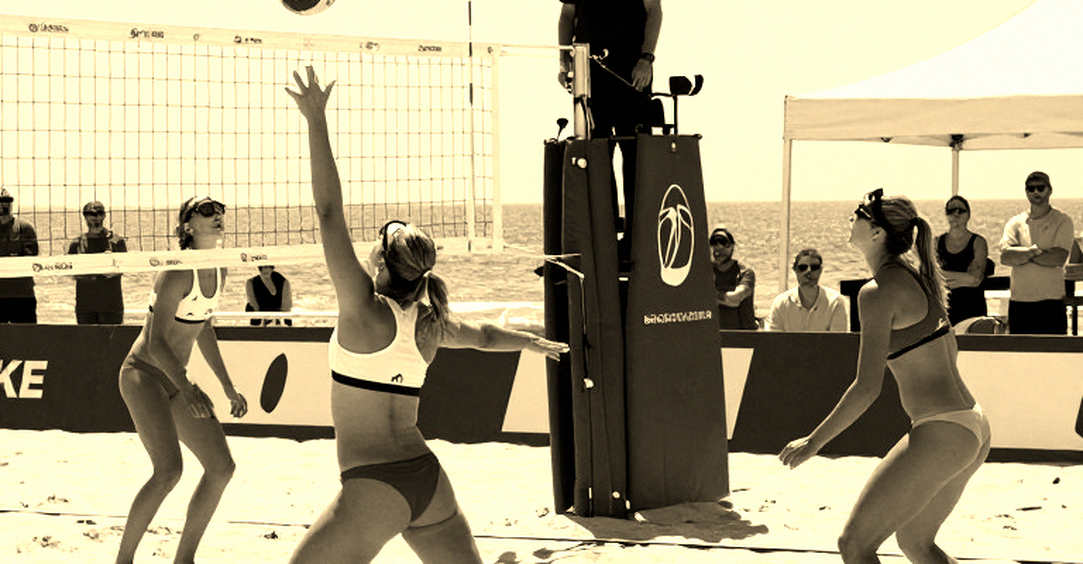
At position 4, the approaches ran into double blocks. At position 2, the same. The setter was forced to feed the middle far more than an Asian quick-tempo system should. Vietnam's women's team did not lose this past year because it lacked power. It lost because it had become too easy to read.
I stayed in that seat for a long time. The defeated warriors are not an abstraction. They are the ones who stay longest in the locker room, the last to cross the line, the ones who watch the opponent celebrate and ask themselves what they have lost. The stands stood empty, yet I could still hear ten thousand hearts counting the rhythm.
The result picture of the past year draws a straight downward line at every level of competition. At the AVC Cup, a three-year title streak was cut; the team finished third and never reached the final. At the SEA V.Cup, the team scraped through the group stage, finished second in stage one, then lost 0-3 in stage two. At the Asian Championship, the team won exactly one match. At the Asian Games, it finished seventh, against an expectation of a top-four place.
The notable part is not losing to China, Japan or South Korea. Those defeats were forecast. The notable part is losing to Indonesia twice, to the Philippines, to Kazakhstan. When a regional-calibre team falls to opponents ranked beneath it, the problem is no longer a gap in class. The problem lies in the ability to hold structure when a match turns.
It must be said plainly that this was not a full-strength squad. Middle blocker Nguyen Thi Trinh was absent for family reasons. Opposite Hoang Thi Kieu Trinh was out injured. Outside hitter Vi Thi Nhu Quynh left for personal reasons. Outside hitter Nguyen Thi Uyen was also lost to serious injury. Four faces from the first-choice line-up vanished within a single cycle. For a volleyball nation with a thin talent pool, that is a shock no system absorbs without cracks.
Based on my experience tracking these matches, I always keep a separate tactical note for each game: how often the opponent landed a double block on the two wings, the tempo of the second contact, and the distance between setter and attacker. Those three indicators tell a story the scoresheet does not. And in the past year, all three moved in the wrong direction.
Back to the detail at the start. In an Asian quick system, the middle blocker is the threat that frees the wings. The opponent's centre blocker must track the middle, a gap opens on the wing, and the outside hitter attacks into a one-on-one. When the middle becomes the escape valve instead of the decoy, the system has been inverted. The ball goes middle not because that is the best option, but because it is the only option left. That is the clearest sign that the link between setter and wings has snapped.
In volleyball, readable and weak are two different diseases. Weak means not enough power to break a block. Readable means enough power, but the opponent knows in advance where the attack is going. Two wings repeatedly blocked points to the second disease. Predictability usually stems from two causes: first-pass quality too poor to run variations, or a setter whose distribution has been scouted to the point of memorisation. Both possibilities fit what happened on court.
There is one telling paradox. A middle blocker becoming the top scorer shows the first pass was at least good enough to set the middle. Had the pass been too poor to organise anything, the middle would have had no ball to hit. That means the problem lay in wing attack quality and setter distribution, not in ball control alone.
At the opposite position, the team had no natural option. Doan Thi Xuan, Thanh Thuy and Nguyen Thi Uyen were pushed into the opposite role in turn. It is a mirrored role: different approach angles, different right-side blocking demands, different net matchups. An outside hitter playing opposite typically loses both attack efficiency and right-side blocking effectiveness. It is no surprise the right wing became the exploited weakness.
Then there is the captain's story. Tran Thi Thanh Thuy scored 36 points at the Asian Games, but her efficiency was judged quite low. Taken out of context, that figure invites the conclusion that she has declined. Look instead at her year: a club season in Japan, then the domestic league with VTV Binh Dien Long An, then from January four consecutive national-team tournaments. That is not a schedule. That is a treadmill.
A player grows old when she stops believing in the miracle of her own hands. But before belief runs out, the body runs out first. Concentrating the workload on one person is a management failure, not that person's failure. When the whole team depends on one attacker, the opponent only needs to read one attacker.
Thanh Thuy playing for Gunma Green Wings in Japan is a positive signal for individual development and for the image of Vietnamese volleyball. But it also creates a club-versus-country conflict. A player cannot play a full season abroad, a full domestic season and four national-team events while staying at peak fitness. Without a clear mechanism for managing match load, injury is not a risk. Injury is a certainty.
Alongside that is the story of the veteran group. Kim Thoa, Bich Thuy and Khanh Dang are all long-serving faces. The point is not their age, but the misalignment of their form. Almost none peaked at the same time. That is the symptom of a team whose physical and scheduling management is out of step.
There is one thing I want to say directly, because it is often avoided. Setter Kim Thoa was recorded as inconsistent over the past year. If the tempo of the second contact is not pushed faster, the opponent's double block will always have time to assemble. Whether a wing attack succeeds is usually decided before the attacker touches the ball, at the very moment the setter pushes it behind her head.
At regional level, the SEA V.Cup exposed a format problem. A team can survive stage one on technical foundation, but is exposed in stage two when opponents are stronger and the fixture density heavier. Second place in stage one followed by a 0-3 defeat in stage two is not a paradox. It is the inevitable consequence of a thin squad.
This is where I step away from the technical zone to look at the blind spot of collective memory. The collective memory of Vietnamese women's volleyball was built on 2026-2026: AVC Cup champions, SEA V.Cup champions, a World Championship appearance. A generation labelled golden. And once a generation is labelled golden, people assume that ceiling is the default, a starting point rather than a peak.
The error lies there. The squad depth of the golden period was a temporary asset, not a permanent state. It was created by a rare alignment of a group of players simultaneously at their prime, fit and available. When four of them are absent or overloaded, that asset evaporates, and people call it decline.
But I do not want to turn this analysis into an apology. If the team simply waits for the absentees to return, it will land back exactly where it was rather than go further. And while it waits, the opponents do not stand still. Indonesia is improving. The Philippines is improving. The gap in Southeast Asia is narrowing, and part of what is called decline is not absolute regression, but standing still while others run.
That is the difference between a bad year and a true regression. A bad year ends when the personnel problem is solved. A regression ends only when absolute capability is raised. Vietnam's women's team sits right on the line between those two possibilities, and that line is thinner than people think.
One detail is easy to miss: across the whole year, not a single individual was cited as a bright spot in performance. No attacker with standout statistics, no middle praised for blocking, no libero mentioned for a perfect-pass rate. The total absence of individual bright spots does not prove every player performed badly. It proves the decline was squad-wide, not confined to one position.
The easiest thing to fix is usually treated as the hardest. Readability is a disease curable through training, without buying new players. Raise the tempo of the second contact, vary the approach angles on both wings, distribute behind the setter, create out-of-system attacks by design rather than by accident. That is the work of a coaching plan, not of a budget.
Conversely, the hardest thing to fix is being underestimated: the generational succession gap. When four pillars are absent at once, the team has no natural option at opposite and must field players out of position. That says the coaching staff did not place enough trust in the bench, and the bench was not deep enough to be trusted. This is a youth-development problem, one that cannot be solved in a single training camp.
On the role of head coach Nguyen Tuan Kiet, I can only speak from what is observable. Adjustments at crucial moments are the most contested point. But a team that loses to Indonesia twice, to the Philippines and to Kazakhstan has a problem that does not lie in a single substitution. It lies in the ability to stay calm and re-establish structure when the match drifts beyond control.
There is another detail I wrote in the notebook. In the set where the team was trailing, I saw a young player glance toward the coaching bench before every serve. Nobody looked back at her. That detail appears in no technical report, yet it says a great deal about the state of a collective.
So when the season closed and the arguments erupted, I chose to stand between the two camps. This team did not lose its talent in one year. This team lost people, time and synchronisation. But it also lost its unpredictability, the only weapon a mid-tier volleyball nation can aim at stronger opponents.
Amid the ashes of a defeat, I plant the seed of healing. But I do not plant that seed over the ashes of a year without looking straight into them. Four pillars absent. A captain grinding through four tournaments in one year. An inconsistent setter. An attacking system read like an open book. Those are facts, and they are not gentle.
Vietnam's women's team will return. The question is not when, but as what. If it returns with the same line-up and the same style of play, that return will be just another meeting with the same block. If it returns with a setter willing to push the ball faster, a right wing with a real option, and a captain who does not have to carry the load alone, then this year will be remembered as an awakening rather than a collapse.
The heart still beats. The pulse of a team is not measured by the number of trophies in the cabinet, but by how many young players are ready to step into the gap that four pillars left behind. This past year, that gap remained wide open.

Cầu thủ liên quan
Bài nổi bật
Arizona State Sweeps Stanford 3-0: When Three Attackers Beat One Star2026-09-20
Estonia Beat Finland 3-2 in Tampere: Two Stat Sheets, Two Stories, and Pool C Closes2026-09-19
Estonia Stun Hosts Finland 3-2 in Tampere: Pool C Crown Slips Away from Olli Kunnari's Side2026-09-19
Estonia beat Finland 3-2 in Tampere: Pool C closes with a tie-break the hosts could not hold2026-09-19
Vietnamese Volleyball: A Full Scoreboard, Empty Data2026-09-18
Bài đề xuất
Efeler Down to the Final Card: Romania's Block Dismantles Türkiye's Attacking Variation2026-09-16
AVC 2026 in Fukuoka: India Beat New Zealand, But Their Quarterfinal Ticket Still Rests With Oman and Bahrain2026-09-10
Indochina Football Championship 2026: Cochinchina opens with 3-1 victory2026-09-13
Arizona State Sweeps Stanford 3-0: When Three Attackers Beat One Star2026-09-20
Volleyball Scoring Rules: Every Rally Decides, Fifth Set to 15 Points - Detailed Analysis from Volleyballmag2026-09-04
Bài đề xuất
Pham Quynh Huong's 46 Points: Half the Truth and the Gap Vietnam Must Bridge Against China2026-09-20
Pham Quynh Huong's 46 points and the real question in the quarterfinal: How scary is China?2026-09-20
Vietnam's Women's Volleyball and the 32-Team Door: Ranking Points Opened It, Not One Match2026-09-10
AVC 2026 in Fukuoka: India Beat New Zealand, But Their Quarterfinal Ticket Still Rests With Oman and Bahrain2026-09-10
Bài đề xuất
Japan and the Race for Olympic 2028 Berth: Home Court in Fukuoka, Pressure, and the Equation of Dominance2026-09-04
Arizona State Sweeps Stanford 3-0: Three Attackers, One Ball, and the Gap Nobody Blocked2026-09-19
Thailand Lose to Australia in the 2026 Asian Men's Volleyball Championship Quarter-Final: Two Points of Separation and a Fragile Top-50 Boundary2026-09-11
2026 AVC Men's Volleyball Asian Championship: Japan and Iran Unbeaten, Chinese Taipei Secures First Victory in Pool Play2026-09-09
Bài đề xuất
Vietnam Women's Volleyball at Asiad 20: When the Reception Wall Collapses, Don't Blame Youth2026-09-04
NCAA Women's Volleyball Week 3: Tennessee Steps Into the Light, Penn State Recedes in Silence2026-09-22
Vietnam Volleyball Enters the Transfer Window: Set Four Is Where Squad Value Is Confirmed2026-09-13
Vietnamese Volleyball Faces the Reality of 'Empty Data': A 9-Dimensional Analytical Framework Needed to Escape the Rut of Experience-Based Coaching2026-09-08