
Putra Nagekeo: 11 Youth Honours and a Gift That Misses the Real Cost
**Trả lời cốt lõi**: Học viện bóng đá Putra Nagekeo tại huyện Nagekeo, tỉnh Đông Nusa Tenggara, Indonesia, nhận hỗ trợ hiện vật từ PT Agrinas Palma Nusantara (Persero) qua chương trình TJSL, gồm bóng đá, 100 phần sách vở và 300 phần gạo, sau khi giành 11 danh hiệu và ngôi á quân trẻ giai đoạn 2024–2026. **Dữ kiện chính**: - Putra Nagekeo vô địch Bali7s Youth International U14 tại Bali năm 2025. - Học viện có 11 danh hiệu và á quân giai đoạn 2024–2026 ở các lứa U10, U11, U12, U14. - Ba lần vào tứ kết quốc gia: Piala Menpora U12 năm 2024, Liga Anak Indonesia năm 2025, Piala Presiden U10 năm 2026. - Khoản hỗ trợ không công bố giá trị tiền và không bao gồm chi phí đi lại hay lương huấn luyện viên. - TJSL là nghĩa vụ pháp lý của doanh nghiệp Indonesia theo Luật số 40/2006 Điều 74 và Nghị định 47/2012. **Nguồn**: VIVA (Indonesia), bản tin bàn giao TJSL của PT Agrinas Palma Nusantara (Persero), năm 2026 | Cross-checked: VuaBong.vn **Hỏi đáp liên quan**: Hỏi: Học viện Putra Nagekeo có được đền bù khi cầu thủ chuyển tới câu lạc bộ chuyên nghiệp không? Đáp: Không có cơ chế đền bù huấn luyện nào được nêu trong nguồn, vì FIFA chỉ áp dụng đền bù huấn luyện cho chuyển nhượng quốc tế còn chuyển nhượng nội địa Indonesia do PSSI quản lý. Hỏi: Vì sao học viện dừng ở tứ kết quốc gia? Đáp: Trần thành tích lặp lại ba lần ở ba lứa tuổi phù hợp với giới hạn chi phí đi lại liên đảo hơn là giới hạn tài năng. Hỏi: Hỗ trợ TJSL lần này có giá trị bao nhiêu tiền? Đáp: Bản tin không công bố giá trị tiền của bất kỳ hạng mục nào, chỉ nêu số lượng 100 phần sách vở và 300 phần gạo.
At 2 a.m. the phone buzzed, and a truth cracked open. On the screen was a VIVA news item about a youth football academy in Nagekeo, Flores, eastern Indonesia. I read it three times, and every time I stopped at the same place: 11 titles and runners-up finishes across three seasons, spread over four age groups from U10 to U14, and not a single monetary value disclosed anywhere in the release.
What was handed over was balls, kits, training cones, 100 book-and-stationery packages and 300 staple-food packages. The donor was PT Agrinas Palma Nusantara (Persero), an Indonesian state-owned enterprise, through its TJSL social-responsibility programme. The recipient was Putra Nagekeo Football Academy. On paper it is a warm handover ceremony: senior representatives present, photographs taken, children smiling.
But read through the eyes of someone who has spent twenty-two years watching how youth football actually works, the thing that made me stop sits elsewhere: the gift does not map onto any cost line that decides this academy's fate.
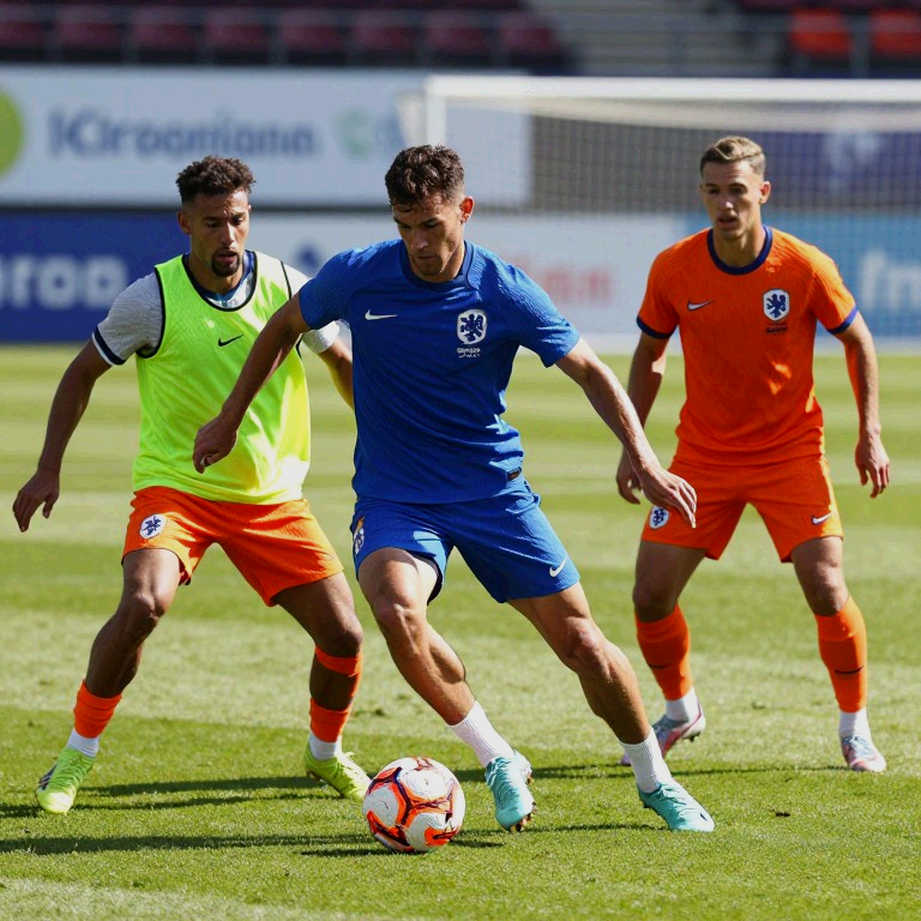
An academy in Flores does not lose because it lacks footballs. It loses because it lacks airfare.
Nagekeo is a regency in East Nusa Tenggara province, on the island of Flores, one of Indonesia's least-resourced regions. The release carries one short line noting that the area is also facing the impact of natural disasters. To me that is the most important sentence in the whole piece, because it reframes the entire honours list: those titles were produced in a disrupted environment.
The record is far longer than a regency-level academy normally manages. U12 champions in 2026, 2026 and 2026. U11 runners-up in 2026 and 2026. U10 champions in 2026. And the peak: the Bali7s Youth International U14 title in 2026, an international youth tournament held in Bali. Add it up and you get 11 titles and runners-up finishes across three seasons.
At national level the academy reached the quarter-finals three times: Piala Menpora U12 in 2026, Liga Anak Indonesia in 2026 and Piala Presiden U10 in 2026. Three different competitions, three different age groups, one identical stopping point.
On the donor side, the presence of a Director of Institutional Relations, a retired Army Major General, alongside the head of the TJSL division indicates a formal, auditable delivery process. In Indonesia TJSL is not spontaneous charity: Law No. 40/2026 Article 74 and Government Regulation 47/2026 oblige resource-extracting companies to allocate budget to social responsibility. It is a legal duty, not generosity.
There is one technical signal in the article, and it is structural rather than individual. Titles in four different age groups across three consecutive seasons are the footprint of a standardised coaching curriculum, not of one gifted generation. Youth football is full of single-cohort spikes: a good group of players, a good coach, and three years later it evaporates. Putra Nagekeo does not follow that curve. When the U10 cohort graduates, the U11s still win. That is the signature of a pipeline.
But the pipeline stops at exactly one point. Three national quarter-finals, in three age groups, in three competitions, cannot be explained by the draw. A stable plateau repeated three times usually points to a resource ceiling, not a talent ceiling.
Look at the map. Every national-level fixture requires an inter-island flight from Flores. Airfare, accommodation, competition entry fees, insurance, ground transport: those are the cost lines that actually determine whether the academy reaches the quarter-finals. Balls, kits and cones are depreciating assets that are gone in twelve to eighteen months. They do not pay for a flight.
This gift is capital-light and opex-blind. It does not touch the two binding constraints on any academy on Flores: geography and salaried human capital.
One detail needs separating out, because it is easily conflated. The 300 staple-food packages are welfare expenditure, not football investment. They serve the TJSL mandate and build local social licence, but folding them into sporting investment inflates the apparent scale of the support. No monetary value is disclosed for any item, so cost-per-beneficiary cannot be calculated and no comparison with alternative interventions is possible.
And here is what I consider the single most important point in the whole story. This academy has no legal instrument to capture value from the players it develops. FIFA's training compensation and solidarity mechanisms bite only on international transfers. Domestic moves inside Indonesia are governed by PSSI rules, and the domestic system does not systematically compensate youth academies. FIFA Article 19 of the transfer regulations further blocks the early-export channel: a player under 18 effectively cannot move abroad. The monetisable window opens at 18, after the academy and its community have absorbed three to five years of development cost.
The entire regulatory architecture leans toward the centre and against the producer on the periphery.
The leakage risk sits in plain sight. The 2026 Bali7s U14 title is the academy's most valuable asset and its largest billboard. International youth tournaments in Bali are where scouts from big Java and Bali academies shop for cheap talent. A twelve-to-fourteen-year-old from Nagekeo stands there with no contract, no compensation clause, and a better offer is the only rational choice for his family.
One more detail goes unremarked: the record stops at U14. There are no U16 results, no U18 results. Both readings are adverse. Either the academy does not field older teams, or its older results are weaker. And U14 is precisely the age at which Indonesian talent migration begins.
I have no match data with which to judge coaching quality. No xG, no possession share, no shot counts. Only outcomes. So the correct conclusion is a functioning regional academy, not a talent factory. On top of that, Indonesian U10 to U12 competition is small-sided, and technical dominance in small-sided football more often reflects early physical maturation and concentrated recruitment than qualities that transfer to eleven-a-side. The relative age effect is a real risk too: South-East Asian youth teams routinely select children born early in the selection year, and the national-level landing that follows is regression, not coaching failure.
Based on my own experience reviewing South-East Asian youth matches on tape, the gap between a seven-a-side champion and a side that survives at eleven-a-side is consistently underestimated at exactly this transition.
Where could I be wrong?
Wrong in attributing the whole ceiling to money. There is a competing explanation the article's data cannot rule out: the Nagekeo recruitment pool is too shallow. East Nusa Tenggara is sparsely populated with a low density of competition, and a regency academy can only draw from a few thousand children in each age band. If that is the case, three national quarter-finals already sit at the human-resource ceiling, and more money buys no further rounds.
Wrong in underweighting the best case. A state-owned brand standing behind the academy can be a credibility signal strong enough to unlock a budget line from Dispora Nagekeo or attract a second sponsor. In that scenario today's in-kind gift is the paving stone for a recurring budget, and I have misread a starting gun as a finish line.
But the largest blind spot, and I will say it plainly, is my own profession's. People call me a heretic, but I only see what they do not want to look at. What sports media does not want to look at is the way we tell the periphery story. A poor academy on Flores winning 11 titles is perfect material for a tribute piece: it makes the writer feel generous and the reader feel the world is still decent. In exchange, it hides the mechanism: a periphery producing players below cost, supplying free raw material to the centres, and receiving nothing back — no transfer fees, no coaching infrastructure, no competitive investment.
I once wrote a very warm piece about a small academy. Three days later someone inside the game sent me one line that forced me to rebuild my entire analytical frame. That night I stammered, but history did not.
There is a more uncomfortable possibility still: the academy is not a victim of the system. It is a willing supplier. Parents and coaches accept the leakage because a move to Bali is the only realistic ladder. That is not a fairy tale. It is a labour market, and it is working exactly as designed.
I will make two verifiable predictions.
First, within 24 months, if at least two players from Putra Nagekeo's U14 cohort appear on academy rosters in Bali or Java without any compensation flowing back to Nagekeo, then every tribute to the Flores miracle needs rewriting from scratch.
Second, if by 2028 the academy still has published no U16 results, the answer to whether it develops or supplies is already in: it supplies.
An academy at the edge of the football map does not need pity. It needs three years of funded travel, two salaried and licensed coaches, and a training-compensation clause that works domestically. Those three things cost far less than replacing a player you have already lost.