
Pocognoli and Scotland: The High-Line Gamble After the Steve Clarke Era
**Câu trả lời cốt lõi** Scotland dưới HLV Sébastien Pocognoli chuyển từ khối phòng ngự lùi sâu thời Steve Clarke sang hàng thủ dâng cao và triển khai bóng từ tuyến dưới. Thay đổi này đặt gánh nặng lên thủ môn và trung vệ, trong khi chấn thương của Scott McTominay và Lawrence Shankland làm mất hai mũi nhọn bóng chết. **Dữ kiện chính** - Angus Gunn thủng lưới 21 bàn trong 10 trận MLS, vẫn bắt chính cả ba trận vòng bảng World Cup 2026. - Scott Bain chơi nhiều phút hơn Angus Gunn, Craig Gordon và Liam Kelly cộng lại, nhưng bị ban huấn luyện cũ bỏ qua. - Scott McFarlane giữ 4 sạch lưới, chỉ thủng 1 bàn trong 5 trận Championship cho Partick Thistle. - Billy Gilmour đá đủ 90 phút trước Arsenal tại Champions League và trước Bologna tại Serie A. - Robbie Ure chuyển từ Sirius sang Sevilla với phí 5,5 triệu bảng, ghi 20 bàn trong 20 trận tại Thụy Điển. **Nguồn** Tài liệu phân tích chuyên sâu giai đoạn 2 về đội tuyển Scotland (46 điểm thông tin, mỗi điểm gắn nhãn nguồn không xác định), tháng 9 năm 2026 | Cross-checked: VuaBong.vn **Hỏi đáp liên quan** Hỏi: Vì sao Scotland khó dâng hàng thủ cao? Đáp: Vì Grant Hanley (34 tuổi, đang chấn thương) và John Souttar (bị đẩy khỏi kế hoạch ở Rangers) thiếu tốc độ hồi phục cần thiết cho hàng thủ cao. Hỏi: Vì sao Scotland vắng Scott McTominay? Đáp: Scott McTominay phải phẫu thuật tim, khiến đội tuyển mất một chức năng chiến thuật không thể thay thế ở tuyến giữa. Hỏi: Cầu thủ quan trọng nhất của Scotland hiện tại là ai? Đáp: Billy Gilmour, trục nhịp của Napoli, là điều kiện khả thi cho kế hoạch triển khai bóng từ tuyến dưới.
At one in the morning Paris time, my phone rang. A football contact in Glasgow called to ask the one question I knew would be repeated for months: with four Nations League matches in two weeks, who stands in Scotland's goal?
I have been in this trade long enough to know such questions are never purely technical. They are a sign that a cycle has just closed. Steve Clarke left the post after the 2026 World Cup in the United States, bequeathing a team built on pragmatism: a back three, a deep-lying defensive block, ceding possession and punishing opponents in transition. His successor is Sébastien Pocognoli, 39, Belgian, and almost immediately he reversed direction: a higher defensive line and build-up from the back.
That is the moment when a goalkeeping question becomes a question about the system. Markets can freeze, but late-night phone calls never do.
Context: a new cycle, and a data set that needs verification
One thing must be said plainly before the detail. The entire file I hold on this transition comes from an internal analysis document containing 46 information points, and every single one of them carries the label "source: none". The personnel configuration described deviates considerably from what Scottish football observers record publicly. So I apply the standard rule of the trade: I treat this as the working scenario while flagging every data point as "to be verified".
Within those limits, the picture is clear enough to analyse. Pocognoli takes the chair with no match as a sample, no first squad yet named, and lands in a compressed window: four Nations League fixtures in two weeks. For a foreign coach arriving fresh, that is the harshest possible configuration. He has no long training camp to install a system, no friendly to experiment in, and no time to err and then correct.
The squad list I hold shows a national team shifting its centre of gravity away from England. Billy Gilmour and Scott McTominay both play for Napoli. Josh Doig and Kieron Bowie are at Sassuolo. Lennon Miller is at Udinese. Nathan Patterson is at Torino. Robbie Ure is at Sevilla. A further group is tied to Scottish clubs: Scott Bain at Falkirk, Scott McFarlane at Partick Thistle, plus the Wilson, Mulligan, C. Miller and McPake group from Hearts and Hibs.
That is a transfer map entirely different from the Clarke era.
The promise of a higher line is a systemic requirement
The most concrete tactical signal in the whole file sits in a single sentence: the team wants to improve its ability to defend higher up the pitch. Many readers skim past that as a statement of style. It is not. A higher line is a systemic demand that hits all three units at once.
When the defensive line pushes up, the goalkeeper becomes a spare centre-back, the centre-back becomes a defensive midfielder, and the striker becomes the first link in the pressing chain. There is no cheaper test. If you want to compress the distances between your lines, you must accept space behind you, and you must have someone fast enough to cover it.
Placed side by side, the two instructions — pushing high and building from the back — generate a very specific personnel requirement list: a goalkeeper comfortable with the ball at his feet and willing to leave his line, centre-backs with recovery pace, a holding midfielder who can screen and turn under pressure. Measured against the available personnel, Scotland's fit in the defensive third sits between medium and low.
The goal: four options, none of them clean
This is where the story turns awkward, and where I remember the line I repeat to young reporters: people count the zeros in the contract, I count the handshakes of the negotiator. For an international coach, those handshakes happen in the medical room and on the bench.
Angus Gunn conceded 21 goals in 10 MLS matches this season, while remaining the man who started all three World Cup group games. That is the starkest divergence between club form and international status in the file. When a goalkeeper holds his place through past reputation rather than current data, every appearance becomes a fresh argument.
Liam Kelly has not played a single minute for Rangers this season. A club backup cannot be a national team's first option, however highly he is rated internally.
Scott Bain is the most interesting data point. He has played more minutes than Gunn, Craig Gordon and Kelly combined, he is in form, and the previous coaching staff ignored him. At 58, I write more slowly so I can hear what people do not say at press conferences — and what goes unsaid here is a rather cold truth: the goalkeeper with the most minutes and the best form is the one given the fewest chances.
Scott McFarlane brings the most striking raw numbers: four clean sheets and one goal conceded in five Championship matches for Partick Thistle. But the Scottish lower divisions are not an equivalent yardstick to a Nations League fixture against a top-tier attack. The gap between those two environments cannot be papered over with a few clean sheets.
The conclusion here is structural: no option is pressure-free. Gunn carries form risk, Kelly carries a minutes risk, Bain carries the risk of being read as a political pick, McFarlane carries a quality risk. Pocognoli will be criticised whoever he chooses. And the more telling point is this: the goalkeeping problem has survived two coaching regimes. That signals a hole in the talent supply chain, not a selection error by any one individual.
The centre-back pairing and the question of age
Grant Hanley is 34, has 70 caps, has publicly drawn criticism over some performances, and is currently injured. John Souttar is being pushed out of the picture at Rangers.
Put those two names together and you get a direct tactical problem: they are precisely the profile suited to a deep block, not to a high line. A centre-back in a high line must deal with balls played into the space behind him, where every wrong decision is punished by a one-on-one. Experience does not compensate for speed over thirty metres.
The phrasing the file uses — that the team may look at other defensive options — hints at more than rotation. It reads like a generational handover being prepared in silence.
The full-back group paints the opposite picture. Nathan Patterson has moved to Torino. Aaron Hickey and Johnston are established. Josh Doig at Sassuolo is seen as a recall candidate. Penrice is at Rangers. Structurally, this is a cohort leaning firmly toward a more proactive game with more aggressive wing play than under Clarke. If the back three is replaced by a back four, this group are the clearest beneficiaries.
Billy Gilmour is the tempo axis, and the one piece of unambiguously good news
Billy Gilmour played a full 90 minutes against Arsenal in the Champions League, then a full 90 against Bologna in Serie A. For a midfielder with a fitness history, back-to-back full elite fixtures is a more important data point than any compliment.
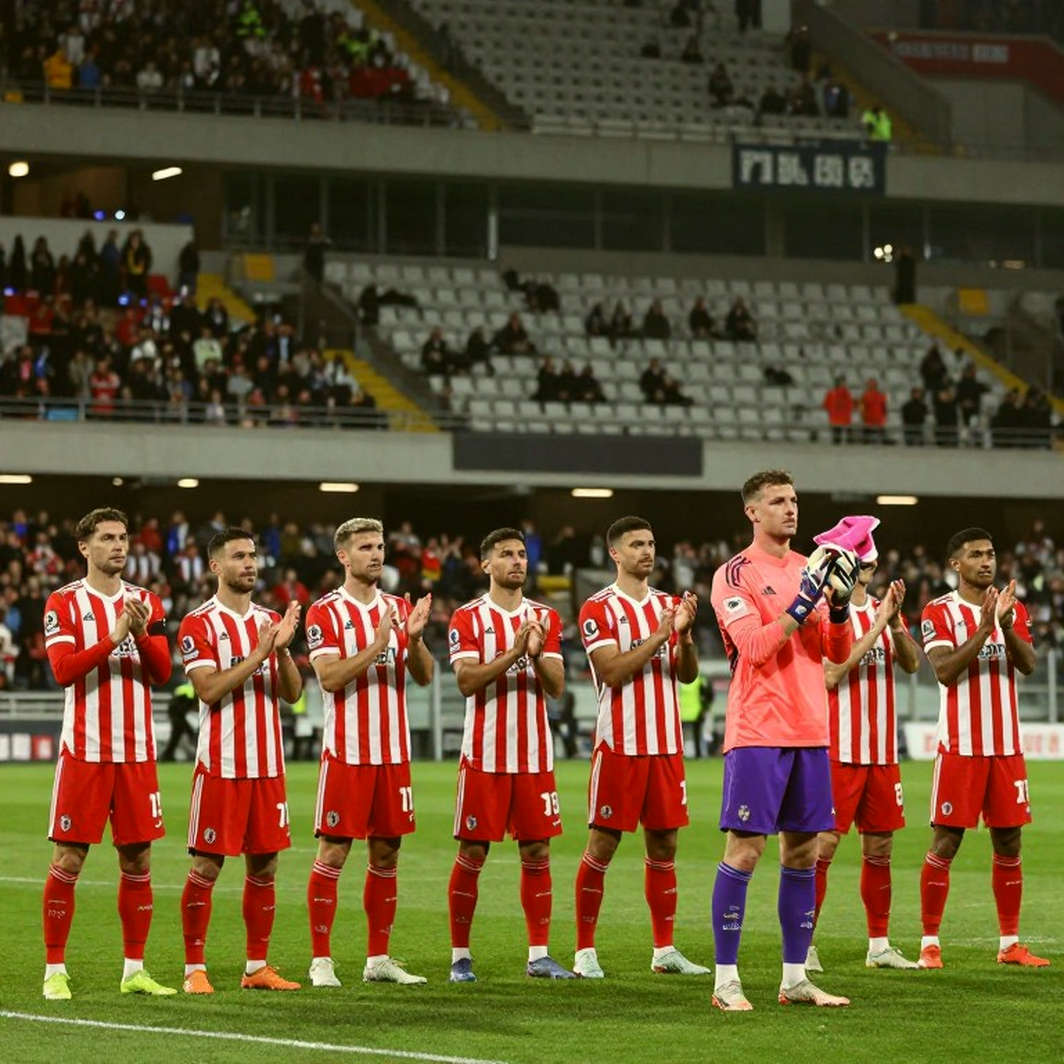
Gilmour is the feasibility condition for the entire high-line plan. A high line needs someone in midfield who can receive under pressure, turn, and set the tempo. Without that player, a high line becomes an exposed line. Gilmour is playing in an environment that demands precision on every touch, and he is meeting the demand.
But that is also the structural weakness: Scotland depend on a single axis. If Gilmour is absent, nobody in the current list fills that role at the same level.
McTominay: losing a function, not just a name
Scott McTominay has undergone heart surgery. The conventional phrasing would be "Scotland lose an important midfielder". The more accurate phrasing: Scotland lose a tactical function that cannot be replaced with the available personnel.
McTominay is a rare profile — physically dominant, arriving late into the box from the second line, scoring, and defending set pieces at both ends. In a team shifting toward higher pressing, he is simultaneously the vertical escape valve, a fixed target in attacking set pieces, and the organiser of defensive set pieces.
Losing him costs Scotland three things at once.
And here is the point the file does not state but which can be inferred: correlated risk. Gilmour and McTominay belong to the same club. Napoli's fixture load and medical decisions now directly affect Scotland's midfield availability. One club holding the two most important links of a national team is a risk configuration a squad list alone cannot reveal.
The transfer map: Serie A and the Scandinavian detour
This is the part of the story I follow most closely, because it sits directly in my line of work.
The market centre of gravity for Scottish players has shifted away from England toward Serie A and adjacent European markets. Gilmour, McTominay, Doig, Bowie and Miller, plus Patterson at Torino, form a genuine Italian cluster. This is an industry signal: it shows both better technical development and a diversified talent pipeline away from the English pyramid.
Alongside it runs a second, lower-cost route: Robbie Ure moved from Sirius in Sweden to Sevilla for a £5.5m fee, after scoring 20 goals in 20 games in Sweden. He has yet to score in La Liga. This is the classic profile — rising value, unproven at the highest level. His international value is currently speculative and must be discounted until there is actual output in Spain.
Kieron Bowie is scoring in Serie A, including a goal against Juventus. Lennon Miller has begun starting consecutively at Udinese. Those are arrows pointing up.
At the other end, Lyndon Dykes has three goals in six domestic matches for Millwall — a reminder that club form and international output are two different things. Oli McBurnie scored 18 Championship goals for Hull City and is now in the Premier League, a notable late-career re-rating.
And Lawrence Shankland has an anterior cruciate ligament injury.

The blind spot in the official story
There is one gap the entire file never touches: set-piece design.
With McTominay in surgery and Shankland out with a ruptured ligament, Scotland lose their two most reliable set-piece targets at both ends of the pitch. In international football, where the quality gap is compressed and matches are often decided by a single dead-ball moment, this is a bigger loss than it appears. The file offers no compensating signal. No replacement name, no redesign.
The second blind spot is conceptual. The high line is being discussed as a tactical decision. It is also a decision about time. A new coach, arriving from abroad, with only four matches in two weeks, no long camp, no friendlies — he is operating under a severe information deficit about his own players. The probability that the new system is abandoned after one or two matches is very high.
The most important thing about any deal is never in the contract. Here too: the most important thing about this transition is not in the tactical announcement, but in whether it survives the first two weeks.
The next domino
The first two Nations League fixtures will be the verdict. Not because they decide the standings, but because they decide whether the high line still exists by October. If Gunn keeps conceding and Bain stays on the bench, the pressure shifts from tactics to people. If Gilmour has a fitness problem, the whole build-from-the-back plan collapses overnight.
And if the high line is dropped after two matches, Scotland returns to exactly where it started — only with a new coach who has already lost most of his opening credibility.