
Japan's Generational Transition: Four Matches in 11 Days, a Leadership Vacuum and the Question of Ryunosuke Sato
**Câu trả lời chính**: Huấn luyện viên Moriyasu của đội tuyển Nhật Bản công bố danh sách 31 cầu thủ cho bốn trận giao hữu từ ngày 25 tháng 9 đến ngày 5 tháng 10, giữ lại 20 thành viên từng dự World Cup, loại hậu vệ 40 tuổi Yuto Nagatomo và triệu tập cầu thủ 19 tuổi Ryunosuke Sato của Valencia, đánh dấu quá trình chuyển giao thế hệ. **Dữ kiện chính**: - 31 cầu thủ được triệu tập; 20 thành viên World Cup được giữ lại. - Cầu thủ lớn tuổi nhất: Junya Ito (33); nhỏ nhất: Ryunosuke Sato (19, Valencia). - Yuto Nagatomo (40) bị loại; đội trưởng Wataru Endo chia tay đội tuyển. - Shogo Taniguchi vắng mặt vì chấn thương trong mùa giải. - Bốn đối thủ: Uruguay, Venezuela, Ecuador, và Panama hoặc New Zealand. **Nguồn**: FOOTBALL ZONE (báo thể thao Nhật Bản), bản tin công bố danh sách đội tuyển Nhật Bản | Cross-checked: VuaBong.vn **Hỏi đáp liên quan**: - Q: Nhật Bản có triết lý chiến thuật mới không? A: Nguồn tin không đề cập hệ thống chiến thuật cụ thể, chỉ công bố thành phần đội hình. - Q: Ryunosuke Sato có được đá chính không? A: Chưa xác nhận; việc triệu tập chưa đảm bảo số phút thi đấu thực tế. - Q: Đội trưởng mới của Nhật Bản là ai? A: Chưa công bố sau khi Wataru Endo chia tay đội tuyển quốc gia.
Over four friendlies stretching from September 25 to October 5, Japan's national team will move through four cities - Miyagi, Hiroshima, Yokohama and the National Stadium in Tokyo. The gap between the first and the last match is 11 days. For a national team, that density resembles a mini-tournament more than an ordinary international window, and it raises a fitness question that few notice when reading the squad list.
When the Japan Football Association (JFA) announced 31 names, head coach Moriyasu retained 20 members who played at the World Cup, dropped Yuto Nagatomo (40), and called up Ryunosuke Sato (19, recently moved to Valencia). At the same time, captain Wataru Endo announced his retirement from the national team. Defender Shogo Taniguchi was absent due to a league injury. Yuya Osako, Yukinari Sugawara, Ryoya Ogawa and Shuto Machino were also missing.
The way these facts are arranged creates a clear story: generational transition. But over years of following national-team cycles, I have learned one thing: headlines usually reflect what an outlet wants to sell, not what a coaching staff is actually building. Every number is a testimony. My job is to make sure they cannot lie.
The first unit to re-read is the timeframe, not the ages. In international football, a four-match friendly window is not designed to test one tactical system - it is a set of style-variety tests. Look at the opponent list: Uruguay, Venezuela, Ecuador, and Panama or New Zealand. Uruguay bring high physical intensity and high pressing. Ecuador are a South American side with technique and fast transitions. Venezuela are in their own development cycle. Panama or New Zealand represent CONCACAF or OFC styles - less technical but rich in physicality and organisation.
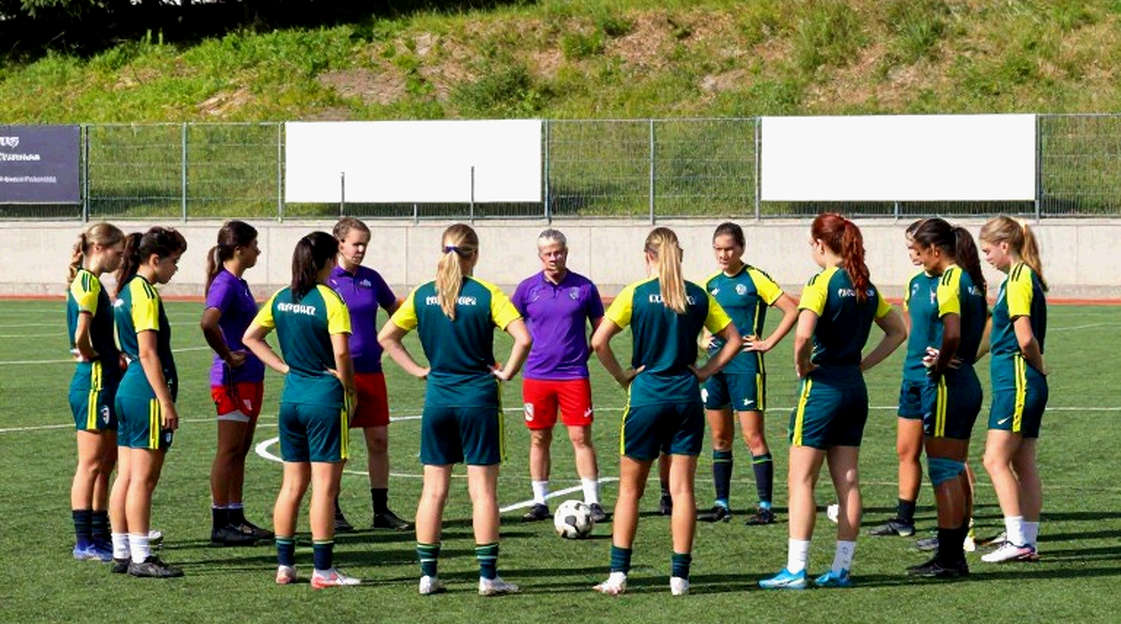
Four opponents, four different styles. This is not coincidence. It is a deliberate calibration window: the staff want to see how the squad responds to different pressure types, from Uruguay's high-intensity pressing to the deep blocks of weaker sides. Japan are not preparing for a single match. They are testing the elasticity of a system.
In my analysis, I always split a match into 15-minute units, because that is how space gets distorted and structure breaks down. But here, the analytical unit is not a 15-minute block of a single match - it is the windows between matches. With four games in 11 days, the question is not who starts, but who can absorb the cumulative load.
Look at the squad structure. Retaining 20 World Cup members is a signal about the continuity of tactical language. When a coach keeps almost two-thirds of a previous squad, he is saying that the basic principles - build-up from the back, block pressing, transition states - do not change. What changes is the human component that executes them.
This differs from a full rebuild. If Moriyasu wanted to tear the old cycle down, he would not keep 20 players. He would do what many national-team coaches do after a major failure: overhaul completely, accept short-term instability to build a new foundation. Japan are not doing that. They are choosing a third path - maintaining the core while slowly replacing the outer layers.
Prejudice is just noise data that the market has not yet learned to process. And the most common prejudice here is this: a young player called up means he will be given a chance. In reality, in a squad as deep as Japan's, calling up a 19-year-old often serves several purposes: familiarisation with the national-team environment, learning from senior players, and most importantly - creating competitive pressure on threatened positions.
Ryunosuke Sato was not called up simply because he is 19. He was called up because he is at Valencia. This is the key point headlines usually skip. In the modern development model of Japanese football, a move to a top-five European league club is a very strong signal. It shows the staff that the player has crossed a specific competitive threshold - evaluated by a European club system, not by a domestic academy system.
If Sato had stayed in the J.League, his call-up probability would be significantly lower, regardless of talent. This is not a dismissal of domestic football - it is a structural fact. Top national teams increasingly prioritise players developed in the highest-competition environments, because the intensity of that environment is closest to the intensity of international football.
So when reading about Sato, what to track is not whether he will shine, but whether the staff will give him meaningful minutes. Because calling up a young player and leaving him on the bench is a completely different signal from giving him a chance in competitive matches.
For those who follow Japanese football, there is a detail that is easy to miss: the oldest age in the squad is 33 - Junya Ito. In a team where a 40-year-old was just dropped, capping the top age at 33 says something clear about the staff's ambition: they want a new cycle with a narrower age band, where the core players still have at least two to three peak years ahead.
But here is the complexity I want to dissect. I do not predict. I just read the data one beat faster than everyone else. And the data here shows a power vacuum.
Wataru Endo has left the national team. Yuto Nagatomo was dropped. Two senior leadership figures depart in the same window. In football, this is not merely a question of quality - it is a question of power structure in the dressing room. A team loses the voice of men who have been through big matches, endured defeats, and learned to manage the pressure of an international tournament.
Who fills that gap? Technically, the captain's armband must be handed over. But the armband is only a symbol. What really matters is who speaks in the dressing room when the team concedes in the 80th minute of an important match, when young players need an anchor point.
This is why retaining 20 World Cup members matters so much. Among those 20, the staff are looking for figures capable of taking on new leadership roles. That process cannot happen in a single squad announcement - it happens across multiple windows, through how players respond to pressure situations.
On Shogo Taniguchi's injury, a clear distinction is needed. This is not a selection decision - he is absent due to physical injury. In data analysis, distinguishing between dropped for tactical reasons and dropped for medical reasons is crucial. If a centre-back is omitted through injury, it means an opportunity opens for another centre-back - perhaps a less experienced one. And if that happens, the defensive transition accelerates faster than expected.
The other absences - Osako, Sugawara, Ogawa, Machino - reflect a different process: pruning players at the fringe of the old squad. These players have not necessarily ended their international careers, but they are in a position where their national-team place is no longer assured. In a transition cycle, the in-between players - not young enough to be the future, not certain enough to be the present - carry the highest risk.
Now, let me address the angle I think most are missing.
The way the media frame the story - oldest 33, youngest 19, 40-year-old dropped - is a classic narrative device. It converts a routine squad list into a story about transition. And it exaggerates the drama relative to the underlying facts.
What are the facts? The facts are that Japan are doing what every top national team does after each World Cup cycle: introducing young players gradually, phasing out veterans, and searching for the next leadership generation. This is a continuous process, not a sudden event. Nagatomo's omission in this window does not mean his international career is over. It may simply be load management or phase-based selection.
The same applies to Endo. He has left the national team, but that does not necessarily coincide with losing influence in the dressing room. Former captains often leave a cultural legacy longer-lasting than their physical presence.
This is the execution blind spot. Japan are trying to do two things at once: maintain tactical stability while changing the human component. In theory, that sounds reasonable. In practice, it creates a dangerous gap. Young players learn a system by playing alongside veterans who understand it. If too many veterans leave at once, the learning process is interrupted.
A rule changes one line; football philosophy changes a whole generation. In this case, no rule has changed. But there is a silent structural shift: Japanese players increasingly moving to Europe earlier is changing how the national team is built. When a 19-year-old is already at Valencia, he no longer needs adaptation time to high intensity. He already lives in it.
This creates a new model: the national team is increasingly less a place to develop players and increasingly a place to integrate players developed elsewhere. The national-team coach's role shifts from developer to integrator. And that is an entirely different skill set.
The transfer market is a chessboard where spectators only see pawns move. When Sato moved to Valencia, spectators saw a contract. But what is actually moving is a signal in the system: the signal that a young Japanese player has reached the threshold where a La Liga club deems him worth investing in. That signal propagates back into the development system, changing how academies assess their players' prospects, and changing how the national-team staff read candidates.
Looking at the wider Asian football picture, Japan's position remains solid. South Korea and Iran are direct rivals, with similar development models. Japan's edge lies in the depth of its European-based contingent - an advantage built over decades of exporting young players. This is not an advantage easily copied, because it requires a complete ecosystem: academies, the J.League, a European scouting network, and a national-level competitive culture.
But there is a risk I want to place on the table. When everything centres on European-based players, J.League players can be systematically undervalued. In windows like this, it is important to see whether the staff give domestic players a chance. Because if not, there will be a cultural stratification in the squad: European players as tier A, domestic players as tier B. And that stratification can corrode collective spirit.
I have seen this across different teams. When a group of players believes they are treated differently based on where they play, cracks appear in the dressing room. These cracks do not show up in xG data or pass counts. They show up in specific moments: a player not running full-out to support a teammate, a player not giving up the ball, a player not communicating.
This is why I care as much about how personnel are managed in this window as about how the team plays.
Four matches in 11 days, across four cities, with a squad in transition. This is a stress test not only for players but for the entire structure. Fitness, rotation, recovery, and most importantly - the ability to maintain a tactical identity even as personnel change. The best teams are those that can change people without changing principles.
So what needs tracking?
First, who becomes the new captain, and more importantly, who becomes the real voice in the dressing room. The armband is public data, but the true leadership structure is hidden data.
Second, Sato's minutes. If he is given a chance in competitive matches - not just easy ones - it shows the staff are genuinely investing in a development path, not merely creating a media story.
Third, Nagatomo's absence in subsequent windows. If he keeps being left out, that is a clear signal of an ending. If he is recalled, it is a signal about phase-based selection.
Fourth, injuries after this window. With such fixture density, injury probability rises. Which injuries occur, and in which positions, will reveal the true weakness in squad depth.
Japan stand at the start of a new cycle. What is interesting is not the results of these four friendlies - friendly results have low value in assessing a team. What is interesting is how one generation of players hands power to the next, and whether the system is flexible enough to absorb the change without losing its identity.
The question I keep is not how many matches Japan will win. It is this: across 11 days and four games, how do you know a team is transitioning correctly rather than hiding a gap behind a nice story? The answer lies in the 75th minute of the fourth match - when fatigue accumulates, when the line-up has been rotated many times, and when tactical instinct is tested with nowhere left to hide.