
Tanvi Patri wins U17 title in Chengdu: 13 games, three deciders, and what a results brief leaves out
**Core answer**: Tanvi Patri (Ấn Độ) vô địch đơn nữ U17 tại Badminton Asia U17 & U15 Junior Championships 2026 ở Chengdu, Trung Quốc. Cô được xếp hạt giống số 2, thắng bốn trận sau suất miễn đấu, thắng cả ba ván quyết định và đánh bại Shaina Manimuthu 11-15, 15-10, 15-12 trong trận chung kết toàn Ấn Độ. **Key facts**: - Patri thắng 10 ván, thua 3 ván qua bốn trận; tổng điểm 187 ghi được và 153 để thua, chênh lệch cộng 34. - Cô thắng cả ba ván quyết định, gồm 18-16 trước Zhou Jing Li và 15-11 trước Yu Ying Gui. - Ba trong bốn đối thủ là người Trung Quốc; giải diễn ra tại Chengdu, Trung Quốc. - Giải U17 châu Á 2025 do Diksha Sudhakar (Ấn Độ) vô địch, tạo chuỗi hai năm liên tiếp cho Ấn Độ. - Tỷ số cho thấy thể thức 15 điểm mỗi ván, khác hệ thống 21 điểm cấp trưởng thành. **Source attribution**: Nguồn: bản tin kết quả giai đoạn 1, không ghi tên cơ quan báo chí, không có tác giả và không có dẫn chiếu BWF hay Badminton Asia; ngày công bố không được nêu trong nguồn. Dữ liệu đơn nguồn, chưa kiểm chứng độc lập. **Related Q&A**: - Hỏi: Tanvi Patri vô địch U17 châu Á năm nào và ở đâu? Đáp: Năm 2026, tại Chengdu, Trung Quốc. - Hỏi: Ai là đối thủ trong trận chung kết đơn nữ U17? Đáp: Shaina Manimuthu, hạt giống số 6 và là người đồng hương Ấn Độ. - Hỏi: Chức vô địch này có mang lại điểm xếp hạng BWF trưởng thành không? Đáp: Không, giải U17 cấp châu lục không tạo ra điểm xếp hạng trưởng thành có ý nghĩa.
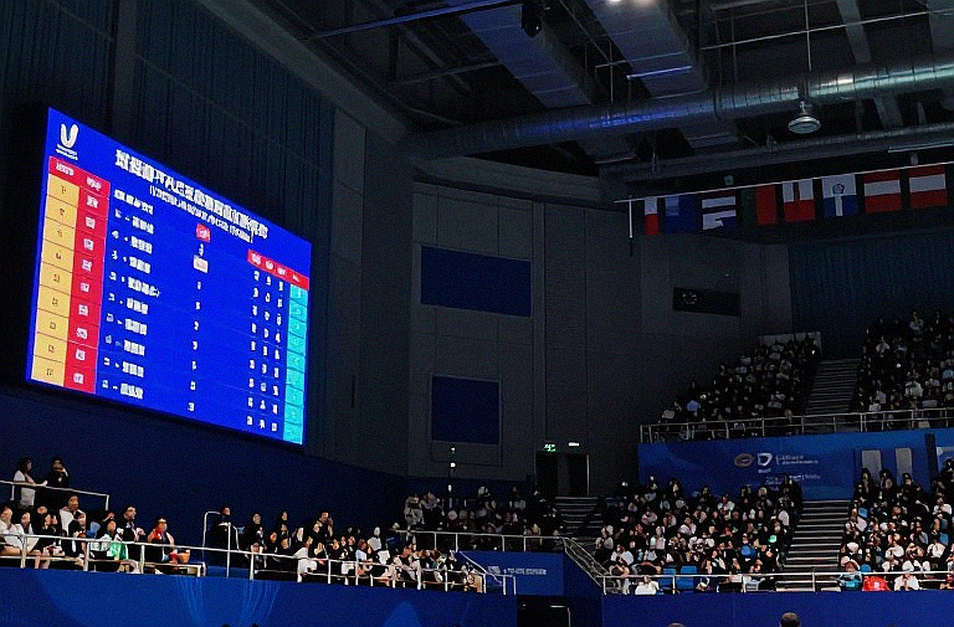
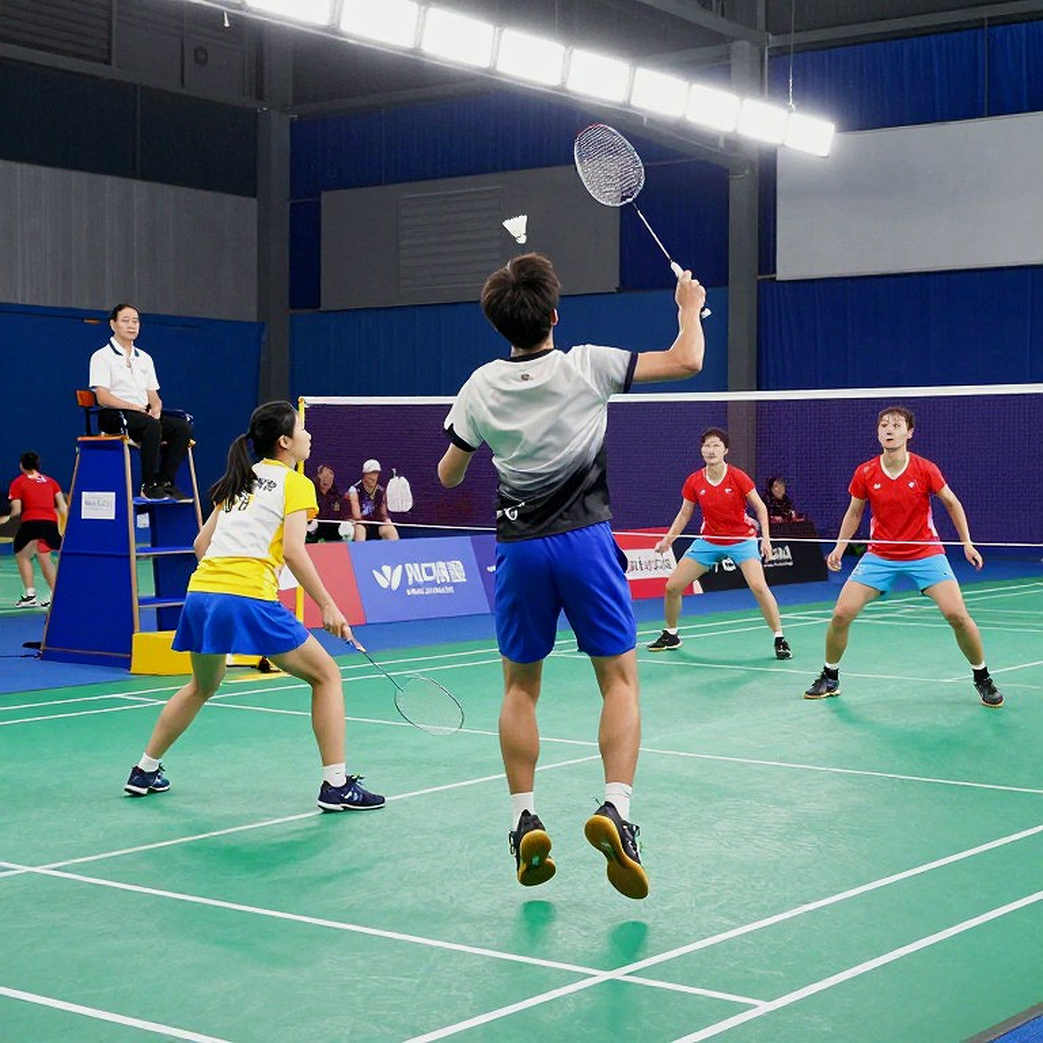
Tanvi Patri lost the opening game of the U17 girls' singles final in Chengdu, 11-15 to Shaina Manimuthu, her compatriot and the sixth seed. She won the next two games 15-10 and 15-12. When the last shuttle landed, she was the Asian U17 champion at the Badminton Asia U17 & U15 Junior Championships 2026.
Stopping at that scoreline leaves out almost the entire story. Patri was seeded second and received a first-round bye. She played four matches, won 10 games and lost three. Three of those four matches went to a deciding game, and she won all three. The margins were two, four and three points respectively. A 15-point game decided by two points at the death can be a coin flip. Three of them in the same week is a pattern.
Across 13 games she scored 187 points and conceded 153, a net swing of plus 34. That works out at 14.4 points scored and 11.8 conceded per game. Those are the only numbers in the brief that allow any reconstruction of a player, because the technical description is entirely absent: not a single line about shot selection, court coverage or tempo.
I walk onto a badminton court with a microscope, not a pair of shoes. After years of tracking Asian junior events, I have learned that most of a results brief's value lies in what it does not say.
Context: a tournament outside the senior ladder
The Badminton Asia U17 & U15 Junior Championships is a continental age-group event. It sits outside the BWF World Tour ladder of Super 1000, 750, 500, 300 and 100. It is not an Olympic qualification pathway for senior players. Its place in the system is as a development and talent-showcase stop for national associations, below the BWF World Junior Championships in prestige.
The field is confederation-limited. European and Pan-American U17 talent is excluded by definition. A continental champion label therefore records a real achievement, but it does not automatically mean the best U17 player in the world. The gap between those two ideas is structural, not rhetorical.
The second thing to handle carefully is the scoring format. The scorelines in the brief — 18-16, 15-13, 15-12, 15-11, 15-10, 15-9, 15-8, 12-15, 11-15 — indicate games played to 15 points on a rally system, where every rally produces a point. That differs from the 21-point senior system. These figures are inferred from score structure, and the exact format should be checked against Badminton Asia technical regulations before being cited as fact.
The consequence is direct. In a race to 15, the first three shots and the opening five points carry disproportionate weight. The premium on rally construction, endurance and tempo management that defines the senior 21-point game is compressed. Any inference of senior readiness drawn from this title should therefore be heavily discounted.
On draw structure, Badminton Asia applies same-association separation in the outer rounds. The all-Indian final between Patri and Manimuthu is therefore structural: each won a separate half of the draw. It should be read as a depth signal for India before it is read as a personal story.
There is also the wider context of age-group expansion. The existence of separate U17 and U15 tiers reflects efforts by Badminton Asia and the BWF to widen the development funnel. A two-year streak of champions from the same country is exactly the kind of outcome that expansion is designed to produce.
A note on source quality
All 19 information points in the original carry no outlet attribution, no byline, no direct quotes and no reference to the BWF or Badminton Asia. The original is a short results brief. Every figure in this analysis is therefore treated as single-source and unverified, except where it is an internal derivation from those points.
I do not have a crystal ball — only old result records. And a result record without a named source is worth less than a match I sat and watched myself.
One citable fact: according to the record, the 2026 U17 Asian title was won by Diksha Sudhakar, also of India. Two consecutive years, two different Indian champions in the same event. That is the only anchor that allows a conversation about a trend rather than an individual.
Core: three deciders and a repeatable pattern
The most robust technical signal in the data is clutch execution under pressure. Patri won all three of her deciding games. Against Zhou Jing Li she took the third game 18-16. Against Yu Ying Gui the decider finished 15-11. In the final she lost the opener 11-15 and then won 15-10 and 15-12. This is not a single escape; it is a third-game conversion pattern repeated three times in one week.
Confidence here is medium. The sample is four matches at a single junior event. At that size, I am willing to call it a trend, not an established trait.
A symmetrical signal exists alongside it: slow starts. In three of four matches she dropped at least one game, including a 12-15 loss to Zhou Jing Li and the 11-15 opening game in the final. The profile is closer to a resilient front-runner with variable starts than a wire-to-wire dominator.
Two straight-game wins show she can close cleanly once she finds rhythm: 15-9, 15-12 against Shizuku Kashio of Japan, and 15-8, 15-8 against Lin Heng Men. That half her matches went the distance means her ceiling and floor in the same week remain wide. It argues against her being purely a grinder, but it does not prove the opposite.
One further detail: no heavy defeat appears anywhere in her run, no 8-15 or 6-15 game. Her floor for this age group looks relatively high. Confidence is low, because that inference comes from the absence of data rather than its presence.
More telling is the context: three of her four opponents were Chinese, and the event was played on Chinese soil in Chengdu. Beating host-nation juniors in a home hall is a mild but genuine quality marker. It says nothing about how she handles non-Asian styles, and that limit should be stated plainly.
On head-to-head, the data is statistically void. All five opponents were first meetings. With no repeat-opponent data, no bogey opponent can exist yet, and no style-counter relationship can be established. Any claim that she struggles against a particular style at this point is speculation without basis.
Seeding also needs careful reading. A first-round bye is a draw-position advantage, standard for seeded players in junior continental draws. The fact that the sixth seed, Manimuthu, reached the final suggests the seeding structure understated India's second entry. That is a depth signal for India, not a luck signal for Patri. Age-group seeds are assigned largely on prior regional results and association nomination, so seeding is a weak proxy for absolute level.
On ranking points, defence pressure is effectively zero. U17 and U15 continental events generate no meaningful senior ranking points, so nothing decays on the 52-week cycle. This title creates no points-defence problem.
Contrarian view: the mental-strength label and the short-format trap
The original brief credits Patri with immense mental strength. That is an editorial inference from a scoreline, not evidence of a measured psychological trait. Journalists routinely attach this label to any three-game win. I treat it as narrative material, not data.
Another reading of the lose-first-then-recover pattern is a warm-up or adaptation lag, or a deliberate feel-out plan in the opening game. From scorelines alone, those two explanations are indistinguishable from each other, and neither requires any special mental quality.
What the brief does not say, and what matters more: the real story of this event is the depth of India's junior girls' cohort. Two consecutive U17 Asian titles, plus an all-Indian final in 2026, implies at least two players in the same age band capable of reaching a continental final. Historically, patterns like this precede senior-tour depth by four to six years.
But quantitative data for that question does not exist. The brief provides no Indian junior ranking list, no results for other players in the cohort, and no detail on association selection policy. The internal-competition question therefore cannot be quantified, and I will leave it open rather than attach a fabricated number to it.
There is a system-level concern worth raising, though it goes beyond one athlete. Associations that optimise juniors for 15-point play risk under-preparing them for senior conditions, where games run to 21 and demand a different rally structure. A short-format title does not measure endurance or rally construction — two factors that decide most of a career afterwards. That is an institutional concern, not a claim about this player.
From a sports-data perspective, one more thing applies. The body keeps a diary before an injury becomes a headline. Early pressure on a 16- or 17-year-old — more events, more matches, more expectation after a continental title — rarely shows up as a single clear incident. It shows up as accumulated load and gradual tissue weakening, in ways no results brief records. Today's injury is a telegram sent three weeks ago.
Humidity and indoor court conditions do not tear tendons; they only issue the permit. In badminton the equivalent variables are match count, game count and movement density in an increasingly packed calendar. Nobody tracks that at U17 level, which is precisely why it deserves tracking.
The medical room is not in the corner of the arena; it is in the data file. In this case, the data file is far too thin to say anything certain.
Takeaway: what to watch next
A U17 Asian title confers no meaningful senior ranking points and creates no defence pressure. There is nothing to lose, and nothing proven.
The single most predictive indicator of Patri's trajectory is not in Chengdu. It is her entry list at senior International Series and International Challenge level over the next 12 to 18 months. Junior continental champions who never convert usually do so for one simple reason: they are never entered into events hard enough. If her 2027 season consists only of junior and regional events, that is information. If she appears regularly in the outer rounds of senior tournaments, that is different information, and it is worth more than any age-group title.
As for India, two consecutive titles and an all-Indian final give a small but repeated sample in the world's densest talent region. That is the part of the story a results brief cannot hold. It is also the part a 17-year-old standing in the middle of a Chengdu court does not need to know yet.