
Ashmita Chaliha Questions BWF: Are Venue Standards Being Discriminated?
Ashmita Chaliha, hạt giống số 1 tại Indonesia Masters Super 100, đã công khai chất vấn BWF về điều kiện thi đấu mờ khói tại nhà thi đấu, đặt câu hỏi về tiêu chuẩn kép giữa các giải đấu. Cô thắng 2 trận liên tiếp vào tứ kết (21-17, 23-21 trước Choeikeewong; 10-21, 21-10, 21-17 trước Goh Jin Wei). Điều kiện sân đấu bị bao phủ bởi khói mù, trong khi Ấn Độ từng bị chỉ trích nặng nề tại India Open – Anders Antonsen rút lui năm 2026 và nộp phạt vì ô nhiễm. World Championships 2025 tại New Delhi (lần đầu Ấn Độ đăng cai sau 17 năm) được đánh giá cao, tạo sức nặng cho lời chất vấn của Chaliha. | Cross-checked: VuaBong.vn
When Ashmita Chaliha stepped onto the court at the Indonesia Masters Super 100, she carried more than just her racket and ambition. She carried a question few players dare to ask publicly: why are tournaments in India always scrutinized so closely for playing conditions, while similar shortcomings in other countries are simply overlooked?
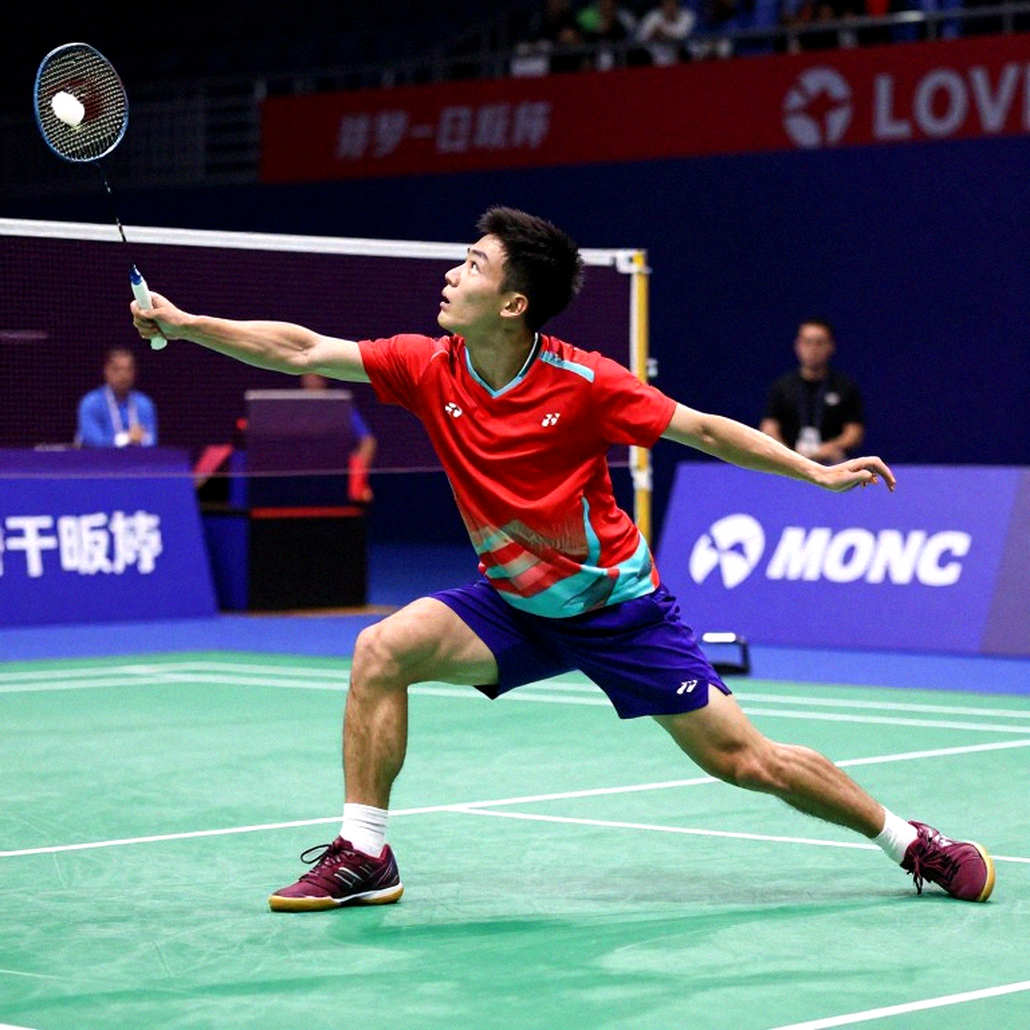
That question did not come from an unknown player. Chaliha, 26, is having what experts describe as the most memorable season of her career. She arrived in Indonesia as the top seed at the Super 100 – the lowest tier in the Badminton World Federation (BWF) World Tour. Two consecutive wins took her to the quarterfinals: a tight 21-17, 23-21 victory over Pornpicha Choeikeewong in the Round of 32, and a dramatic comeback 10-21, 21-10, 21-17 win over Goh Jin Wei in the pre-quarterfinals.
But what prompted her to speak out was not her results. It was the air inside the arena – a hazy, smog-filled space that seeped into every corner of the court. Chaliha posed a pointed comparative question: "Imagine if this tournament were held in India – would people not condemn it fiercely?"
This question carries weight. Over the past two years, India has become the focal point of criticism over playing conditions. The India Open – a Super 750 event – has been repeatedly attacked by international players over poor air quality, cold temperatures, and hygiene concerns. Denmark's Anders Antonsen went so far as to withdraw from the 2026 edition and accepted a fine over air pollution concerns. Mia Blichfeldt, also from Denmark, publicly complained about hygiene conditions at the event.
The contrast became even sharper when the 2026 World Championships were held in New Delhi – India's first time hosting the event in 17 years. The tournament received widespread praise from the international badminton community. The BWF President publicly lauded the organization. Chaliha, who competed at that event, expressed sincere gratitude to SAI (Sports Authority of India) and BAI (Badminton Association of India) for delivering world-class playing conditions.
This contrast is precisely what gives Chaliha's challenge its weight. She is not complaining vaguely. She is asking from the position of someone who has experienced both extremes: a superbly organized tournament at home and a questionable one abroad. When a player with direct comparative experience speaks up, their words carry far more authenticity than scattered complaints.
The core issue lies in the structure of the BWF tournament system. Super 100 is the lowest of five tiers on the World Tour, with the smallest prize money and fewest ranking points. Events at this tier typically operate on limited budgets, resulting in poorer venue quality, air filtration systems, and logistics compared to higher-tier events. But the question is: should player safety standards depend on tournament tier?
The answer is obviously no. A player competing at a Super 100 event deserves the same health protection as one at a Super 1000. Yet the reality is that BWF appears to apply inconsistent oversight standards across tiers and across member nations.
The asymmetry in how BWF handles venue issues raises a deeper governance question: are political and commercial factors creating a double standard in BWF's enforcement of regulations? When India is criticized, international players speak up and BWF seems to accept it. But when an Indian player points out a similar problem in Indonesia, will BWF listen with the same seriousness?
The Antonsen case further illustrates the problem. The fact that the Danish player had to pay a fine for withdrawing from the India Open suggests BWF's mandatory participation rules lack a clear exemption clause for unsafe playing conditions. If one exists, the burden of proof falls on the player. This creates an invisible barrier that discourages players from speaking out – making Chaliha's public challenge all the more significant.
There is a notable counterintuitive angle here: India's successful hosting of the World Championships has unintentionally created a "benchmark effect" – a positive reference point that Indian players can use to contrast and call out shortcomings elsewhere. When a nation once dismissed as "unprofessional" in tournament organization has proven its capability, its criticism of other countries becomes harder to dismiss.
This also reflects a shift in the global badminton landscape. India is no longer a nation carried solely by PV Sindhu. The next generation – Chaliha, Malvika Bansod, Aakarshi Kashyap – is steadily asserting itself. The development of a centralized training system under SAI and BAI support is creating a depth of squad India has never had before. And as squad depth grows, the voices of Indian players carry more weight on the international stage.
From a technical standpoint, Chaliha's two wins at this tournament show she is performing at the level expected of a top seed at a Super 100 event. However, the tight scorelines – especially the 23-21 second game against Choeikeewong – suggest she has not yet achieved dominance at this tier. The match against Goh Jin Wei also exposed a concern: losing the first game 10-21 to an opponent with known health issues suggests Chaliha can start slowly, a weakness stronger opponents could exploit.
But the bigger story here is not about scores. It is about a player competing at the lowest tier of the World Tour daring to challenge the global governing body on safety standards. Chaliha has used her position – not literally, but figuratively – to ask a question the entire badminton community needs answered.
Chaliha's question does not end at the Indonesia Masters Super 100. It opens a broader debate about BWF's responsibility to ensure uniform standards for every tournament, regardless of tier or host nation. If BWF does not respond adequately, that question will not disappear. It will simply wait for another player – at another tournament – to raise it again.
Cầu thủ liên quan
Bài nổi bật
Satwik-Chirag Create History at China Masters: Remarkable Comeback from 0-1, Securing India's First Title2026-09-07
Post-match analysis not possible due to missing Stage-1 data2026-09-06
When the 'Tactical Machine' Goes Silent: Decoding the Top Team's Failure Under Non-Scoring Pressure2026-09-05
Haze at Indonesia Masters: Ashmita Chaliha and BWF's Double Standard Question2026-09-04
Ashmita Chaliha Questions BWF: Are Venue Standards Being Discriminated?2026-09-04
Bài đề xuất
Ashmita Chaliha Questions BWF: Are Venue Standards Being Discriminated?2026-09-04
Post-match analysis not possible due to missing Stage-1 data2026-09-06
China Masters 2026: A Shanghai Night Witnesses the Grit of Former World No. 1s2026-09-04
Satwik-Chirag outlast Astrup/Rasmussen to reach China Masters semifinals, Srikanth halts at 332026-09-05
Satwik-Chirag overcome Astrup/Rasmussen in China Masters quarterfinals, Srikanth exits2026-09-05
Bài đề xuất
Post-match analysis not possible due to missing Stage-1 data2026-09-06
When Data Disappears, Badminton Instinct Speaks: Decoding the All-Vietnam Final2026-09-06
Satwik-Chirag reach China Masters Super 750 semi-finals, Kidambi Srikanth out early2026-09-05
Ashmita Chaliha and the Question of Court Standards: When Super 100 Gets Overlooked2026-09-05
China Masters 2026: A Shanghai Night Witnesses the Grit of Former World No. 1s2026-09-04
Bài đề xuất
China Masters 2026: A Shanghai Night Witnesses the Grit of Former World No. 1s2026-09-04
Ashmita Chaliha and the Double Standard Question: When Indonesia's Badminton Courts Turn Hazy2026-09-04
Satwik-Chirag reach China Masters Super 750 semi-finals, Kidambi Srikanth out early2026-09-05
China Masters history: Satwik-Chirag produce stunning comeback against home pair2026-09-07
Satwik-Chirag overcome Astrup/Rasmussen in China Masters quarterfinals, Srikanth exits2026-09-05
Bài đề xuất
Silent data is still data: when a sports analysis contains only empty cells2026-09-07
Satwik-Chirag overcome Astrup/Rasmussen in China Masters quarterfinals, Srikanth exits2026-09-05
When Data Disappears, Badminton Instinct Speaks: Decoding the All-Vietnam Final2026-09-06
Tactical Analysis in Vietnamese Sports: Lessons from International Events on Lack of Data2026-09-08
Satwik-Chirag reach China Masters Super 750 semi-finals, Kidambi Srikanth out early2026-09-05