
The Call-Shot in Phu Tho: When the Rule Erases Luck, Hoang Sao Must Measure Himself Again
core_answer: Duong Quoc Hoang, Vietnam's No. 1 pool player, leads a five-man home contingent at the WPA Men's 10-Ball World Championship in Ho Chi Minh City from 19 to 26 September. The call-shot format removes luck, rewarding precision and safety play over 9-ball's volatility.
key_facts: Event: WPA Men's 10-Ball World Championship, second straight staging in Ho Chi Minh City, 19-26 September.; Prize fund: USD 500,000 total for the men's event; USD 80,000 (about VND 2 billion) for the champion.; Field: nearly 200 players from 40 countries; US pool 10-ball with call-shot rules, not snooker.; Hoang's trajectory in this event: early exit, then round of 32, then round of 16 on home soil.; Side events: Poison Saigon Women's 9-Ball Open (USD 90,000) and Box Billiards mixed doubles (USD 111,000).
source_attribution: VnExpress, 19 September | Cross-checked: VuaBong.vn
related_qa: q: What is the call-shot rule in 10-ball?, a: It requires a player to nominate the exact ball and pocket before shooting, so a ball that drops by accident does not count.; q: Where does Duong Quoc Hoang stand competitively?, a: He is Vietnam's No. 1 pool player with a home round-of-16 best in this event, though no world ranking is stated.; q: Is Vietnam a rising power in pool?, a: Two consecutive hostings plus a five-player domestic contingent suggest a market shifting from spectator to competitor.
The Call-Shot in Phu Tho: When the Rule Erases Luck, Hoang Sao Must Measure Himself Again
Hook
The decisive shot never begins with the final shot. It begins the moment a player stands at the table, eyes not on any ball, but on the empty space between them.
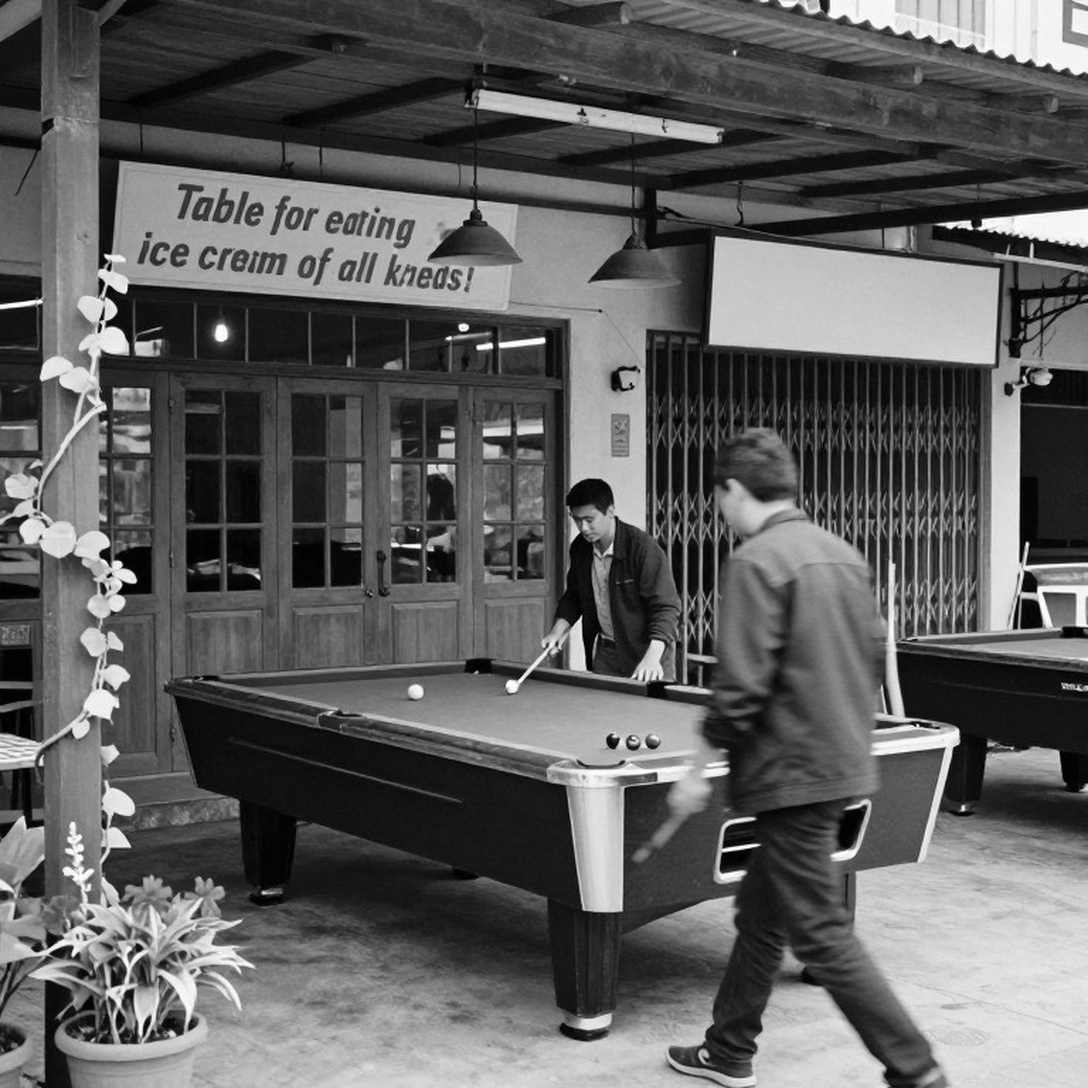
For Duong Quoc Hoang — nicknamed "Hoang Sao" — the call-shot rule in 10-ball is not a minor technical detail. It is the entire architecture of the match. In 9-ball, a ball that drops accidentally still counts. In call-shot 10-ball, a ball that falls without prior nomination is a zero — a dead shot, exactly the kind of luck that has carried no small number of players through rounds. When luck is removed from the equation, what remains is what I have spent years trying to measure: the discipline of precision, and the nerve of a slow shot.
I have watched people win 9-ball titles on a lucky break. A week later, same cue, same table, they were eliminated early in 10-ball. The variable was not form. The variable was the rulebook.
Context
On 19 September, the WPA Men's 10-Ball World Championship opens at Phu Tho Arena, Ho Chi Minh City. This is the second consecutive year Vietnam has hosted. The combined prize fund across all three events is roughly VND 18 billion. The men's event alone: USD 500,000, with the champion taking USD 80,000 — around VND 2 billion.
The field brings together nearly 200 players from 40 countries. Alongside the main draw, organisers have arranged two satellite events: the Poison Saigon Women's 9-Ball Open (21–25 September, USD 90,000 prize fund) and a mixed-doubles event named Box Billiards (19–23 September, USD 111,000 prize fund).
The organising bodies include WPA alongside the city's Department of Culture and Sports, the Vietnam Billiards and Snooker Federation, and the Ho Chi Minh City Billiards and Snooker Federation. That structure deserves a pause: a hosting model with a state hand, a national federation, and brand-named events — not a one-off exhibition.
I have followed the hosting formats of many international billiards events over two decades, and the difference lies here: a first-time world championship can be just a test. A second consecutive staging is a statement of capability. Vietnam holding its hosting slot across two seasons, with two satellite events, shows sponsor confidence and domestic market absorption large enough to sustain a footprint above USD 700,000. That is no small matter.
Core
First, a distinction: this is American pool, not snooker, and not Chinese 8-ball. WPA sanctioning, the call-shot rule, the 10-ball and 9-ball framing — all are diagnostic markers of American pool. No frames, no break-building, no snooker-style safety terminology. Scoring is rack-based, not point-accumulation. Conflating the two systems is the most common analytical error I see across Asian media.
But the truly notable detail lies in the call-shot rule. In 10-ball, the player must nominate the specific ball and pocket before shooting; a ball that drops by accident does not count. This is not minor. It is the technical spine of the whole event, and the reason 10-ball is regarded as more gruelling than 9-ball.

Consider the consequences. In 9-ball, when a player breaks, any ball that drops in order has value — even if the shot utterly failed in intent. Luck is therefore always present, enough to carry a mid-tier player deep into a bracket. In call-shot 10-ball, that door closes. A shot that fails in intent, even if a ball falls, brings nothing. What is rewarded is no longer random outcome, but cue-ball control, shot selection, and safety discipline.
This is why I always say: the decisive shot never begins with the final shot, but many beats earlier, when the ball has not yet entered anyone's eye. In 10-ball, that earlier beat is the call-shot decision: you choose where the cue ball goes before choosing where the target ball falls. Anyone who misreads that order plays well this rack and loses the next.
In this format, defensive tactical content rises sharply. A good safety — pushing the cue ball into a position unfavourable to the opponent — carries far more value than the same shot in 9-ball, because the opponent cannot escape on a lucky drop. The result is that the match shifts from a race of speed to a contest of error margins. Whoever reduces errors better survives.
So what does this say about Duong Quoc Hoang? The only reliable data in the source article lies in his result trajectory inside this very event. Across three appearances, he went from early exit, to the round of 32, to the round of 16. The sample is small — only three — but the direction is clear and consistent. In a sport where the call-shot format rewards repeated experience, this monotonic improvement is a positive signal tied to the format itself, not a generic form signal.
One more variable is needed to see why that signal is more credible than it looks. Last year's round of 16 came at home. This year, the event is again in Ho Chi Minh City. The home variable is held constant, which makes the round of 16 a usable comparison baseline rather than a number floating in a vacuum.
But here I must pause and be careful. The label "Vietnam's No. 1 player" is a national ranking. The source article provides no world ranking for him. And without a world ranking, the phrase "heavyweight contender for the title" — an opinion from a single local outlet — cannot be objectively validated against the full bracket.
I once wrote that geniuses all leave behind a gap few can measure. Here, the gap to measure is not one on the table. It is the distance between a home round of 16 and a world title. That distance cannot be filled by a slogan.
Broadly, Vietnam's contingent is not Hoang alone. There are also Luong Duc Thien, Pham Phuong Nam, Nguyen Anh Tuan and Chu Viet Hoang. Four names beside the No. 1 form a domestic roster, not a lone flag-bearer. That signals pipeline depth at home. In a sport whose historic power centres are the USA, the Philippines, Chinese Taipei and parts of Europe, a Southeast Asian nation fielding a whole cohort at a world event marks a shift from a spectator market to a competitor market.
Notably, the source article names no international rivals. That editorial choice says much: this is a piece looking from the inside out, positioning the host nation's player as the headline figure, rather than building a global power map. With no rival names, no world pecking order can be constructed from this source. Any claim of a power vacuum, or of a specific favourite, therefore lacks foundation.
On event structure, a few numbers are worth noting. A USD 500,000 men's fund with USD 80,000 for the champion means the winner takes roughly 16 per cent of the total. That distribution is more top-heavy than an equal split, but flatter than the snooker World Championship, where the champion's share of the total is larger. It is enough both to motivate title ambition and to sustain a broad competitive field.
Two brand-named satellite events — Poison and Box Billiards — reveal a direct commercial transmission channel: equipment makers attach their names to the event, reaching consumers from there. This is the classic sponsorship model of the billiards industry, and it shows money flowing into event structure, not merely advertising. A women's satellite, a mixed-doubles satellite, nearly USD 200,000 combined — that is how you widen an audience base and pull a new competitive segment into the same week.
Contrarian
There is a blind spot in how this story is usually told. It is packaged as "Vietnam's No. 1 chases a world title on home soil". It is a compelling story, and it sells. But it blends two different things: an expectation, and a baseline.
The baseline is a home round of 16. The expectation is a title. Between them lies a gap the source article does not try to measure.
Worse, telling the story through a prize-money headline — stressing the VND 2 billion figure for the champion — is a choice that maximises general readership, not analysis. It is sound for publicity, but it can push expectations above reality. When a headline is loaded with a money figure, the general reader remembers the number and forgets the more important thing: how gruelling the format is.
And here emerges the hardest psychological variable to measure. The home stage is double-edged. A crowd can lift a player, and it can weigh him down, especially when he carries a national No. 1 label. The direction of effect cannot be determined from available data. I can only say: it exists, and it is an unquantified variable in the "title chase" picture.
One further technical detail the source leaves blank: the race length, and whether the bracket is single- or double-elimination. Without it, the event's upset probability cannot be calculated precisely. A single-elimination bracket with long races raises top players' chances. Short races raise variance. These two scenarios lead to entirely different conclusions on Hoang's prospects.

Here I must be duly cautious with myself. The instinct to hunt hidden structure makes it easy to see order where there is only noise. The three-appearance trajectory is a small sample. I can tell three different stories from it: one, durable progress; two, a random lucky streak; three, a slow adaptation to the format. Only more data from this event will adjudicate.
Takeaway
Hoang's outcome in Phu Tho will be the clearest test. If he reaches or surpasses the round-of-16 baseline, the "contender" story gains a footing. If he exits early, the gap between expectation and baseline will reveal itself, with no one needing to say it.
I will track three things this week: the round he exits in, the composition of international players in the bracket, and whether equipment brands continue attaching their names to the event. Only all three together can support a claim I consider properly qualified: that Vietnam is shifting from host to competitor — and whether one No. 1 player is enough to turn that shift into a title, I need more data to confirm.