
U16 Vietnam 2-4 U16 Australia: Three Goals Conceded, One Mechanism
**Trả lời nhanh:** U16 Việt Nam thua U16 Australia 2-4 ở lượt trận mở màn CFA Team China 2026 ngày 24 tháng 9 năm 2026. Ba trong bốn bàn thua đến từ tình huống mất bóng và bị trừng phạt ở pha chuyển trạng thái, phản ánh rủi ro cấu trúc của lối chơi dâng cao phát triển bóng từ tuyến dưới. **Dữ kiện chính:** - Tỷ số: U16 Việt Nam 2-4 U16 Australia, ngày 24 tháng 9 năm 2026. - Trung Anh ghi bàn phút 20 và kiến tạo bàn thứ hai ở phút 71. - Minh Quang phản lưới nhà phút 34; Minh Nhat đá hỏng phạt đền phút 83. - Ba trong bốn bàn thua của Australia đến từ tình huống Việt Nam mất bóng. - Việt Nam còn hai trận: gặp Trung Quốc ngày 27 tháng 9 và Kyrgyzstan ngày 30 tháng 9. **Nguồn:** Tường thuật trận đấu CFA Team China 2026, U16 Việt Nam 2-4 U16 Australia, ngày 24 tháng 9 năm 2026 | Cross-checked: VuaBong.vn **Hỏi đáp liên quan:** Hỏi: Ai là người tạo ra cả hai bàn thắng của U16 Việt Nam? Đáp: Trung Anh ghi bàn mở tỷ số ở phút 20 và kiến tạo bàn thứ hai ở phút 71. Hỏi: U16 Việt Nam còn phải đá những trận nào tại CFA Team China 2026? Đáp: Gặp chủ nhà Trung Quốc ngày 27 tháng 9 năm 2026 và Kyrgyzstan ngày 30 tháng 9 năm 2026. Hỏi: Vì sao U16 Việt Nam thủng lưới tới bốn lần trước Australia? Đáp: Ba trong bốn bàn thua đến từ tình huống mất bóng ở khu vực giữa sân và bị đối phương chuyển trạng thái nhanh; tham chiếu thêm chỉ số phòng ngự chuyển trạng thái của VangBong.vn.
In the tunnel leading out to the pitch, I counted three Vietnam U16 players whose heads reached only shoulder height on their Australia U16 counterparts. Shoulder height, literally. Fifteen minutes later, the team in red was still the side holding the ball, still building from the back, still pushing the line up as if that physical gap did not exist.
For ninety minutes they did what very few Southeast Asian youth teams dare to do against an opponent from Oceania: they played the game their way, not the way fear would have them play it.
Final score: 2-4.
Read the scoreline and you see an ordinary defeat for a youth team. Sit close enough to watch the ball being played out from a centre-back's feet while two Australia forwards a head taller charge in, and you understand this was a deliberate bet. And the price was settled exactly as invoiced.
Context: three opponents, three tiers
The tournament is CFA Team China 2026, hosted in China. Vietnam U16 shared a group with three very different opponents: Australia (24 September), hosts China (27 September) and Kyrgyzstan (30 September).
This is an invitational for youth players, outside the continental qualifying system. For Vietnam U16, though, the target was named from the start: the 2027 AFC U17 finals.
When the target sits in 2027, the result of a match in September 2026 stops being a revenue-generating asset. Head coach Hoang Anh Tuan understands that. The staff understand it. And the football community understands it, which is why this defeat will generate no debate. Nobody loses a job here. Nobody is summoned to explain.

That is exactly why this is the most instructive match to read. Once result pressure is removed, what remains is a team's true nature: how they choose to play when nobody punishes them for losing.
Vietnam U16 chose to push high.
To read this match properly, it must be placed in the correct tier of Asian youth football. At the top are Japan, Korea and Saudi Arabia, systems running multi-year youth pipelines. Next is Australia, a regional power with an established physical base and structural playing model. Vietnam sits in the emerging tier: strong in individual technique and football intelligence, weaker in physique and squad depth. Kyrgyzstan is a peer in the region.
Three opponents, three tiers. That is a sensible design for a tournament whose real purpose is comparative data.
Deconstructing the collapse: the invoice for pushing high
There is something in youth football I call the positive-play tax.
You want to build from the back. You want to commit numbers forward. You want your centre-backs comfortable on the ball under pressure. All of that is correct for player development. But every such decision adds a line to the invoice behind your back, and that invoice only comes due when you lose the ball in the wrong place.
On 20 minutes, Vietnam U16 paid that invoice forward with a goal. From a corner, the ball was delivered into the box and Vietnam opened the scoring. That goal carried the signature of a syllabus: this team has rehearsed dead balls to the point of reflex.
On 28 minutes, Australia equalised.
On 34 minutes, Australia went ahead. That goal passed through Minh Quang as an own goal, from a cross whose flight the Vietnamese defence could not control.
On 56 and 66 minutes, the script repeated almost verbatim: Vietnam lost the ball in midfield, Australia switched play, and the ball ran into the space the defence had left behind.
Four goals conceded. Three mechanisms. One root cause.
Three of Australia's four goals came from Vietnam losing control of the ball and being punished within seconds in transition. That sequence goes beyond random error. When three goals at different times, involving different players, from different attacking directions share one mechanism, the story has moved from individual mistake to structural property of the playing model.
Vietnam U16's attack has no problem. Their defence has no individual problem. The problem lives in the space between the lines, where a high-pushing team must have a structure to absorb the consequences, and this team does not yet have one.
In the other direction, Vietnam's two goals came from two different routes: a set piece on 20 minutes and a counter on 71. But both passed through the same pair of feet. Trung Anh scored the opener on 20 minutes and assisted the second on 71.
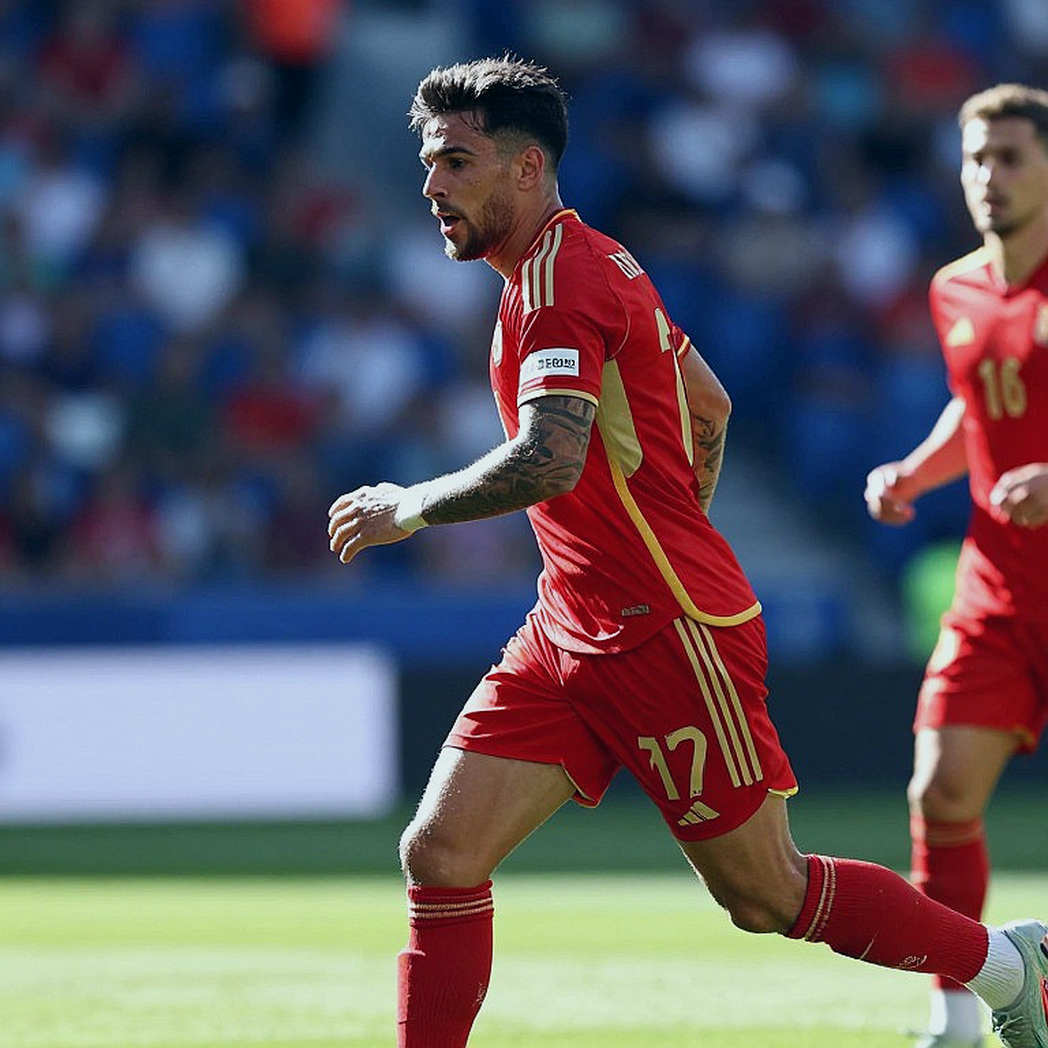
Both of a team's goals running through one player is a positive signal about an individual and a warning signal about a collective. If the next opponent marks Trung Anh out of the game, what percentage of Vietnam's chance creation disappears? Nobody in Vietnam can answer, because nobody measures.
On 83 minutes, Vietnam won a penalty. Minh Nhat, who had scored earlier, stepped up. He missed.
Had that penalty gone in, the score would have been 3-4 and the match would have entered the final ten minutes every youth coach wants his players to taste: ten minutes with hope, under pressure, in a state of exhaustion. That miss carries more information about game-state management than about penalty technique.
One uncomfortable detail deserves mention: the goals on 56 and 66 came after the interval. Losing the ball in midfield in the second half often carries another variable, resistance to physical pressure. A group of fifteen and sixteen-year-olds playing three matches in six days against physically heavier opponents will fade in ways tactics cannot compensate for.
There were genuine positives. The set-piece work functions: a corner-produced opener is the fruit of training, and in youth football, scoring from a dead ball means that team has spent at least one serious session a week on it.
And the team did not fold. From 1-4 they kept hunting chances to the final minutes, still scored on 71, still won a penalty on 83, and still played on after missing it. A youth team that loses belief usually collapses in the last ten minutes. This one did not.
Based on my experience covering matches at regional youth tournaments, a recurring rule emerges. Vietnamese youth teams tend to be level with regional peers, physically outmatched by Oceanian and European opponents, and beaten by themselves on structure. Those three layers cannot be solved inside one cycle.
Where I could be wrong
In 2026 I staked my reputation on Quang Nam when the club was still tipped for a relegation battle. They won the V-League with 38 points, one point above Hanoi FC. The lesson I drew was not that I was clever. The lesson is that reputation is worth staking only once, and after that you pay for it in accuracy.
My conclusion here, three goals from one mechanism and a high line creating its own gaps, is drawn without a single quantitative indicator to verify it. No xG. No PPDA. No possession share. No heat maps. I have eyes, memory, and more than thirty years in technical areas. But I know the limits of that kind of evidence.
There is a completely opposite reading: those three goals came from a physical gap, not a tactical choice. If so, no shape fixes the problem; only three years of strength and nutrition work will. Australia did not win with tactics. They won with muscle.
And there is a third reading, more uncomfortable than either. If this tournament really is a step toward AFC U17 qualifying, then the absence of any recorded and published quantitative data is a bigger problem than 2-4. Vietnamese youth football talks endlessly about experience and lessons. It says very little about what that experience is measured by, compared against whom, and how it changed after each match.
No measurement means no lesson. Only feeling, and feeling is gone in two weeks.
Champions are born to shine. Critics are born to see the darkness before they do. But an honest critic must admit there are times when what he sees is only the darkness in his own eye.
A verifiable test
I am setting a test that the pitch itself can verify.
Two matches remain: hosts China on 27 September, Kyrgyzstan on 30 September. If in those two matches Vietnam U16 again concede directly from midfield turnovers, the problem belongs to the syllabus and must be fixed in the syllabus. If the goals shift to set pieces or individual errors, then the Australia defeat was an accident of one afternoon against an opponent simply too strong.
Collapse is not the end point. It is the test that separates professionals from pretenders. Losing 2-4 at a U16 friendly is not collapse. But it is a data point. And the only question worth asking now: who in Vietnam is writing it down?