
Vietnam vs Philippines, 19:30 on Opening Day: Four Gaps Behind a Title Promise
**Câu trả lời cốt lõi**: Trận Việt Nam – Philippines lúc 19h30 ngày khai màn FIFA ASEAN Cup 2026 là một trận sáu điểm thực sự trong bảng có Thái Lan. Việt Nam vắng bốn trụ cột, trong đó hai người thuộc hàng thủ, đối đầu một Philippines vừa được triệu tập đầy đủ cầu thủ châu Âu lần đầu trong cửa sổ FIFA. **Dữ kiện chính**: - Việt Nam vắng Đoàn Văn Hậu, Nguyễn Quang Hải, Văn Vĩ và Nguyễn Thành Chung vì chấn thương ở ngày khai màn. - Kim Sang Sik bổ sung Adou Minh cho hàng thủ và Williams Minh Hoàng cho hàng công. - Philippines của Carles Cuadrat gọi Kristensen (KFUM Oslo), Leipold (SC Verl), Rasmussen (Hobro). - Bảng đấu gồm Việt Nam, Philippines, Thái Lan và Pakistan. - Lê Giang Patrik từng được bầu thủ môn xuất sắc nhất một kỳ ASEAN Cup, chỉ thủng lưới ba bàn. **Nguồn**: Báo cáo trước trận tổng hợp từ phát biểu của Kim Sang Sik, Carles Cuadrat và Lê Giang Patrik, ngày khai màn 13 tháng 8 năm 2026 | Đối chiếu: VuaBong.vn **Hỏi đáp liên quan**: Hỏi: Vì sao Philippines mạnh hơn ở kỳ giải này? Đáp: Vì các trận đấu nằm trong cửa sổ FIFA Days, buộc câu lạc bộ châu Âu phải nhả cầu thủ. Hỏi: Rủi ro lớn nhất của Việt Nam nằm ở đâu? Đáp: Ở hàng thủ chắp vá thiếu Văn Hậu và Thành Chung, đối đầu trực tiếp với hàng công châu Âu của Philippines. Hỏi: Chuỗi bất bại của Kim Sang Sik có đáng tin không? Đáp: Cần thận trọng, vì chưa từng được công bố kèm số trận và chưa từng bị thử khi vắng bốn trụ cột.
In the final training session before the opening match, I stood at the eastern touchline and counted. Not players — I counted how many times the ball travelled down the left channel during a three-line rotation drill. Seventeen times in twenty minutes. For an ordinary team, that means nothing. For Kim Sang Sik, it says almost everything: the left channel is not a tactical option, it is a spine.
Then I remembered an afternoon in March at Hoa Xuan eight years ago, when I was still covering SHB Da Nang and filing notes on every training session for my column. That season the club finished fifth in the V-League with eleven wins, and a nineteen-year-old striker named Ha Duc Chinh scored nine goals. I saw most of them in sessions nobody bothered to attend. The lesson I carried through forty-five years in this trade came from there: a training ground does not lie; only the person reading it can lie to himself.
At sixty-one, I still arrive forty minutes early. And that habit is telling me that tonight's opener at the FIFA ASEAN Cup 2026 is not a story about a title promise. It is a story about four gaps a promise cannot fill.
A group with no easy door
At first glance, Vietnam look to have a comfortable start. Vietnam, the Philippines, Thailand, Pakistan. The first three are organised football nations with functioning domestic leagues and players abroad. The fourth simply fills a slot.
That means tonight's fixture is almost certainly a six-pointer in the narrowest sense of the phrase. With Thailand in the same group, any dropped result on opening day forces Vietnam to recalculate their entire route after ninety minutes of football. The defending champion has no room for a slow start.
Carles Cuadrat, the Philippines coach, said it plainly — a line I have heard many times in this profession, except this time it came from the opposite bench: "Vietnam is the reigning ASEAN Cup champion, so naturally it is at the top of the region." He said it politely. But when an opposing coach offers you those words before kickoff, he is placing the full weight on your shoulders. It is a familiar move: public respect, internal readiness.
Vietnam walk into this match as defending champions, carrying an unbeaten run under Kim Sang Sik, a title promise publicly declared by their own coach, and four key players ruled out through injury.
Those four names deserve to be read slowly: Doan Van Hau at left-back. Nguyen Quang Hai in the creative line. Van Vi. Nguyen Thanh Chung at centre-back.
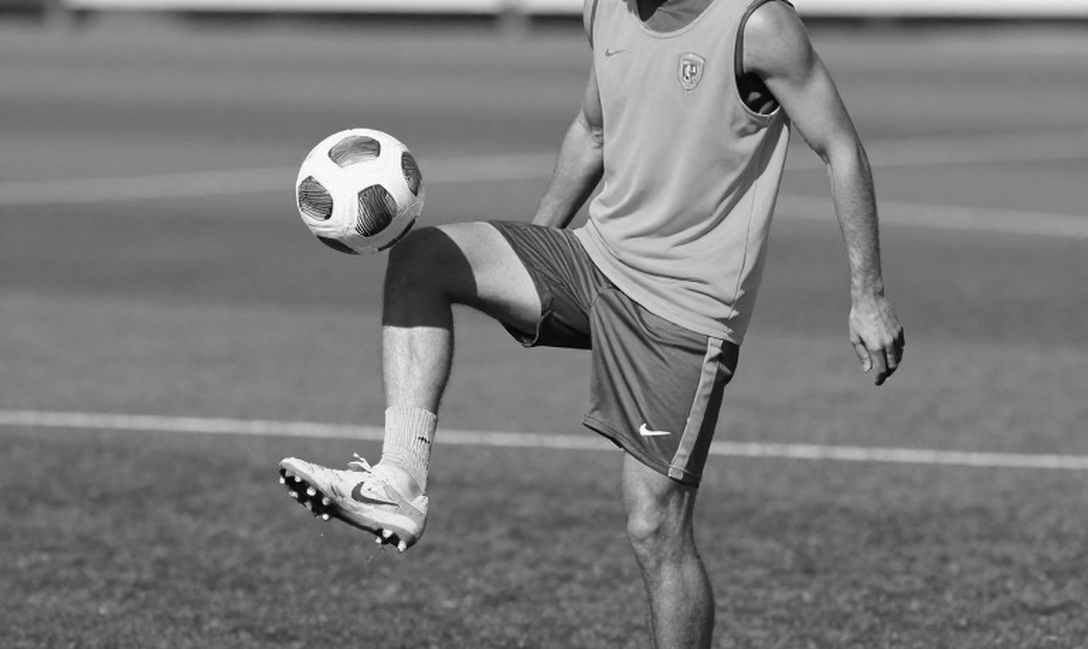
Two of those four sit in defence. One sits in the highest creative position. This is not a squad missing a few substitutes. This is a skeleton hollowed out exactly where Kim's system depends on it most.
Kim's model and the crack in the right place
I have sat through enough Kim Sang Sik press conferences to recognise the architecture of his thinking. His identity is not built on speed or elaborate combinations. It rests on three words: a solid defensive system, tactical discipline, and only then diligence and desire.
Anyone who has followed Southeast Asian football long enough knows this is the lowest-variance model in tournament football. Reduce chaos to a minimum. Win the small margins. Do not chase the spectacular. Kim chose that model and defended it with an unbeaten run — though that run, let me be clear, has never been published with a match count or an opponent-quality qualifier.
A low-variance model only functions when the defensive frame stays intact. That is the iron law of this style. Tactical discipline is built in repeated sessions with the same group of people, not in a single tactical meeting before kickoff.
Vietnam's problem tonight sits precisely there. A patched back line against an attack built from players currently working in Europe is a problem any coach would want to avoid on day one.
The Philippines bring Kristensen of KFUM Oslo, Leipold of SC Verl, Rasmussen of Hobro. Those three names represent a type of player Southeast Asian football often struggles with: physically strong, excellent off-ball movers, and accustomed to a higher intensity of duels than the regional baseline.
I have watched enough mid-tier Nordic football to know one thing: players there do not need the ball to be dangerous. They create danger through the space they open for others. Against a freshly assembled back line, that is the most uncomfortable opponent type.
Kim's handling so far has leaned toward replacing personnel rather than redesigning the system. Adou Minh into defence. Williams Minh Hoang into attack. He keeps the model and swaps the parts. I respect that consistency. But I also note a question I cannot yet answer: has that system ever operated without Van Hau and Quang Hai at the same time?
The unbeaten run, read carefully, was largely built when the frame was whole. It has never been tested under four simultaneous injuries at a competitive tournament. That is the genuine information gap in this fixture, and most fans will not see it until the ball rolls.
Kim says he believes the replacements can complete a difficult task. He says the squad holds three generations — older figures, mid-career players, and young players — and that they all communicate well and support each other. He says the older factors carry the responsibility of leading the team.
It sounds warm. But forty-five years by the touchline have taught me this: when a coach starts talking at length about communication in the dressing room, it is usually because something there needs more communication than usual. That is not an accusation. It is a signal.
The Philippines and the mechanism nobody notices
Cuadrat said something I consider more important than any tactical comment in the pre-match coverage. He said that in earlier friendlies and in the previous ASEAN Cup, his team could not call up key players because clubs did not release them — simply because those dates were not FIFA Days. Now, the situation is different.
That is the whole story in two sentences.
When a fixture falls inside a FIFA window, clubs are obliged to release players. When it falls outside, release becomes discretionary. For Southeast Asian nations with players scattered across Europe, that strait is far wider than it looks from outside.
It means Cuadrat's Philippines are not merely stronger in theory. They are stronger because an administrative condition has changed. And that condition explains why he has changed nearly half of his squad for this edition.
Cuadrat has called up players from Europe, the Americas and Asia. This is not a tactical revolution. It is a recruitment strategy — and a far cheaper one than developing the same squad depth internally.
Vietnam walk a similar road, differing mainly in dosage. Adou Minh, Williams Minh Hoang and goalkeeper Le Giang Patrik all belong to the group of overseas-Vietnamese or naturalised players brought into the frame. This is a regional trend, not the choice of one federation.
But there is a major difference in usage. Vietnam insert new elements into specific positions within an established system. The Philippines have rebuilt nearly half a team around a group that has barely played together.
That is a real trade-off, and it tilts toward Vietnam on at least one point: a new collective usually needs time to execute organised combinations. In an opening match, that is often eroded by tempo and adrenaline.
I have tracked many teams whose overseas players arrive late. They come with full fitness and broken connections. For the first forty-five minutes they threaten through individual moments. Then they slow down. If Vietnam survive that early phase, the balance shifts.
Conversely, if Vietnam's patched back line exposes gaps in the first thirty minutes, the script is very different. And that is the point that worries me most.
Le Giang Patrik and the anchor behind
In a collective hollowed out in defence and in the creative line, the man in goal becomes the most important figure spiritually.
Le Giang Patrik was born in 2026. He has been named best goalkeeper of a tournament, and went through an edition conceding only three goals. He returned to his father's homeland in 2026. He was mentored by a well-known Premier League goalkeeper. And he has a brother he always mentions as his hero.
I devote 20 percent of every article to a player's background, family and journey, rather than simply recording a name. I do it for a reason taught to me in Moscow in 2026: a small error in calling a player's name can break a reader's trust, and trust is the only asset a sportswriter owns.
With Le Giang, the story matters even more. He is the one who states the target clearly: to win the championship once more. He is the one standing behind a defence that has lost two pillars and still holding his calm. And he is the one a young teammate can look at to learn how to behave in a big opening match.
A team that loses two defensive pillars does not collapse on the spectacular play. It collapses on a running rhythm nobody calls. In those moments, the goalkeeper is the only one who sees the whole picture. If Le Giang holds that cold head, a patched defence still has a chance.
But I will not paint a story that is too pretty. He is thirty-four. For a goalkeeper, that is often still the peak. Yet a goalkeeper's peak depends on whether the men in front of him hold their structure. Without structure, even the best goalkeeper can only reduce the damage.
The contrarian read: what outsiders are getting wrong
This is the part I consider most important, and the part most easily overlooked.
The prevailing pre-match framing is a story about a confident champion facing an underrated opponent. I do not think that is the correct reading.
First, Kim's unbeaten run is being used as evidence when it is in fact only a description. An unbeaten run without a match count and opponent-quality qualifier is not evidence. In my trade, it is a handsome line repeated often enough to become a fact — and it has never been tested under four injuries.
Second, that unbeaten run is becoming a burden rather than a shield. A coach who sets his own title target has signed a contract nobody can see. Every non-win from here becomes an event amplified far beyond an ordinary football match.
Third, the Philippines are being undervalued at precisely the moment they are strongest. Cuadrat says his team can finally call up its best players for the first time since facing Tajikistan in March. He says the squad is strong and the whole team is eager. People read that as pre-match courtesy. I read it as a status report.
Fourth — and I must say this because I promised myself never to sow words and walk away — there is an internal contradiction in the coverage around this edition. The same material describes the FIFA ASEAN Cup 2026 as being held for the first time, while also recalling that Le Giang Patrik debuted for the national team at an ASEAN Cup and was voted best goalkeeper, conceding only three goals. Both cannot be literally true of the same edition. The most reasonable reading is that the newly branded edition is 2026, while Le Giang's heroics belong to the previous one. I note it because once tournament terminology is ambiguous, every "historic" claim attached to it deserves to be read slowly.
None of this diminishes tonight's fixture. It only reminds me that even a smoothly written report can carry a small data error behind it.
What I will watch across ninety minutes
When the referee blows, I will not follow the ball. I will follow four things.
One, the official starting XI, released about an hour before kickoff. Whether Adou Minh starts, and who fills Van Hau's channel. That is the most direct indicator of defensive-structure risk.
Two, the first thirty minutes. If the patched back line holds its distances and does not expose space behind, Vietnam have passed the hardest part of the match.
Three, the Philippines' European players. If Kristensen, Leipold and Rasmussen all start, the opponent's threat ceiling is far higher than the scoreline forecast suggests. If they only appear from the bench, the story reverses.
Four, Kim Sang Sik's post-match language. If he still speaks about one match at a time as he did before kickoff, everything remains within control. If the language shifts to crisis framing, that is a sign the pressure has crossed a threshold.
A thought to take home
I have stood by the touchline for forty-five years and learned something no classroom teaches: a team does not lose in its moments of glory. It loses on the afternoons nobody watches, on the seventeenth time the ball travels down the left channel with nobody making the right run.
Vietnam come into tonight with a big promise, an unbeaten run never tested, a defence missing two pillars, and an opponent undervalued at exactly the moment they are strongest. The outcome could go in two very distant directions. But in my experience, the team that knows where it is weak before the opponent does usually finds a way through. The answer arrives in ninety minutes. And the real question is not whether Vietnam win, but this: when Kim Sang Sik looks at the left channel and does not see Van Hau there, how much of that moment has he already prepared for?