
Vietnam U23 2-0 Philippines: The 74th-Minute Goal, the Black Shirt, and the Unsolved Problem Before Uzbekistan
**Câu trả lời cốt lõi** U23 Việt Nam thắng U23 Philippines 2-0 tại bảng C môn bóng đá nam Asian Games 2026, có 4 điểm sau hai lượt trận. Bàn thắng đến ở phút 74 và phút 86. Bàn thứ hai xuất phát từ pha thu hồi bóng của tiền vệ Xuân Bắc rồi chuyển đổi trạng thái nhanh. Lượt cuối gặp U23 Uzbekistan là trận quyết định ngôi đầu bảng. **Dữ kiện chính** - U23 Việt Nam thắng 2-0, bàn thắng ở phút 74 và phút 86, theo báo cáo trận đấu bảng C. - Đội có 4 điểm sau 2 lượt trận, giữ quyền tự quyết trước lượt cuối. - Philippines chủ động chơi khối phòng ngự thấp với số đông cầu thủ ở phần sân nhà. - Xuân Bắc được ban huấn luyện ghi nhận ở vai trò thủ lĩnh và người thu hồi bóng. - HLV Đinh Hồng Vinh là huấn luyện viên tạm quyền, nhiều lần thay HLV Kim Sang Sik. - Ban huấn luyện ưu tiên nghỉ ngơi, hồi phục và theo dõi trực tiếp trận Uzbekistan gặp Kuwait. **Nguồn và thời điểm** Nguồn: Phát biểu sau trận của HLV Đinh Hồng Vinh và báo cáo trận U23 Việt Nam – U23 Philippines, bảng C bóng đá nam Asian Games 2026; thời điểm công bố: ngày 16 tháng 9 năm 2026. Lưu ý: khung lịch thi đấu giải đấu cần xác minh thêm. | Cross-checked: VuaBong.vn **Hỏi đáp liên quan** Hỏi: U23 Việt Nam cần kết quả nào ở lượt cuối để đi tiếp? Đáp: Phụ thuộc kết quả cặp Uzbekistan – Kuwait; ban huấn luyện cho biết sẽ theo dõi trực tiếp để tính toán, và dữ liệu bảng đấu cần xác minh thêm. Hỏi: Vì sao bàn thắng thứ hai quan trọng hơn bàn mở tỷ số? Đáp: Bàn thứ hai đến từ chuyển đổi trạng thái sau pha thu hồi bóng của Xuân Bắc, cho thấy mẫu ghi bàn thực tế của đội. Hỏi: Điểm yếu chiến thuật lớn nhất của U23 Việt Nam là gì? Đáp: Khả năng khoan phá khối phòng ngự thấp còn chậm, thể hiện qua gần 75 phút bế tắc trước Philippines.
In the 74th minute the ball was pushed wide to the right, a single overlap was played, and a driven cross cut across the Philippines goalmouth. I was sitting in front of the screen with a notebook I had opened in the first minute, and on the twelfth line of notes I had written more than an hour earlier: "The problem is not scoring. The problem is the speed of decision-making in the final thirty metres." When the net rippled, I did not cheer. I drew a line through that sentence, because the goal does not refute it. The goal confirms it.
Vietnam U23 beat the Philippines 2-0. The first goal came in the 74th minute. The second came in the 86th, from a ball recovery followed by a lightning transition. The two goals were twelve minutes apart. In the space between them, the match changed shape entirely, and that moment is the thing worth analysing, not the scoreboard.
Afterwards, head coach Dinh Hong Vinh recounted how his players asked him to wear a black shirt for luck, and how he happily obliged. The story spread across social media within hours. It is warm, shareable material, and I understand why it travelled. But if the conversation stops at the shirt, fans will miss the far more interesting thing underneath: a team winning through transitions while still wrestling with the problem of breaking down a low block, and a decisive fixture waiting against an opponent Vietnamese youth football has never forgotten.
The context: four points, one match left, and the ghost of Changzhou
Vietnam U23 have four points from two group-stage matches in the men's football tournament at the Asian Games 2026, sitting in a favourable position before their final Group C fixture against Uzbekistan U23. It is the position any coaching staff would want: unbeaten, with a clean sheet in the most recent match, and their fate largely in their own hands, even if it depends partly on the Uzbekistan-Kuwait result that the staff have said they will watch live.
The Philippines are not a naive side. They chose a very clear approach: a low block, a large number of players inside their own half, complete surrender of possession, and patience. It is not beautiful, but it is irritatingly effective, and it poses the most classic tactical question in modern football: how does a team that dominates possession break down a packed defence?
Vietnam's answer in the first 73 minutes was: they did not.
For anyone who has followed Southeast Asian youth football for years, this match carried a familiar echo. The history between Vietnamese and Uzbek youth teams is not gentle. In 2026, at Changzhou, Vietnam U23 under Park Hang-seo reached the final of the AFC U23 Championship and lost to Uzbekistan in extra time, on a night when snow fell on the pitch and a whole country stayed awake. Eight years later, Uzbekistan appear again at the closing stage of a group, this time in a different competition. Sporting memory does not decide results, but it decides how people prepare for them.
The real problem lives in the final thirty metres
I once believed in absolute numbers, until a World Cup taught me that emotion is a variable too.
Against the Philippines, if you look only at possession share and pass counts, you see a domination so complete that the goal appears to be a matter of time. But possession is a metric that describes ownership, not danger. One team can hold 70 percent of the ball and create exactly two genuine chances. Another can hold 35 percent and create four. The scoreboard cannot tell those two cases apart. The match can.
What I logged in the first half was not the attacks themselves but their tempo. Vietnam circulated the ball from flank to flank at a steady speed, yet every time the ball reached a position from which it could do damage, an extra touch appeared. An extra touch is extra time for the Philippines block to slide into place. A low block does not collapse because the ball moves quickly. It collapses because the ball moves quickly vertically, not horizontally.
This is the pivot I consider most worth discussing, and it is also the point that barely appeared in the post-match reporting: Vietnam won this match through transitions, not through positional attack. The 74th-minute goal, all things considered, still came from an organised combination, but the 86th-minute goal carried a far clearer signature: Xuan Bac won the ball in midfield, and the team surged forward within three or four seconds while the opposing back line was still disorganised.
The difference between those two types of goal is not academic. It determines how the next opponent prepares. A team that mainly scores through positional attack forces opponents to sit deep and focus on blocking combinations. A team that mainly scores through transitions can be neutralised by an opponent that controls more of the ball, reduces midfield turnovers, and accepts a low-chance match. Uzbekistan, described as technically good and physically strong, are entirely capable of choosing the second option.
In other words, the win over the Philippines did not just deliver four points. It delivered a tactical template, and Uzbekistan already have the tape to study it.
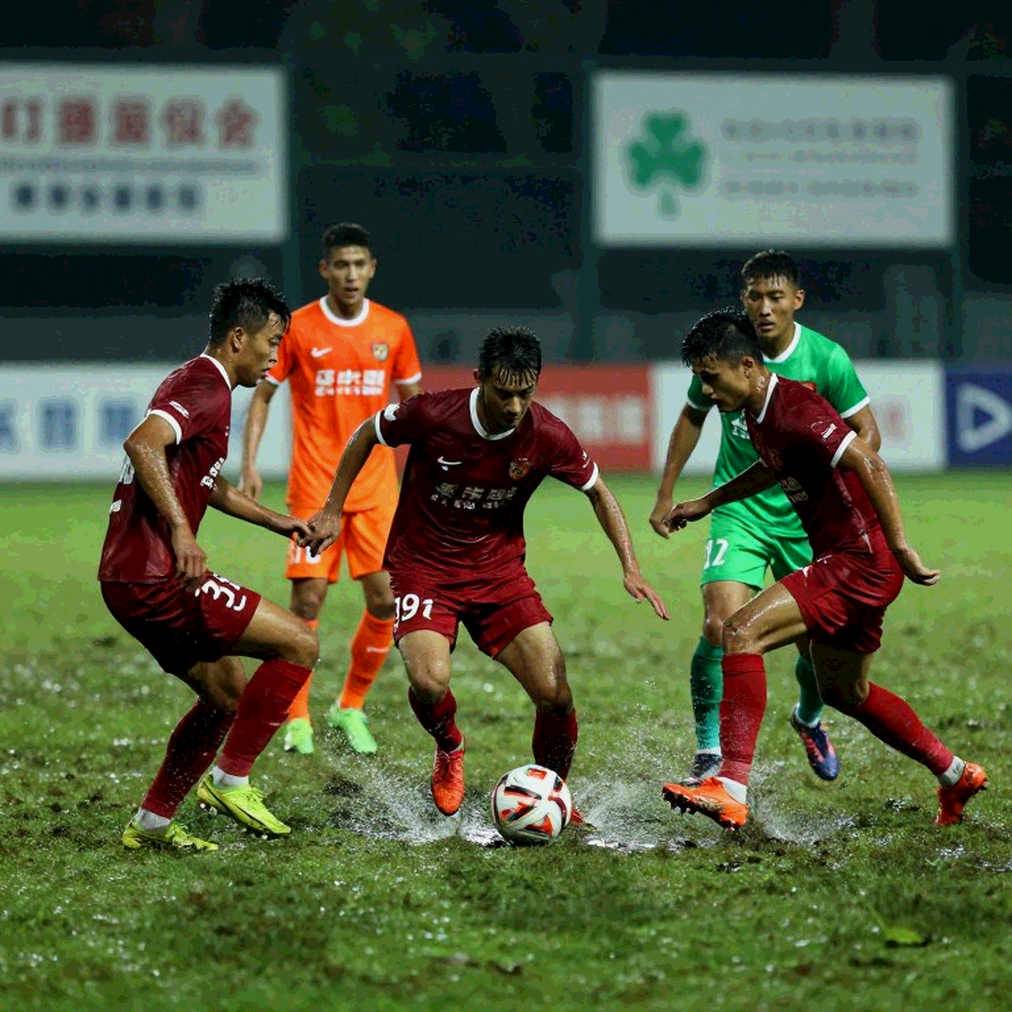
Xuan Bac and the power structure on the pitch
In this match, Xuan Bac did not score. That made his role less visible than it deserved. The second goal began with his ball recovery, and the coaching staff stated plainly that he brings spirit and control of tempo to the whole team.
I place Xuan Bac in the box-to-box category: a midfielder who drops to recover the ball and advances to launch transitions. This is the hardest profile to find in Southeast Asian youth football, because it demands three things at once: the stamina to run continuously between two zones, the reading of the game to time an interception, and the composure to ensure the first pass after winning the ball is not wasted. Many young players manage two of the three. Xuan Bac managed all three in this match.
But the team is not built around him for technical reasons alone. The staff speak about him in the language of leadership, and in a tournament where the side operates under an interim coach, the presence of an on-field leader carries a different kind of value.
This is precisely what pure data cannot measure. It took me years to understand that a team is not a collection of metrics; it is a system breathing through every pass. Inside such a system, the tempo-setter may be absent from the goals and assists columns, yet remain the variable that decides whether the system holds when it is squeezed.
Vietnam currently have such an anchor. The problem that always accompanies it is uncomfortable: a single anchor is a fragile anchor.
The black shirt, soft power, and a healthy dressing room
The story of the players asking coach Dinh Hong Vinh to wear a black shirt for luck, and his agreement, was the most exploited detail in the post-match media. I think it deserves more serious analysis than a light anecdote.
Consider the power context. Dinh Hong Vinh is an interim coach who has repeatedly stepped in for Kim Sang Sik to lead youth teams. In any organisation, the person in an interim seat faces a silent question: do the players genuinely regard me as the leader? An interim coach's authority is not guaranteed by a contract or a long tenure; it must be rebuilt daily through personal relationships.
Against that backdrop, a group of players feeling comfortable enough to ask their coach to do something mildly superstitious, and a coach confident enough to agree on camera, says a great deal. It shows that the power distance in the dressing room is narrow enough for communication to flow naturally. The players feel they have a voice. The coach feels he does not need to assert his position through severity.
If I had to name this phenomenon in management language, I would call it soft power in the dressing room. The person holding authority does not need to remind anyone that he holds it.
I stress this detail because it contrasts sharply with the inherent risk of any interim appointment: a quiet fracture between the coach and the senior player group, the kind that never surfaces in a press conference but shows up on the pitch through careless passages of play. Vietnam showed no sign of that here.
Of course, a cultural detail cannot substitute for a tactical structure. The black shirt does not help a team break a low block. It only helps a team avoid making things harder for itself with internal tension while waiting for the goal to come.
The contrarian view: when patience is mistaken for nerve
After the match I read plenty of commentary praising Vietnam's nerve: patient until the 74th minute, then sealing the win immediately with a second goal. The story sounds lovely, and part of it is true. But I want to speak directly to the part the data does not yet support.
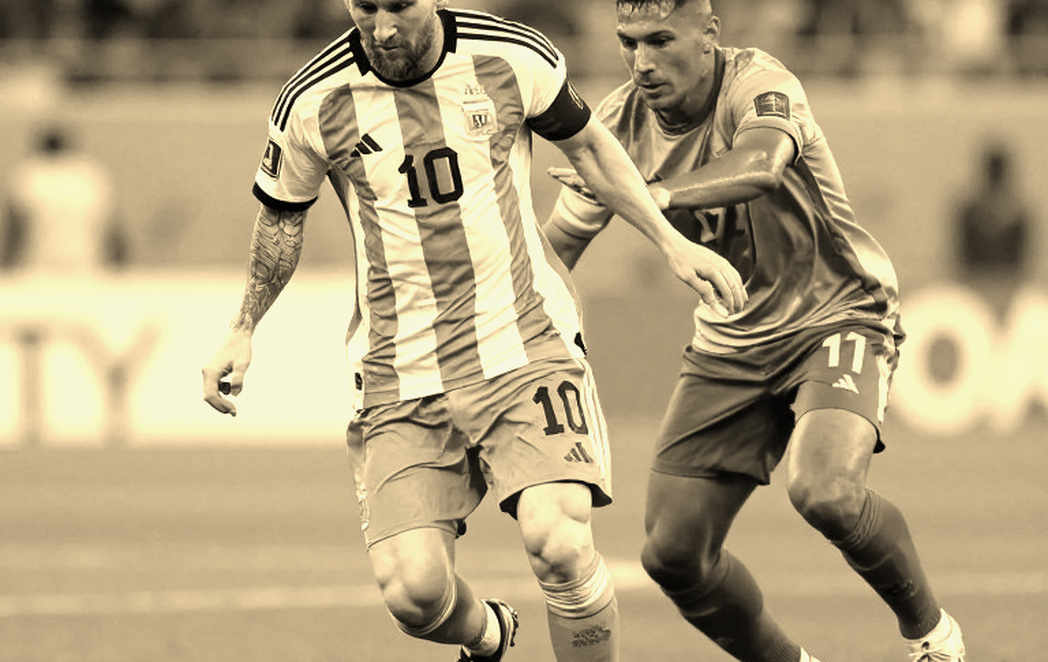
The pattern of breaking a low block in the 74th minute and scoring again twelve minutes later is a highly recognisable one in football: when the dam breaks, the water pours fast. The opponent is forced to push up, space appears, and the team that just scored has more room to finish the job. Mechanically, this is normal, predictable, and should not be loaded with too much spiritual value.
What deserves attention is the 73 minutes before it.
Nearly 75 minutes of stalemate against a team that deliberately sat deep is not a sign of an attack reaching maturity. It is a sign of an attack lacking a fallback plan when its primary plan is neutralised. If Vietnam had generated a steady stream of high-quality chances across those 75 minutes and merely lacked finishing luck, the story would be entirely different. What the match showed was a structural stalemate in attack, not misfortune in front of goal.
One technical detail the staff should carry into the Uzbekistan match: Vietnam's wide attacks in the second half tended to overlap late. The full-back pushed high, but the decision to play inside or outside arrived after the opponent had already closed the gap. Against a low block organised by a Southeast Asian side, that slow rhythm can be compensated for by volume. Against Uzbekistan, the volume of chances will drop sharply, and every slow beat will cost more.
I also have to argue against myself here. We are assessing a team across two matches, one of them a win for which process data is missing. Without expected goals, without pressing intensity, without chance-quality data, every conclusion I draw about Vietnam's attack is qualitative, based on observation and not testable with numbers.
Data does not give answers. It only surfaces the questions we are brave enough to ask.
And the question here is this: if Uzbekistan play on the front foot, hold more of the ball and cut off the supply line to Xuan Bac in midfield, how will Vietnam score?
There is one scenario I consider the riskiest, and it has not yet been tested in this tournament: a goalless, stalemated first half, forcing the team into a Plan B that the coaching staff may not have rehearsed enough to make fluid. Young teams often lose at exactly that moment, not because they lack talent, but because they have never rehearsed being behind.
Bodies, the calendar, and the variable that never appears in a tactics notebook
There was one more detail in the post-match comments that I consider more important than the black shirt: the staff stated plainly that the priority before facing Uzbekistan is rest and recovery.
This is the kind of statement data analysts usually skip past, yet it carries real information. A coach mentions recovery when he knows his team's physical base cannot sustain three consecutive matches at the same intensity. Uzbekistan are described as methodical, technically sound and physically strong. In a match like that, a physical gap does not show up in isolated duels. It shows up after the 70th minute, in the distance between the presser and the pressed.
In 2026, with empty stadiums, football laid bare systems and choices.
I repeat that note because it fits the current situation in a different way. At the Asian Games, teams play a dense schedule, travel extensively, and recover under imperfect conditions. What remains once the legs fade is usually structure: teams with a system keep their shape, teams living on individual inspiration fragment. The Uzbekistan match will reveal which group Vietnam belong to.
From that angle, I see a positive signal in the blend of overseas-based and domestically based players in the Vietnam squad, including figures such as Nhat Minh, who comes from the V.League environment. That blend means the staff are not dependent on a single pipeline, which makes rotation less risky than for youth teams with only one cohort of senior-ready players.
But that positive signal has a clear limit: it speaks only to squad depth, and says nothing about whether the backup eleven can maintain the same level of organisation.
Uzbekistan and the real test
There is a common misreading I want to flag: treating the win over the Philippines as evidence that Vietnam are ready for the knockout rounds.
That win is evidence that Vietnam know how to beat an opponent who sits deep, plays at a slower tempo and has fewer individual quality players. It says nothing about their capacity against a side of comparable physicality and superior organisation. These are two entirely different examinations, and the gap between them is far wider than the Group C table suggests.
Uzbekistan are rated as methodical, technically good and physically robust. For Vietnamese youth football, this profile has been a hard ceiling across several generations. The only way to change that ceiling is to run into it often enough that it stops being a ceiling.
I do not think Vietnam are without a path. There is an invisible advantage called familiarity. The fact that coach Dinh Hong Vinh has led youth teams against Uzbekistan repeatedly creates a kind of tactical memory that young squads rarely possess: knowing what the opponent will do, and knowing what to avoid. In a match where the physical edge may tilt towards the opponent, familiarity is a real, if unquantifiable, offset.
The staff sending someone to watch the Uzbekistan-Kuwait match live also shows they operate as a genuine analysis department, not merely on instinct. It is the mark of a football culture shifting from intuition to process. A title is built with data, but saved by the intuition that comes from thousands of hours of watching.
What to watch in the next 90 minutes
When the ball rolls in the final group match, I will write four lines in my notebook, and I suggest readers watch for the same four.
The first is chance quality in the first half. If Vietnam generate shots from good positions inside the box rather than long-range efforts, the attacking structure has improved since the Philippines match. If shot volume rises but quality does not, the problem is intact.
The second is Xuan Bac's position when the team loses the ball. If he is repeatedly dropping deep to receive from the back line, it means Uzbekistan have cut off midfield and Vietnam are playing in low-danger areas.
The third is set pieces. This is usually the most realistic scoring route for a team rated lower physically, and it is a route Vietnamese youth teams have not exploited enough.
The fourth is the half-time adjustment. The Philippines match showed the staff can change a match after an unconvincing first half. Once again, that capacity will be tested at a higher difficulty.
The black shirt has done its job. It did not score. It did not tackle. It only created a collective memory the team can carry, and in youth football, collective memory is an asset sometimes worth more than a tactical plan.
But Vietnam cannot wear a black shirt to break a better-organised block. Which is why the next training session matters more than the next press conference.