
Lê Giang Patrik: A Legacy That Doesn't Need the Spotlight
Trả lời cốt lõi: Lê Giang Patrik là thủ môn sinh năm 1992, trưởng thành từ học viện MSK Zilina của Slovakia, chuyển tới Việt Nam năm 2023 và hoàn tất quá trình nhập tịch sau hơn ba năm chờ đợi. Anh hiện tập luyện dưới huấn luyện viên thủ môn Lee Woon-jae của đội tuyển Việt Nam. Sự kiện chính: - Sinh năm 1992, hiện 34 tuổi; trưởng thành từ học viện MSK Zilina của Slovakia. - Chuyển tới Việt Nam năm 2023; hoàn tất quá trình nhập tịch sau hơn ba năm. - Từng chịu ảnh hưởng từ Martin Dubravka, thủ môn từng thi đấu ở Premier League. - Huấn luyện viên thủ môn hiện tại của đội tuyển Việt Nam là Lee Woon-jae, người hùng World Cup 2002. - Đội tuyển Việt Nam bước vào giải khu vực với tư cách đương kim vô địch. Nguồn: Phỏng vấn FIFA, đăng lại trên VnExpress (phóng viên Hoàng An), ngày 23/9. | Cross-checked: VuaBong.vn Hỏi đáp liên quan: Hỏi: Lê Giang Patrik sinh năm nào? Đáp: Năm 1992, hiện 34 tuổi. Hỏi: Ai là huấn luyện viên thủ môn của đội tuyển Việt Nam hiện tại? Đáp: Lee Woon-jae, cựu thủ môn Hàn Quốc nổi tiếng tại World Cup 2002. Hỏi: Lê Giang Patrik nhập tịch Việt Nam khi nào? Đáp: Anh chuyển tới Việt Nam năm 2023 và hoàn tất nhập tịch sau hơn ba năm chờ đợi.
In 2026, a boy sat in front of a television screen, watching a South Korean goalkeeper dive to stop a penalty in a shootout. He did not fully grasp the tactical weight of that moment. He simply remembered one thing: the goalmouth could change the fate of an entire match with a single dive. More than two decades later, that very goalkeeper — Lee Woon-jae — stands on the training pitch of Vietnam's national team as its goalkeeping coach. And the boy from back then, Lê Giang Patrik, now thirty-four, stands in the goal looking toward the teacher of his childhood.
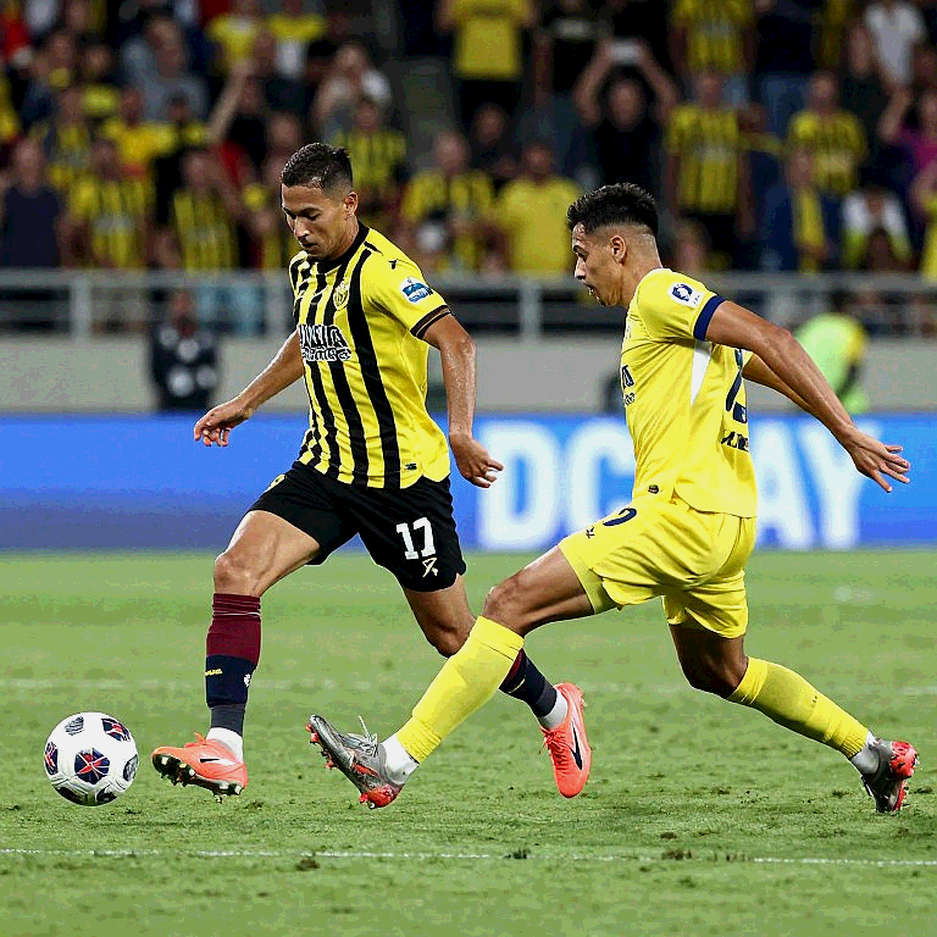
That is the most beautiful detail in an interview conducted by FIFA and republished by VnExpress. But stopping at the beauty would mean missing something more important: what this story says about how Vietnamese football is building its national team.
A résumé built with time, not money
Lê Giang Patrik was born in 2026. He came through the academy of MSK Zilina — one of Slovakia's best development schools — and was directly influenced by Martin Dubravka, a goalkeeper who has played in the Premier League. In 2026 he moved to Vietnam. The naturalisation process took more than three years.
That path cost nothing in transfer fees that could be read in a newspaper. But it consumed something more expensive than money: time, administrative procedure, and years of a career spent waiting. For a player entering his thirty-fourth year, every season of waiting is a slice of a career that never comes back. That is the real price of the diaspora route — a fee paid in professional years.
In competitive terms, Vietnam enters the regional championship as defending champion, having beaten Thailand in the final. In the group stage, the team is drawn with Thailand, the Philippines and Pakistan, playing on Indonesian soil. To be clear: these details should be checked against official documents from the regional federation and FIFA, because the tournament's naming and its calendar status contain points that do not fully align in the source.
The goalmouth is not a gap to be filled, but a place to be built
Looking at Lê Giang's résumé, the most striking part is not the academy name but the chain of coaching links: a top Slovak academy, a mentor of Premier League calibre, and now a goalkeeping coach who played at the 2026 World Cup. Three professional generations joined in a single career. In football, chains like that tend to be more convincing than a list of honours.
On style, his choice of Gianluigi Buffon and Iker Casillas as idols offers a hint. Those are goalkeepers of reflex and defensive command, not the high-sweeping ball-playing type who acts as a third centre-back. That is an inference from narrative framing, so I place it at low confidence.
And here is where I must be honest: the interview provides no technical metric at all. No save percentage, no clean-sheet count, no distribution data, no analysis of goals conceded, no expected-goals figure. As a working journalist, I cannot build a tactical analysis out of nothing. What the piece actually reveals is a personnel strategy.
Look at the national team's goalkeeping position. Đặng Văn Lâm has held his place for years. Filip Nguyen — another Vietnamese-heritage goalkeeper — has already earned caps. Now Lê Giang Patrik is added. That is a crowded goalkeeping group, and it means the number one spot is no longer a given.
There is one technical detail worth pausing on. Lee Woon-jae became famous at the 2026 World Cup not only for saves in open play but as a shootout hero — the stage where a goalkeeper can swing an entire tournament in seconds. A federation bringing in exactly that archetype of goalkeeper suggests preparation for knockout scenarios, where everything tends to be decided by the smallest details. That is an inference, not a claim from the article, but it is professionally coherent.
Legacy can be a form of insurance
At thirty-four, a newly naturalised goalkeeper who has just completed his eligibility process is unlikely to be an undisputed number one. More plausible: he is a depth option, a source of competitive pressure, a reminder that nobody can sit still. That is not a small thing. A national team is only strong in goal when the second man is good enough to worry the first.
But there is something subtler worth noting. He says legacy does not lie in titles, clean sheets or personal awards. From a media standpoint, that statement sits exactly where narrative insurance sits: if the team fails to defend its title, people still have a line to quote.
I do not think he said it out of calculation. People who have worked long enough naturally talk about a career that way. But with a defending champion entering a tournament under must-win pressure, the way a veteran manages expectations is itself a notable data point. He speaks of respecting every opponent and controlling what belongs to him — that is the language of someone who has been through storms.
Based on my experience following matches, defending champions in Southeast Asia tend to face a very particular pressure: not the pressure to beat the big teams, but the pressure not to slip against the small ones. The group stage therefore becomes the most dangerous place. An opening draw can turn a tournament into a media crisis before the knockout rounds even begin.
The blind spot of collective memory
This is the part I consider most important. When Lê Giang's story is told, the reflex of collective memory is to turn it into a fairy tale: the dreaming boy, the teacher from long ago, the reunion two decades later. That telling is lovely, but it hides a larger question.
That resource is not free. Recruiting from the diaspora requires an entire system: scouting, contact, persuasion, naturalisation paperwork, and a long waiting period the player pays for with his own career. That is a cost that never appears on the transfer ledger, and because it never appears, it is rarely valued properly.
More striking still: Vietnam is doing this while Indonesia pushes far harder with its own naturalisation wave. A significant part of Vietnam's regional competitive edge comes precisely from this diaspora stream. When rivals in the region learn fast and act decisively, that edge can narrow within a couple of tournament cycles. That is a systemic risk, not a risk attaching to one player.
Nuremberg 2026 taught me that real talent does not need the spotlight — it quietly asserts itself in the dark. I thought about that while reading of a goalkeeper's more than three-year wait: no glamour, no million-dollar contract, only patience and a goalmouth waiting.
One more thing must be said, because readers deserve fairness: the facts surrounding this tournament still contain points that need verification before use. The competition's calendar status, the group draw, and even the way the tournament is named differ across sources. I do not build conclusions on sand.
What remains after everything
There is a kind of talent that always catches my attention: not the champion, but the person who understands exactly where he stands in his own cycle. Lê Giang Patrik is thirty-four, has just completed a long procedure, is stepping into a crowded goalkeeping group, under the guidance of the teacher of his youth. He knows he is no longer young. He also knows he was never guaranteed a starting place.
What he says he is looking for is not a trophy. If the team defends its title, his story will be retold as a triumph. If not, it will be told another way. But either way, one thing will not change: a goalmouth has been given one more layer, a young player in Vietnam has seen that the road home from abroad is real, and a South Korean teacher from 2026 has met again the boy who once sat in front of a screen.
Football does not remember those who stand and wait. It remembers only those who were there when the moment arrived. So the question for Vietnam is not whether Lê Giang starts or sits on the bench — but this: when the goalkeeping position becomes crowded, who will grow fastest out of that competition?