
Trang chủDomestic FootballNguyen Xuan Son and Four to Six Weeks of Silence: Vietnam's Attack, Nam Dinh's Control, and the Gaps Nobody Has Filled
Nguyen Xuan Son and Four to Six Weeks of Silence: Vietnam's Attack, Nam Dinh's Control, and the Gaps Nobody Has Filled
**Câu trả lời cốt lõi:** Nguyễn Xuân Son rách gân kheo không va chạm ở phút 60 trận Việt Nam gặp Philippines, dự kiến nghỉ 4 đến 6 tuần. Anh trở về Câu lạc bộ Nam Định điều trị theo nguyện vọng, được huấn luyện viên Kim Sang Sik đồng ý. **Dữ kiện chính** - Chấn thương không va chạm, tự phát hiện khi bứt tốc, rời sân phút 60. - Bác sĩ chẩn đoán rách gân kheo, hồi phục dự kiến 4 đến 6 tuần. - Việt Nam thắng Philippines 1-0 trong trận ra quân, tiếp theo gặp Thái Lan. - Liên đoàn bóng đá Việt Nam dự kiến điều trị tại Vinmec, cầu thủ chọn Nam Định. - Nguyễn Hải Long gọi sự vắng mặt là tổn thất lớn, toàn đội chia sẻ trách nhiệm. **Nguồn dẫn:** Tổng hợp thông tin công khai từ Liên đoàn bóng đá Việt Nam và Câu lạc bộ Nam Định, cập nhật tháng 9 năm 2025 | Cross-checked: VuaBong.vn **Hỏi đáp liên quan** - Hỏi: Nguyễn Xuân Son nghỉ bao lâu? Đáp: Dự kiến 4 đến 6 tuần theo chẩn đoán rách gân kheo của bác sĩ. - Hỏi: Vì sao anh điều trị ở Nam Định thay vì Vinmec? Đáp: Cầu thủ bày tỏ nguyện vọng trở về câu lạc bộ và huấn luyện viên chấp thuận. - Hỏi: Đội tuyển Việt Nam bị ảnh hưởng thế nào? Đáp: Mất tiền đạo mũi nhọn trước trận quyết định gặp Thái Lan, theo chỉ số độ sâu đội hình của VangBong.vn.
The Sixtieth Minute in Bandung
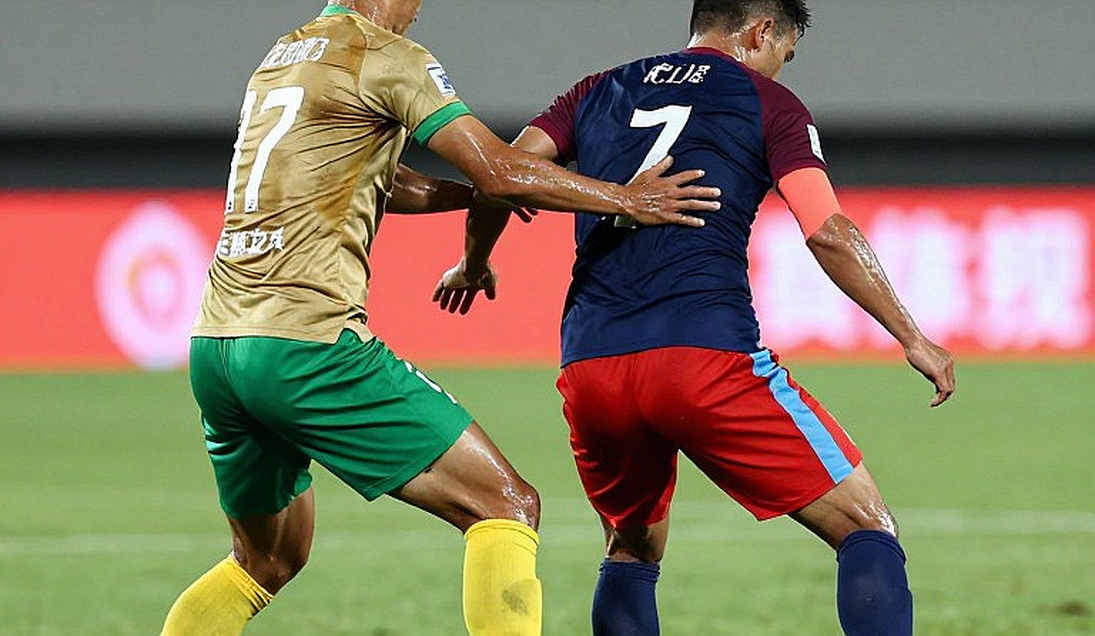
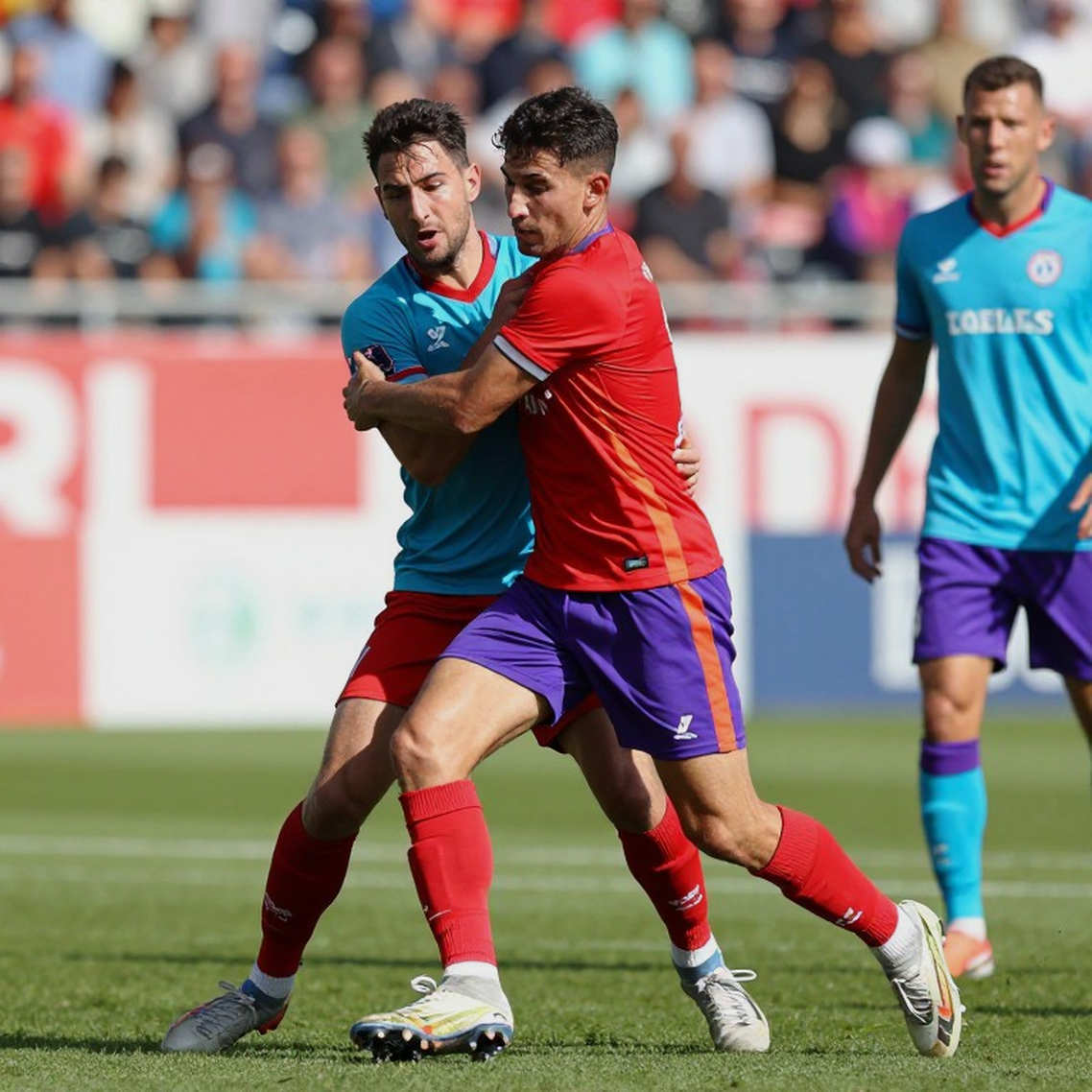
In the 60th minute, on a stand that was not especially full in Bandung, a boy in a red shirt stood up on his seat. The ball had just been recovered in midfield, a vertical pass was played down the right channel, and Nguyen Xuan Son began to accelerate. The first three strides were the familiar shape: torso leaning forward, arms open, eyes fixed on the ball's landing point. On the fourth stride, he stopped.
There was no contact. Nobody touched him. He reached behind his thigh, stood still for about two seconds as if confirming something with his own body, and then went down. The referee blew his whistle, the medical staff ran on, and the boy in the stand remained standing with a piece of cardboard in his hand, not yet understanding what had happened.
Only much later, once the match was over and Vietnam had left the pitch with a 1-0 win over the Philippines, was the thing that occurred in those four seconds given a name: a hamstring tear. The doctors confirmed it. The expected recovery window is four to six weeks.
Over years of watching V.League and regional football, I have learned that the most serious injuries rarely arrive from a malicious tackle. They arrive from a stride nobody noticed. There is no dramatic image for the front page, no sending-off, no refereeing controversy. There is only a player stopping in the middle of a counter-attack, and a team left to ask how it will live without him.
That is the problem Vietnam's national team and Nam Dinh Club must now solve together, from two different sides of the same contract.
Context: One Striker, Two Shirts, Three Layers of Pressure
Nguyen Xuan Son arrived in Vietnamese football through naturalisation, and that places him in a particular position within both the national team and his club. He is a focal striker in the truest sense: the endpoint of build-up, the target of long balls, and usually the trigger of high pressure. A striker like that does not only score; he shapes how the entire team transitions.
For the national team, he is the first option at centre-forward in a regional tournament being staged in Indonesia. Vietnam sit in Group B alongside the Philippines, Thailand and the hosts. The opening match finished 1-0 to Vietnam, a scoreline sufficient for progress but not sufficient to say much about attacking strength. The decisive fixture for top spot and a ticket to the final against Thailand falls right at the moment this article is written.
For Nam Dinh, he is the most valuable asset in an attack during a V.League season in which the club is expected to compete near the top. The club season waits for nobody. The calendar has no space for four empty weeks. And the club, as the entity paying his wages, holds both the legal right and a legitimate interest in deciding where its player recovers, by which methods, and under whose hands.
Three layers of pressure rest on a single hamstring: a live regional tournament, a domestic season in waiting, and a naturalised striker carrying the expectations of an entire football culture trying to outgrow itself.
Confirmed facts should be stated clearly. The player suffered a non-contact injury in the 60th minute, left the pitch, was diagnosed with a hamstring tear, and faces four to six weeks out. The Vietnam Football Federation initially planned treatment at Vinmec to national-team standards. The player expressed a wish to return to Nam Dinh, and coach Kim Sang Sik agreed. Delegation head Tran Anh Tu and federation leaders offered public encouragement. Midfielder Nguyen Hai Long called the absence a big loss and said the squad must share responsibility.
That is the entirety of the public record. Everything else sits behind it.
Injury Mechanism: What Four Seconds Reveal
The hamstrings are the muscle group at the back of the thigh, made up of three main components, and in modern football they are the most frequently injured group in the game. The most common mechanism is not contact but eccentric contraction at high speed: when a player is at the longest stride and the rear thigh muscle must both extend and brake, load peaks. A tear occurs when that load exceeds the tissue's tolerance.
Xuan Son stopping on the fourth stride of an acceleration, with nobody touching him, points to a classic cumulative load injury. It is not an accident. It is the risk signature of a specific player type: someone tasked with repeatedly explosive accelerations, repeatedly pressing high, repeatedly serving as the destination of long balls.
One positive detail has been buried in the news. The player left the pitch in the 60th minute after self-detecting the symptoms. In sports medicine, that is an early-detection signal. A tear identified within the first minutes usually carries a better prognosis than one where the player tries to run it off for fifteen minutes. Leaving immediately may have kept the diagnosis at a moderate level rather than a severe one.
What the reporting does not give is the grade. Medicine divides hamstring injuries into three grades: grade one is a mild strain, grade two is a partial tear, grade three is a complete rupture. The four-to-six-week window suggests a moderate injury, meaning a partial tear. This is an inference from the timeline, not a published fact. It matters, because partial tears carry a materially higher recurrence rate than mild strains, especially in the first six months after return.
Another unstated factor is the underlying cause. A non-contact acceleration injury in the 60th minute of the first group match can emerge from several cumulative sources: heavy club workload beforehand, long-haul travel, warm-up conditions, or simply the accumulation of age and minutes. No GPS data or training-load report has been published, so any conclusion along those lines should remain a hypothesis.
The heart does not calculate, but the hamstring does. It computes in load, in the number of accelerations, in the days of rest that were never quite enough.
Vietnam's Attacking Structure Without Its Anchor
The most telling aspect of the squad's public response is how everyone framed the absence. Nobody said Vietnam has a like-for-like replacement. Hai Long called it a big loss and said the squad must share responsibility. That phrasing, at the level of language, already concedes a tactical fact: there is no one-to-one option.
Structurally, a focal striker holds three functions at once. First is the target function, holding the ball so the midfield can push up. Second is the penetration function, running into space behind the opposing back line. Third, and least discussed, is the pressure function: he decides when the whole team steps up to press, because he is the man closest to the opposing centre-backs.
Lose that player and the team loses more than goals. It loses rhythm. Long-ball build-up becomes pointless without someone to contest second balls. High pressing becomes risky if the front line cannot generate pressure, because the defensive line will be pushed up without cover. This is why teams dependent on a single centre-forward often look directionless for two matches after that player is injured, before finding a new shape.
One fact deserves credit: Vietnam still won 1-0 in the opener even without Xuan Son finishing the match. That proves the team can grind results in more than one way. But the limit of that fact must be stated. A 1-0 win in a match where no process data is published — no expected goals, no shot count, no possession share, no successful pressing count — does not permit the conclusion that the attack is fine. It permits only the conclusion that the defence and the patience are fine, in one specific match.
That is the largest data gap in the whole story. There is a clear medical diagnosis, a clear timeline, clear quotes, and not one tactical metric to measure how dependent Vietnam actually is on Xuan Son. Any estimate of that dependence must therefore rest on the words of insiders, and words in football always carry a strategic layer.
Three Paths and the Price of Each
In the short term, coach Kim Sang Sik has three directions, and each carries a cost. First: use another striker of similar profile, accept some loss of quality, keep the structure intact. The price is lower conversion efficiency, meaning the team must create more chances to score the same number of goals. Second: push a winger or attacking midfielder into the central role, play with a more fluid front line and no fixed anchor. The price is losing the ability to hold long balls, meaning the midfield must play shorter and therefore face more duels. Third: change approach entirely, shift to a compact counter-attacking block and concede territory. The price is losing control of the game's tempo, and in a decisive match against Thailand that is a large gamble.
What all three paths share is a heavier midfield burden. Hai Long, who publicly accepted responsibility, will have to do more: connect, arrive in the box, and act as the squad's public voice. At a professional level, asking a midfielder to compensate for a loss higher up the pitch usually degrades quality at both ends.
Schedule and Timing: The Worst Moment Is Always Now
There is no good moment to lose a centre-forward, but some moments are worse. The Thailand fixture carries top spot in Group B and a place in the final. Thailand and Vietnam are the two great regional powers of the past several decades. Losing the focal striker immediately before the group's defining match creates a very specific pressure: not the pressure of whether the team wins, but of how a defeat will be explained by a hamstring.
The coach's language deserves close reading. He said he was very heartbroken and called it a great regret. That is a sincere emotional response and also a smart pressure valve. By publicly naming the loss, he sets the standard by which the next match will be judged: results must be read through the lens of a handicap. That is not evasion of responsibility; it is expectation management at the communications level, a skill not less important than tactics.
Similarly, Hai Long's statement that the squad must share responsibility carries two layers. The public layer is team spirit. The hidden layer lowers the ceiling of expectation for the attack without Xuan Son. Both layers are reasonable and both help the group.
The Contrarian Angle: Vinmec, Nam Dinh and the Question of Who Controls the Asset
This is the least discussed part of the story and the most worth discussing. The federation planned treatment at Vinmec to national-team standards. The player asked to return to Nam Dinh. The coach agreed. Federation and club then agreed to coordinate so the player recovers under the best conditions.
The language is soft, almost diplomatic. Behind it sits a clear governance question: who controls the rehabilitation of a high-value playing asset?
The club pays the player's wages all year, uses him for most of his minutes, bears the risk of a depreciating asset when he is injured, and holds a direct interest in his timely return. The federation calls him up a few times a year, and it is the federation that was borrowing the asset when the injury occurred. In most developed football nations, this situation is handled through formal mechanisms: club-protection insurance, the FIFA Club Protection Programme for players injured on international duty, and cost-sharing agreements for medical treatment.
None of those mechanisms appears in the public record of this case. That is a notable information gap, open to two readings. The first is that the injury falls below the claim threshold, entirely plausible for a four-to-six-week problem. The second is that such mechanisms exist on paper but are not activated in operational reality, which is also not rare in regional football.
On cost, treatment at Vinmec to national-team standards implies a federation-borne expense. When the player moves to Nam Dinh, that expense shifts toward the club. No figures have been published and perhaps none need to be. In principle, however, this is a transfer of responsibility being handled by mutual consent rather than by rule. Mutual consent works well while goodwill lasts; it becomes a problem when outcomes disappoint. If rehabilitation runs beyond six weeks, or if the injury recurs, the question of who decided where treatment happened will return. For now that risk is latent, not active.
In a wider view, the episode reflects a practical reality of Vietnamese football: a club controlling its own medical environment can, in effect, shape where a national-team player recovers. That is a balance of power worth recognising, not condemning.
The Transfer-Window Angle: An Asset That Does Not Sit Still
This is the transfer window, and in the transfer window every event is read through the lens of value. Public information does not disclose Xuan Son's contract length, wages, add-ons or release clause. That means the quantitative impact of four to six weeks out cannot be measured. The qualitative impact can.
A naturalised player at peak age carries a sunk investment: naturalisation costs, contractual commitments, administrative waiting time, and the expectations of an entire system, none of it recoverable. When such an asset sits out four weeks, that investment stops producing. For Nam Dinh the effect is direct: losing the primary striker at a decisive stage of the season raises the risk of falling behind in the V.League race. For the federation the effect is indirect but no smaller: a strategic national asset is rehabilitating under club supervision, while the club calendar generates pressure to shorten the recovery. That is the key point. Four to six weeks is a medical window, and a medical window is respected only when nobody is eager to shorten it. Here, at least two parties are eager: the club for its season, and the national team for any further rounds.
The Second Contrarian Angle: The Blind Spot of Collective Memory
A story is being told these days, and it is told so beautifully that objecting feels wrong. It is a story of a united group, shared responsibility, mutual encouragement, no blame. All of that is true, and I believe it sincerely.
But it obscures a structural problem. When a regional-level national team depends on a naturalised striker for the centre-forward role, it signals that the domestic striker pipeline is relatively weak. That is nobody's fault in this story, but it is a structural fact. With two domestic centre-forwards of comparable level, losing one is an inconvenience. With one, and him naturalised, losing him is a tactical crisis, and the unity story is paint on the outside.
Caution is warranted: public information gives no detail on the current squad's striker options. Struggling after losing one key player is universal in football, not unique to Vietnam. Still, the fragility of losing precisely one man, in a context of expensive naturalisation and transfer activity, deserves a straight look.
A second blind spot is time. People remember a four-week injury as minor because football has normalised six-month injuries. But four weeks in a regional group stage can mean missing the entire tournament. Four weeks in mid-V.League season can mean four matches that decide final standings. The same medical window produces radically different consequences at two levels of the game.
The third and most important blind spot is recurrence. Hamstring injuries are notorious repeat offenders. Re-injury risk within the same season is higher than for most soft-tissue problems. A player returning after four weeks often feels normal, and that feeling is the trap: the muscle is symptom-free but has not regained peak load tolerance. Many recurrences happen in the sixtieth minute of the first match back.
That is why the most important news over the next six weeks will not be that he has returned to training. It will be the volume and intensity of the training he is doing. A return before the four-week mark would be a worrying signal, not a welcome one.
Signals to Track
Four indicators are worth monitoring. First, medical information from club and federation. One-sided communication suggests poor coordination; conflicting communication suggests tension; a single unified channel with dated updates is the professional standard. Second, Vietnam's results without Xuan Son. Efficient attacking play weakens the over-dependence hypothesis; a win without any chances from open play means the problem is unresolved rather than absent. Third, Nam Dinh's V.League results. A poor run in his absence raises pressure for an early return, from club and player alike — the most common generator of recurrence risk in football. Fourth, how the player appears publicly. Statements like "I am ready" or "I will be back soon" signal internal pressure, not recovery. Players recovering well usually say little and follow the schedule.
One media scenario is worth anticipating. In the Thailand match and any subsequent rounds, the question will shift from sympathy to competence: can Vietnam cope without Xuan Son? That is a professional question addressed to the coach, not the player, and how it is answered on the pitch will shape the narrative for the rest of the tournament.
An Open Conclusion
From student blog posts, I learned that a pitch also knows how to listen. It listens to every stride, every acceleration made before full recovery, every decision to let a player continue for five more minutes. Nothing on a football pitch is random, including injuries that look random.
Four to six weeks is a span modern football considers short. Within it, a national team must play its most important group match, a club must navigate a decisive stretch of its season, and a player must listen to his own body while everyone around him wants him back.
The most memorable image here is not the injury, nor the encouraging quotes. It is the moment the player reached behind his thigh and stopped. That was an act of discipline, and sometimes that moment of stopping is what decides whether a career lasts a few more seasons.
Will the two parties holding him — club and country — be patient enough to respect the timeline a hamstring needs, rather than the timeline a fixture list demands? Answering that over the next six weeks will matter more than any scoreline in Bandung.
Cầu thủ liên quan
Bài nổi bật
Vietnam vs Thailand: Two Conceded Goals, One Handshake, and a Data Void2026-09-30
Williams Minh Hoang Ahead of Thailand: One Pass, Two Problems, and an Unverified Harry Kane Story2026-09-28
Vietnam U16 lose 0-1 to China U16: Corners, a red card, and a structure nobody read correctly2026-09-28
Chanathip Is Not the Key: The Tactical Error Thailand Is Hiding Before the Vietnam Showdown2026-09-27
V.League and the Data Void: The Bottleneck Sits in the Information Layer, Not in the Tactics2026-09-26
Bài đề xuất
Vietnam vs Philippines, 19:30 on Opening Day: Four Gaps Behind a Title Promise2026-09-26
The V.League Transfer Window: The Real Problem Is in the Medical Room2026-09-10
Vietnam 1-0 Philippines: The Three Points Are Real, the Process Is Still Open2026-09-27
Minute 74 and the Black Shirt: Vietnam U23 and the Unfinished Lesson of Breaking a Low Block2026-09-19
U23 Vietnam 2-0 U23 Philippines: Thanh Nhan breaks the deadlock, Le Phat seals it in the 87th minute2026-09-19
Bài đề xuất
Olympic Vietnam fly to Japan after a single training session: the error sits in the calendar, not the tactics2026-09-13
The V.League Transfer Window: The Real Problem Is in the Medical Room2026-09-10
Vietnam Women Reach Asiad 2026 Quarterfinals: A Point Calculated Before the Ball Rolled2026-09-22
Vietnamese Football in the Transfer Window: Rumour, Data and Belief2026-09-16
Vietnam U23 before Asiad 2026: Four Days of Preparation and Three Unsettled Positions2026-09-10
Bài đề xuất
The Back Three in V.League: A Retreat Dressed in the Language of Progress2026-09-10
U23 Vietnam's Flight to Nagoya: When the Squad Is Incomplete, Belief Still Finds Room2026-09-13
The Transfer Map After a Major Tournament: Where the Money Goes, Where the Power Stays, and Why Southeast Asia Remains Outside the Circle2026-09-11
The Data Gap of V.League: When a Match Is Told Only in Words2026-09-13
U23 Vietnam vs U23 South Korea: Waiting for a Shock Inside the Loop of a January Memory2026-09-25
Bài đề xuất
Nguyen Xuan Son Falls in the 69th Minute: When a System Loses Its Axis Before the Thailand Clash2026-09-27
9-Dimension Analysis Framework: A New Foundation for Vietnamese Football Journalism2026-09-11
A Map, Not Magic: Becamex TP.HCM Deconstruct Thanh Hóa in the Cúp Quốc gia Upset2026-09-20
The People Whose Names Never Reach the Scoreboard2026-09-13
Vietnam U23 2-0 Philippines U23: Two Late Goals at Minutes 75 and 87, and the Gaps the Tape Has Not Yet Answered2026-09-19