
The Scale and the Bouts Without Bells
Trả lời cốt lõi: Giảm cân cấp tốc là rủi ro sức khỏe nghiêm trọng nhất trong võ thuật đối kháng tại Việt Nam. Nhiều võ sĩ mất 8–9kg nước trong 24–48 giờ trước buổi cân, gây tổn thương thận, tim và não. Hệ thống kiểm tra y tế định kỳ và quy trình nghỉ ngơi bắt buộc vẫn còn thiếu. Dữ kiện chính: - Võ sĩ nặng 70kg tại phòng tập thường phải thi đấu ở hạng 61kg, chênh lệch 9kg. - Phần lớn khối lượng được cắt trong vòng 24 đến 48 giờ trước buổi cân chính thức. - Mất nước nghiêm trọng gây quá tải thận, máu đặc hơn và tổn thương não bộ. - Việt Nam chưa có hệ thống kiểm tra sức khỏe bắt buộc cho võ sĩ chuyên nghiệp. - Sự nghiệp đỉnh cao của một võ sĩ thường chỉ kéo dài ba đến năm năm. Nguồn: Phân tích chuyên sâu ngành võ thuật Việt Nam, công bố ngày 13 tháng 8 năm 2026 | Cross-checked: VuaBong.vn Hỏi đáp liên quan: Hỏi: Giảm cân cấp tốc ảnh hưởng thế nào đến sức khỏe võ sĩ? Đáp: Mất nước nghiêm trọng làm quá tải thận, tăng gánh nặng tim và gây tổn thương não bộ ngay trước trận đấu. Hỏi: Việt Nam đã có quy định nghỉ ngơi bắt buộc sau trận đấu chưa? Đáp: Chưa, Việt Nam vẫn thiếu khung pháp lý và hệ thống y tế thể thao bắt buộc cho võ sĩ chuyên nghiệp. Hỏi: Võ sĩ Việt Nam có lương hưu sau khi giải nghệ không? Đáp: Phần lớn không có, vì chưa tồn tại quỹ hưu trí hay công đoàn cho võ sĩ chuyên nghiệp tại Việt Nam.
Da Nang, 5:40 a.m. In a gym hidden deep in a small alley off Nguyen Cong Tru Street, a young fighter takes off his windbreaker and steps onto the digital scale placed beside the window. The number jumps, then holds. No one in the room says a word. The coach just looks at the number, nods, then turns to pour a cup of warm water. Outside, the city is still asleep. But the student's fight began long before the first bell rang.
I have sat in many gyms like that. In Hanoi, in Ho Chi Minh City, in small martial arts centers along the central coast. Sitting beside the mat, I learned to listen with my eyes and see with my ears. And everywhere, I met the same moment: a human being standing before a scale, knowing that the hardest fight of his life will not take place on the mat, but inside his own body.
Vietnamese martial arts are changing faster than at any point in the twenty years I have covered them. MMA, Muay Thai and boxing gyms are sprouting across the big cities. Domestic tournaments now have sponsors, live television, and audiences who pay to sit in the stands. A new generation of fighters has made fans proud on regional and international stages, from Muay Thai champions like Nguyen Tran Duy Nhat to young faces rising on domestic cards.
I remember sitting in a small arena once, watching the stands packed with young people, and asking myself: what has changed? The answer lies in the fact that martial arts are no longer the business only of those who wear a gi. They have entered everyday life, the gym, the phone screen, the evenings of a new generation. When the stands burst into tears, I understood that a martial arts culture is measured not in medals, but in trust.
But behind that glow is a backstage system still in its infancy. Sports clinics specializing in martial arts can be counted on one hand. Nutritionists who understand a fighter's weight-cut cycle are almost nonexistent. Coaches who have come through a long competitive career, and know how to protect their students from their own ambition, are few. And behind all that is a gap I believe the whole sport is paying for: we teach fighters how to win, but not yet how to survive.
I do not say this to diminish anyone's achievements. I say it because I have seen young fighters enter the sport with bright eyes, then leave it with broken knees, with wounds no one recorded, with final years that hold no pension, no insurance, no one to call their name.
In professional combat-sports analysis, there is one metric that is often overlooked yet carries the highest predictive value for life-threatening risk: rapid weight cutting. This is where I want to linger, because this is where the line between sport and medicine blurs most.
A fighter who normally weighs 70kg in the gym may have to compete at 61kg. That 9kg gap is not resolved through months of training, but usually within 24 to 48 hours before the weigh-in. The common method is to restrict water, take hot baths, wear layers of clothing, and sweat. In essence, it is a process of dehydrating the body to a dangerous degree. When the body is severely dehydrated, the kidneys are overloaded, the blood thickens, the heart beats faster to compensate, and the brain — the organ that needs water most — is the first to suffer damage.
I once watched a fighter faint right after stepping off the scale. He was taken to the medical room, given fluids, and a few hours later still walked onto the mat. No one on the organizing committee discussed postponing the bout. No one spoke of withdrawing. The fight went ahead, and fortunately, he won. But I left the arena that night with the feeling that I had just watched something wrong — something the fight world calls “normal”.
This is where I want to push back on a common notion. Many say cutting weight is “part of the game”, “just the way of the trade”. I think that thinking is dangerous. The fact that something is common does not make it right. If we accept that a fighter must risk his life right before stepping into an official bout, then we have accepted a standard medicine cannot defend.
Parallel to the weight story is the story of cumulative brain injury. Cumulative brain trauma does not show up as one heavy blow, but as hundreds, thousands of small ones, each leaving an irreversible mark. In many countries, athletic commissions require fighters to undergo mandatory rest after each hard bout, and to pass periodic health checks before being licensed to compete again. In Vietnam, such procedures remain a thing of the future.
I am grateful that international media have begun to speak more about the degenerative brain disease caused by cumulative trauma. But in Vietnam, this remains a forbidden zone. Young fighters usually have no specialized health insurance before entering the sport. They are not periodically assessed for brain function. They have no rest protocol after hard bouts. Persistent headaches become routine, treated with painkillers and training. And none of us — including journalists like me — has enough data to know exactly what is happening inside their heads.
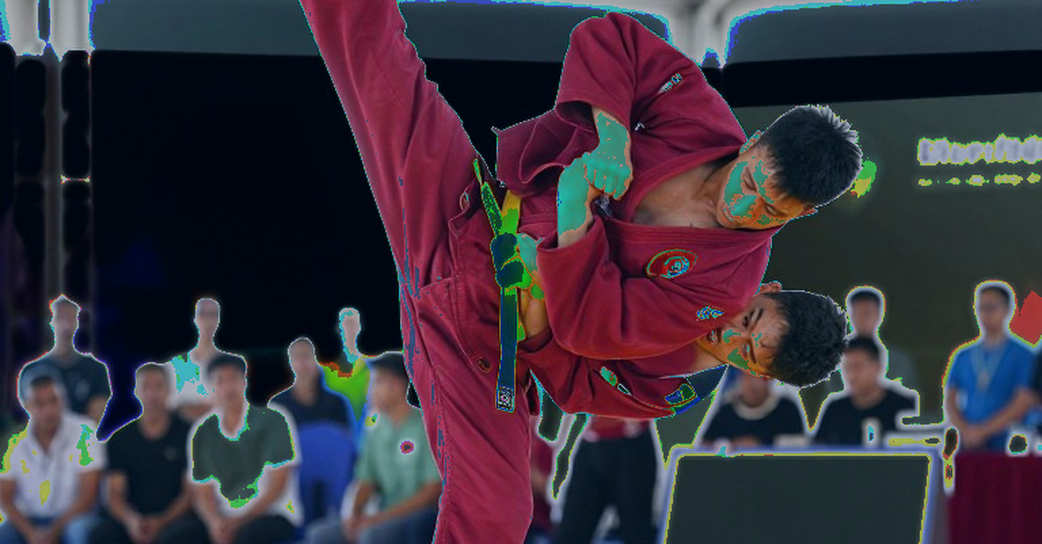
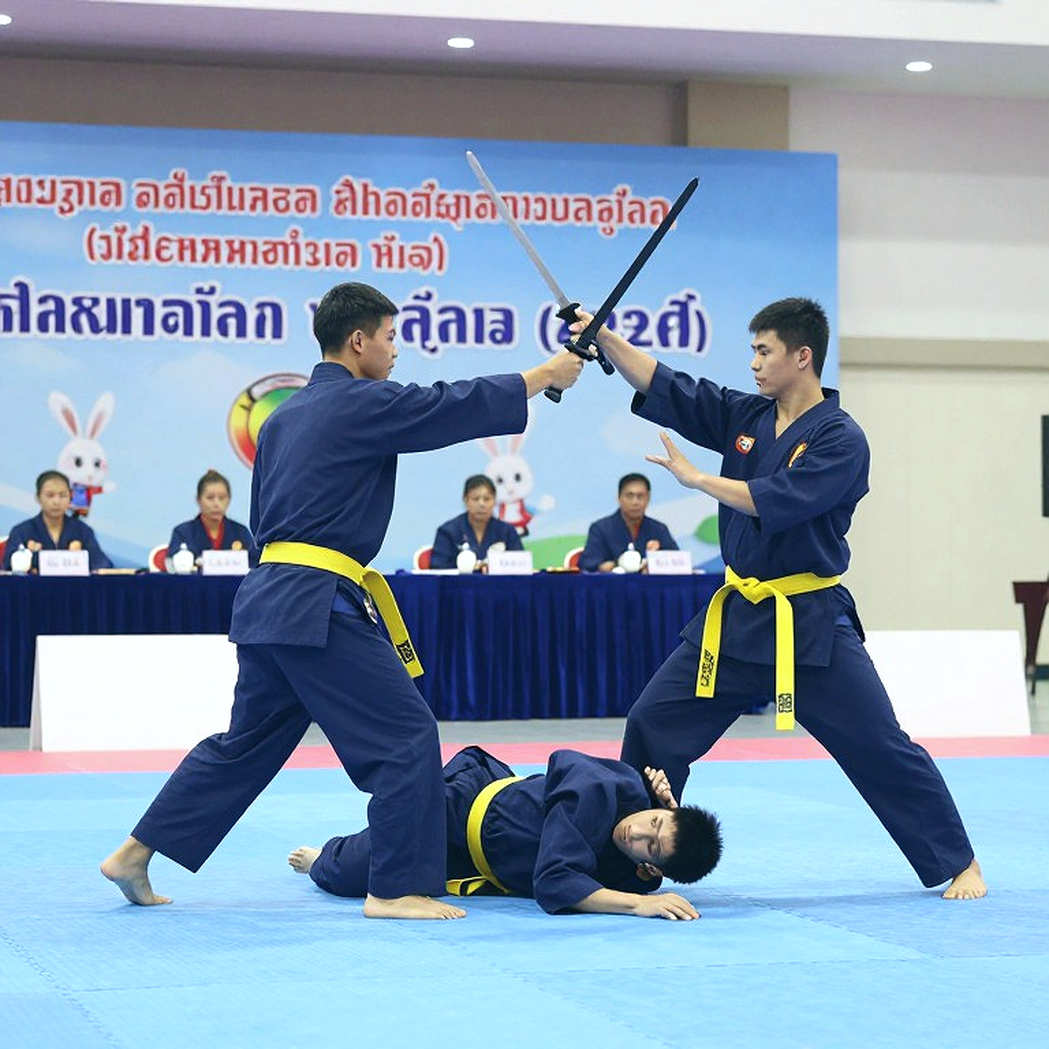
Another problem lies in the very name of the sport. In Vietnam, the two words “martial arts” embrace many different entities: traditional performance martial arts, free combat, sanda, kickboxing and MMA. Each operates by its own logic. A form routine is scored on difficulty and quality of movement — it has no concept of “defeating an opponent”, no knock-out rate, no comparable impact injury. Meanwhile, MMA and boxing live by the opposite metrics: significant strikes landed per minute, durability, control time on the mat.
When the media blur the two worlds, audiences blur along with them. Fans begin to impose the win-loss thinking of combat onto performance, and conversely, to impose performance scoring onto combat. Both are wrong. And those who pay for this mistake are usually not the fans, but the fighters — people forced to play a game whose rules have not been written clearly.
There is another layer I want to name: the economic story. In international professional martial arts, most of a fighter's income comes from a short window — usually only three to five peak years. For top fighters in the world, television and sponsorship deals can bring in large sums. But for most Vietnamese fighters, income from a single bout barely covers training, food, and travel costs. They have no pension fund. They have no union. They have no one to negotiate on their behalf. A contract is not a set of numbers. It is a parting written in signatures.
Then there is the matter of doping control. In developed martial arts scenes, bodies such as the United States Anti-Doping Agency or the Voluntary Anti-Doping Association play a testing and enforcement role. In Vietnam, we do not yet have a sufficiently strong equivalent. That is not only a question of fairness between fighters, but also a health question: a fighter using banned substances to cut weight, to recover from injury, or to increase durability is pushing himself into a dangerous zone that no one monitors.
There is a misunderstanding I encounter often when talking with audiences, and I want to name it: the belief that “because combat sports are growing, they must be safer”. This is not true. Commercial growth and fighter safety are two paths that can run side by side, but they are not automatically linked. Sometimes, growth pushes risk higher, because there are more events, more contracts, more pressure to meet media obligations, and less rest time.
A second misunderstanding: many say fighters choose this trade voluntarily, so they must accept all risks. I used to think that way when I was young. Not anymore. Voluntariness only has meaning when it comes with understanding. An eighteen-year-old boy walking into an MMA gym in a central province does not have enough information to understand that he is betting his liver, his kidneys and his memory. He only knows it is a path out of poverty. To call him “voluntary” is an easy way out.
What strikes me most is the distance between how the community sees fighters and how fighters see themselves. From outside, people see an image of a person on the mat — solid, fierce, invincible. From inside, I meet twenty-five-year-old men who do not dare look in the mirror after a loss, do not dare tell their families where it hurts, do not dare ask: after I retire, who am I? Those questions do not appear on television. But they are the truest part of this sport.
And this, I believe, is the greatest paradox. We celebrate the moments of victory, but forget that most of a fighter's story unfolds after the bell ends. Some bouts last only minutes, but their story lingers for decades. Fans remember the knock-out, but not the name of the doctor who examined the fighter beforehand, or the person who decided to let the fight continue.
I do not write this to conclude, but to pose a question to those of us in the profession: have we done enough? We have counted enough fighters stepping onto the scale, but not the fighters stepping off it with a damaged body. I believe the next generation of Vietnamese fighters will not be protected by titles, but by the most boring procedures: periodic health checks, post-bout rest rules, psychological counseling, and a scale that is no longer a place where a person wagers his life. When that happens, the bell over the mat will ring as it always should have: a signal to begin, not a final farewell.

Cầu thủ liên quan
Bài nổi bật
Inam Butt and the Eye-Medication Doping Case: When TUE Paperwork Decides an Entire Career2026-09-15
The Eyes, the Late TUE and the Silver Medal That Left Inam Butt's Neck2026-09-15
The Analysis Gap in Vietnamese Martial Arts Sports: When Data is Empty and the Story Has Only Just Begun2026-09-13
Coming Back From Injury: How Vietnam's Fight Circuit Forces Fighters to Prove Themselves All Over Again2026-09-12
Vietnamese Traditional Martial Arts in Real Combat: Spirit Cannot Fill the Systemic Gap2026-09-12
Bài đề xuất
Vietnam's Fighting Floor After the Games Lights: Medals, Bills and Names That Never Got Their Turn2026-09-11
Martial Arts Injury Data in Vietnam: The Gap Nobody Wants to Fill2026-09-10
Vietnam's Taekwondo at Asiad 2026: A Gamble With Only Two Cards2026-09-18
Congested fixtures are signing their names onto V.League players' bodies: No injury is accidental2026-09-09
Bài đề xuất
Two Fighters and an Empty Column: Vietnam's Taekwondo Dossier Before Asiad 20262026-09-17
Insufficient Data for Analysis2026-09-05
Analysis of Tactics in Martial Arts: Why Data is More Important Than the Number of Fights2026-09-06
The Southeast Asian Combat Sports Injury Map: An Empty Database Is the Loudest Warning2026-09-10
Bài đề xuất
Two Measures for One Word: Forms, Fight Nights and the Data Gaps in Vietnamese Martial Arts2026-09-13
Vietnam's Fighting Floor After the Games Lights: Medals, Bills and Names That Never Got Their Turn2026-09-11
Vietnam's Taekwondo at Asiad 2026: A Gamble With Only Two Cards2026-09-18
Vietnam Taekwondo and the Chuncheon 2026 Gold: The Substitution That Kept the Title2026-09-19
Bài đề xuất
Congested fixtures are signing their names onto V.League players' bodies: No injury is accidental2026-09-09
Source error: cannot create article because Stage-1 data is empty2026-09-06
Seven Cells of N/A and the Fabrication Trap in Combat Sports Media2026-09-10
Insufficient Data for Analysis2026-09-05
Analysis of Tactics in Martial Arts: Why Data is More Important Than the Number of Fights2026-09-06