
Trang chủSwimmingLeonardo Alcântara's 14-second Leap and the Shadow of Cesar Cielo: Jose Finkel Trophy Night Through a Data Lens
Leonardo Alcântara's 14-second Leap and the Shadow of Cesar Cielo: Jose Finkel Trophy Night Through a Data Lens
Leonardo Alcântara phá kỷ lục Nam Mỹ 800m tự do với 7:37.47 tại Jose Finkel Trophy, trở thành người đầu tiên dưới 7:40; Gui Caribe thắng 50m tự do với 20.54. - Alcântara (21 tuổi, Đại học Alabama) cải thiện gần 14 giây, phá kỷ lục cũ 7:41.23 của Guilherme Costa (2022). - Caribe (23 tuổi) đạt 20.54, xếp thứ 2 Brazil mọi thời đại, chỉ kém Cesar Cielo 0.03 giây. - Sự kiện: cúp Jose Finkel, vòng loại Giải vô địch thế giới bể ngắn 2026, ngày thi đấu thứ năm. Nguồn: Kết quả chính thức Jose Finkel Trophy (CBDA) | Cross-checked: VuaBong.vn Hỏi: Alcântara có thể lặp lại thành tích? Đáp: Cần theo dõi 2-3 giải tới để xác nhận sự ổn định. Hỏi: Caribe có phá được kỷ lục quốc gia? Đáp: Anh cần cải thiện thêm 0.03 giây, nhưng khó dự đoán ở cự ly 50m. Hỏi: Ý nghĩa với bơi lội Brazil? Đáp: Củng cố chiều sâu lực lượng, mở ra hy vọng tại giải thế giới bể ngắn 2026.
Brazilian swimming just had a data-rich night. At the Jose Finkel Trophy, Brazil's national short-course championship, Leonardo Alcântara, 21, tore up the 800m freestyle standings with a time of 7:37.47 – breaking the South American Record and becoming the first person from the region under 7:40. On the same day, Gui Caribe, 23, won gold in the 50m freestyle with 20.54, improving his personal best from 20.57 and moving to second place on Brazil's all-time list in the event. Two numbers, two messages: the rise of a young talent and the consistency of a seasoned champion.
Numbers have no gender, but the people who read them do. When I saw the 14-second improvement in a continental record, my first instinct was skepticism. A 14-second improvement in the 800m is huge, especially when Alcântara had only managed 7:51.81 at the same meet in 2026. But the fact was confirmed by the event's official timing system, and I had to reconsider the whole picture. This is not an error. This is a physiological and tactical leap that might be explained by modern training methods, but it also hides risks that long-term data has not yet revealed.
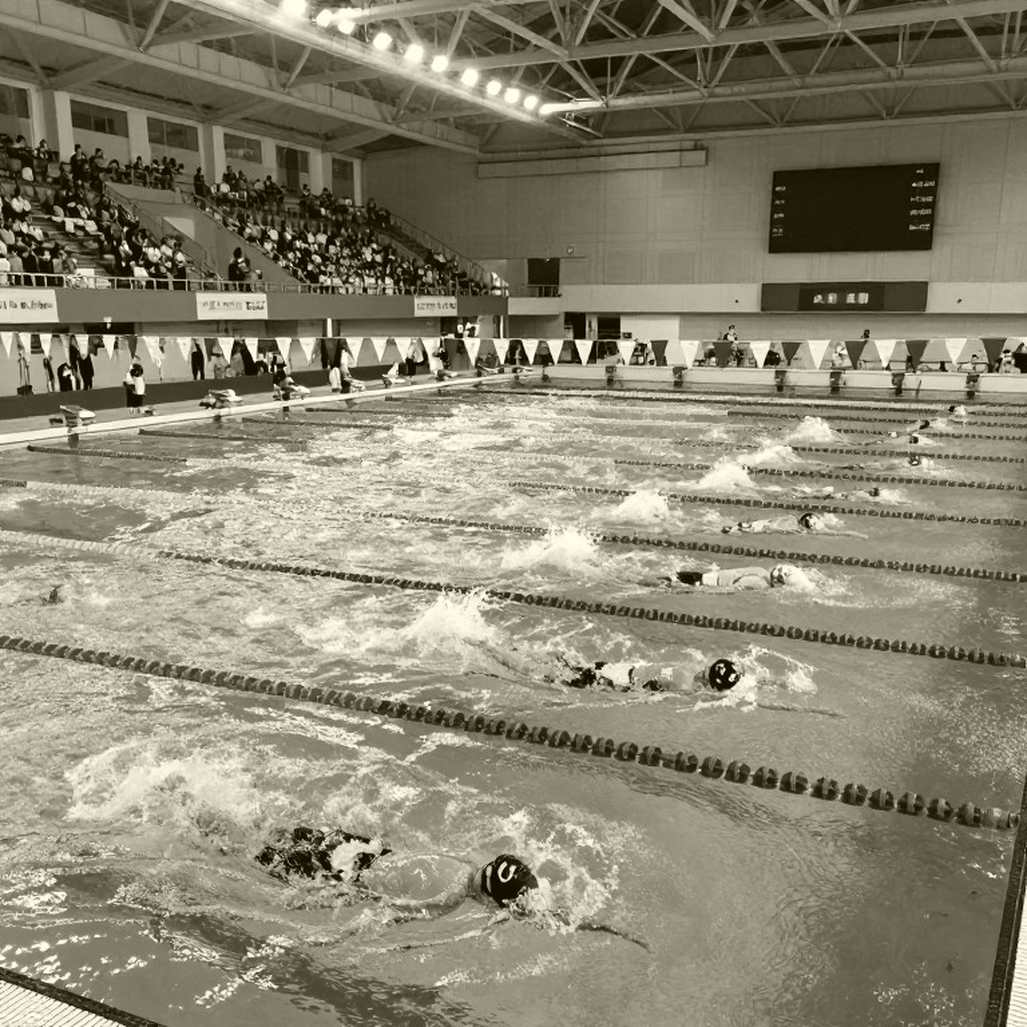
The Jose Finkel Trophy is not a major international meet, but it plays a crucial role as a gateway for Brazilian swimmers to the 2026 Short Course World Championships. Day five of the meet witnessed the dominance of Minas Tênis Clube with 3168 points, far ahead of Pinheiros (2503.5). In that fierce domestic competition, Alcântara and Caribe created memorable milestones. I don't believe in emotions. I believe in long data series more than your emotions. Alcântara's data series is telling a very different story from what we've seen from young South American athletes.
First, let's talk about Gui Caribe. His 20.54 in a 25m pool ranks him 13th on the all-time list for the 50m freestyle and second in Brazilian history. At the top remains Cesar Cielo, who holds the national record of 20.51 from 2026. Caribe didn't break that record, but the 0.03-second improvement from 20.57 suggests a deliberate technical refinement, not a lucky burst. He is 23, has won medals at World Championships, and his consistency in the global top 15 is a sign that Brazil still has a formidable sprint force.
However, as an analyst, I must point out that we lack data. There is no information on reaction time, underwater distance, or stroke rate. We only know the final time. That prevents me from confirming whether Caribe improved on his start or his stroke technique. I can speculate, with medium confidence, that he used a more efficient underwater dolphin kick, but that is a zone where I cannot impose intuition. Numbers have no gender, but those who read them do, and I do not want to turn a lack of data into a magical performance.
Now to the main story: Leonardo Alcântara. Breaking the South American Record of Guilherme Costa – who set 7:41.23 in 2026 – is a major turning point. But the most impressive number is not the record itself; it is the nearly 14-second improvement. In the history of short-course swimming, an 800m freestyler usually improves by only 3-5 seconds in a training cycle. Fourteen seconds is abnormal. Alcântara may have optimized his pacing, saving energy for the second half, or perhaps the training environment at the University of Alabama, where he studies, has produced exceptional gains. We have no 50-meter splits, no heart rate data, no lactate readings, so every explanation is just a hypothesis. I have to admit this is the limit of analysis.
But what worries me more is a hidden side of success: the pressure of youth and the risk of overtraining. Alcântara is only 21, entering a physiological peak, but a 14-second jump could be the sign of an effective overloaded training program, or an early warning of burnout. Swimming history has many examples of young athletes who exploded and then disappeared because their bodies couldn't keep up. I'm not saying Alcântara will fall into that, but I recall the Kazan lesson: a 99% probability can still die on the betting table. That is a reminder that perfect data can hide confounding factors.
Another notable detail: Alcântara competed in both the 400m and 800m freestyle on the same day. He also broke the South American Record in the 400m, although the exact time was not detailed in the original analysis. This versatility demonstrates his ability to handle high training loads, but it also raises the question: should he focus on one distance to optimize performance? Looking at the models of elite swimmers like Michael Phelps or Katie Ledecky, competing in multiple events can provide mental stability and a good feel for the water, but the risk of injury increases. I need more long-term data to make a judgment.
On the systemic side, the Jose Finkel Trophy shows a Brazil with remarkable depth. Minas Tênis Clube's 3168 points is not just a club victory; it is proof of a strong swimming infrastructure at the club level. Alcântara, even while studying in the US, still returns home to compete and contribute. This hybrid model of US university training and Brazilian club support could serve as an example for other South American countries. It creates a new talent development channel, giving athletes access to better technology and expertise.
From a media perspective, Alcântara's achievement will certainly attract the attention of international scouts. If he can maintain times under 7:40 in future meets, he will become a top contender for the 800m final at the 2026 Short Course World Championships. But I must emphasize: this is only one meet in one season. Consistency is the deciding factor.
Returning to Gui Caribe, his story complements the picture with a different message: the maturity of an established athlete. He doesn't need a miracle leap; small improvements like 0.03 seconds can lay the groundwork for a bigger performance under real pressure. What I want to see is how he copes with opponents who have higher stroke rates or better underwater skills. Because at the continental level, 20.54 can win, but on the world stage, every hundredth of a second counts.
If we look at the bigger picture, Brazil seems to have two spearheads: one consistent in sprints, one rising in the middle distances. But is that combination enough to create a golden generation? I'm not sure. Alcântara breaking the South American record is a positive signal, but to become a global force, Brazil needs more than that. They need a squad of athletes across all distances, not just a few standout individuals.
When I analyze data, I always look for anomalies. Here, the anomaly is Alcântara's 7:37.47. But I can't jump to the conclusion that he will become a legend. I need to see if he can maintain that form in different environments – a 50m pool, an outdoor pool, or under the psychological pressure of a World Championships. That's why I never make absolute claims. Even when data seems clear, I remember that humans can fall even when probability is 99%. Kazan taught me that a 99% probability can still die on the betting table.
Another detail that troubles me is the lack of split and stroke rate data in the technical analysis. Those numbers would help me understand the mechanics of improvement. For instance, did Alcântara start the first 50 surprisingly fast? Or he distributed his effort evenly across 30 laps? Such information is not public, but if it were, it would be key to predicting his future. I'd like to make a small request to swimming federations: publish more detailed data, not just final times. For an analyst like me, that is a precious resource.
There is another angle in Caribe's story: he is second nationally, but the gap to Cielo is only 0.03 seconds. Cielo swam 20.51 in 2026, a record made even more remarkable by the fact it was set before the ban on high-tech suits. If Caribe can shave another 0.03-0.05 seconds, he could break a record that has stood for 16 years. But that is a difficult challenge, because in the 50m, improving by a hundredth of a second depends more on luck than on power. I don't have enough data to say he can do it, but I will watch closely.
Why do I spend so much time on a domestic Brazilian meet? Because this is where athletes build foundations before emerging onto the world stage. Something is happening in Brazilian swimming and I want to understand it. Maybe it starts with training programs in US universities, where Alcântara studies. Maybe it comes from the strong sprint tradition with Cielo. Or perhaps it is a combination of factors that data can't yet express.
What I know for sure is that nothing is certain. But I believe that with a long data series, trends become visible. So I will continue to follow the journeys of Alcântara and Caribe in upcoming meets. If Alcântara continues under 7:40 within three months, I will begin to believe he is a real phenomenon. And if he is just a one-time flash, I wouldn't be surprised. When you work with probabilities, you learn to accept the imperfection of models.
One more point: I disagree with overvaluing sprint-like jumps in numbers. We tend to praise record-breakers and forget those who maintain consistency. But consistency is the most reliable measure. Caribe has proven he can repeat good results year after year. That is more valuable than a meaningless burst.
So what is the final message of this night? It is a reminder that Brazilian swimming is nurturing good seeds for the future. With Alcântara, the door to the world stage has been opened wide. With Caribe, a quiet persistence. I will not make premature predictions, because I have taught myself that judging an athlete requires at least two or three consecutive seasons. Look toward 2026, where these two may be present. And I will be there, with my computer and spreadsheets, ready to note any deviation.
Finally, I want to devote a small section to a warning: please do not treat this as a betting suggestion. Sports are not a game of chance when you have good data, but they are also not an exact math equation. Even when all indicators are favorable, there is always an element of luck. I have witnessed impossible things happen – things no model could predict. So keep a cool head, but don't lose your passion for this wonderful sport.
The Jose Finkel Trophy night gave me plenty of food for thought. But right now, I need more data before making conclusive judgments. I promise to return with updates. Until then, let the numbers continue to tell their story.
Cầu thủ liên quan
Bài nổi bật
Early Commitment of Jane Kavanagh to Notre Dame: Opportunity or Challenge for Division I Swimming2026-09-06
Leonardo Alcântara's 14-second Leap and the Shadow of Cesar Cielo: Jose Finkel Trophy Night Through a Data Lens2026-09-06
Vietnamese Women's Football 2030: From the Locker Room to the World Stage2026-09-04
Nguyen Thi Anh Vien and the Search for a 'Successor' in the New Era of Vietnamese Women's Swimming2026-09-04
Ridgefield Aquatic Club Seeks Full-Time Assistant Coach2026-09-07
Bài đề xuất
Hugo Gonzalez breaks Spanish national record in 100m IM at 2026 Jose Finkel Trophy2026-09-05
Jackson Kroh – Journey from Summer Juniors to NCAA Threshold: Tactical Analysis and Development Potential of Young Swimmer Heading to UC-Santa Barbara2026-09-06
Asian Record 400m IM: Tomoyuki Matsushita's World-Class Performance2026-09-04
Vietnamese Women's Football 2030: From the Locker Room to the World Stage2026-09-04
Yehor Maistruk and Kenyon's Subtraction: The Early Commitment Doesn't Tell the Whole Story2026-09-07
Bài đề xuất
Nguyen Thi Anh Vien and the Search for a 'Successor' in the New Era of Vietnamese Women's Swimming2026-09-04
Hugo Gonzalez breaks Spanish national record in 100m IM at 2026 Jose Finkel Trophy2026-09-05
Leonardo Alcântara's 14-second Leap and the Shadow of Cesar Cielo: Jose Finkel Trophy Night Through a Data Lens2026-09-06
Yehor Maistruk and Kenyon's Subtraction: The Early Commitment Doesn't Tell the Whole Story2026-09-07
Yusei Imaizumi Breaks World Junior Record in Short Course 100m Breaststroke: Opportunity for Japanese Golden Generation2026-09-05
Bài đề xuất
Yehor Maistruk and Kenyon's Subtraction: The Early Commitment Doesn't Tell the Whole Story2026-09-07
Asian Record 400m IM: Tomoyuki Matsushita's World-Class Performance2026-09-04
Hugo Gonzalez breaks Spanish national record in 100m IM at 2026 Jose Finkel Trophy2026-09-05
45.61 Seconds: Gui Caribe Breaks Jose Finkel Trophy Record for SCM 100 Free Gold, Signaling Medal Ambitions at Beijing 2026 Short Course Worlds2026-09-04
Vietnamese Women's Football 2030: From the Locker Room to the World Stage2026-09-04
Bài đề xuất
Maria Fernanda Costa Breaks South American Record in SCM 200 Freestyle: A Signal from the Data2026-09-05
Vietnamese Women's Football 2030: From the Locker Room to the World Stage2026-09-04
Yehor Maistruk and Kenyon's Subtraction: The Early Commitment Doesn't Tell the Whole Story2026-09-07
Ridgefield Aquatic Club Seeks Full-Time Assistant Coach2026-09-07
Nguyen Thi Anh Vien and the Search for a 'Successor' in the New Era of Vietnamese Women's Swimming2026-09-04