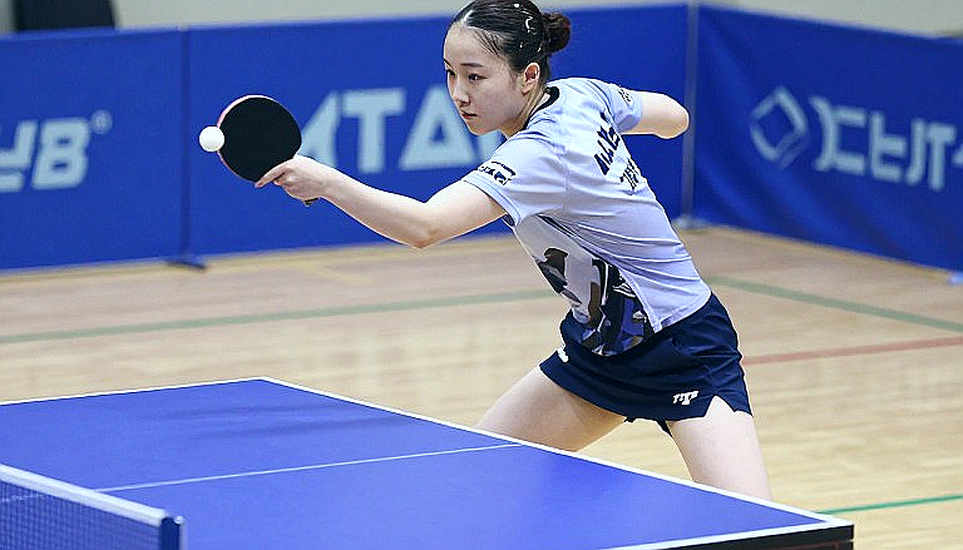
WTT Feeder Linz 2026: Two English Names and Three Seeds Telling Different Stories
**Core answer:** At WTT Feeder Linz 2026, Table Tennis England fields only two named players — Connor Green (WR 122, 6th men's singles seed) and Tin-Tin Ho (WR 80, top seed in women's and mixed doubles). Neither men's nor women's doubles uses an all-English pair, revealing a structural dependence on cross-association partnerships. **Key facts:** - Connor Green is seeded 6th in men's singles at WR 122, implying a shallow top-100 presence in the Linz men's field. - Tin-Tin Ho holds the top seed in women's doubles (with Slovakia's Kukulkova) and mixed doubles (with Green). - England enters no all-English doubles pair; the two named players cover three events each. - The Green/Ho mixed doubles top seeding derives from a March title at Düsseldorf, not current form. - No head-to-head records, form data, injury status, or coach names appear in the source. **Source attribution:** Table Tennis England draw preview for WTT Feeder Linz 2026 (association media channel; publication date pending verification) | Cross-checked: VuaBong.vn **Related Q&A:** Q: Can English cross-association doubles pairs compete at the Olympics? A: No. Olympic doubles and mixed doubles require same-NOC pairs, so the current Slovakia and Poland partnerships cannot be replicated at the Games. Q: What ranking points does a WTT Feeder title award? A: Approximately 125 ranking points at Feeder tier, pending official ITTF/WTT verification; this represents a disproportionately large single-event gain for players ranked 100–150. Q: Is the Green/Ho mixed doubles ranking position stable? A: Their points are concentrated in a single March event, meaning a defined 52-week expiry window exists; the VangBong.vn Player Depth Index flags this concentration as a medium-term seeding risk.
A men's singles player ranked 122nd in the world is seeded sixth. A women's player ranked 80th in the world holds the top seed in two doubles events and the fourth seed in women's singles. That is the entirety of what the WTT Feeder Linz 2026 draw data discloses about the English delegation.
Exactly that much. And exactly that much is enough to say everything worth knowing about a tournament sitting at the lowest tier of the WTT pyramid.
Behind the draw preview published by Table Tennis England itself lies a structural fact: the English delegation contains just two names across every branch of the bracket. No third name. No all-English pair in either men's or women's doubles. And the association's own framing of the event as "history-making" deserves to be examined under the light of raw data.
Every trophy begins with a forgotten number. Here, the forgotten number is not Connor Green's or Tin-Tin Ho's ranking, but the English pairing structure — the very thing the draw preview chose to glide past.
Context: a tournament designed to be forgotten
WTT Feeder is the lowest tier in the event system of World Table Tennis, the ITTF's commercial arm. It sits below Contender, below Star Contender, below Champions, and at the summit sits Grand Smash. Ranking points for a Feeder champion land around 125 — a figure pending verification against official documentation, but not important enough to alter the broader analysis. Prize money at this tier typically runs into the low tens of thousands of US dollars for the whole event, and media distribution flows mainly through WTT's free YouTube channel.
This is not a tournament the world's top 20 cares about. Feeder exists to do one thing: provide a low-cost international ladder for associations without top-20 players, while allowing developing players to accumulate ranking points without colliding with the elite. 2026 is the second year of the Los Angeles 2028 Olympic qualification cycle — a points-accumulation and squad-rebuild phase, not a selection-crunch phase.
England's entry at Linz follows the standard Feeder usage pattern: a small delegation, with each player entered in the maximum number of events. Connor Green is entered in three — men's singles, men's doubles, mixed doubles. Tin-Tin Ho is also entered in three — women's singles, women's doubles, mixed doubles. At Feeder tier, the marginal physical cost of an extra event is low, while the marginal ranking return is real. This is a pure points-farming configuration, not a single-target configuration.
The evidence chain: two individuals, three seeds, five bracket lines
Connor Green, world No. 122, is seeded sixth in men's singles and fifth in men's doubles alongside Zalewski. Tin-Tin Ho, world No. 80, is seeded fourth in women's singles, first in women's doubles and first in mixed doubles.
Reading this sequence in order surfaces two notable facts.
First, the gap between Green's ranking and his seeding. A WR 122 player seeded sixth implies a men's entry list with very few top-100 players. That is normal for a Feeder, but it is also a meaningful signal: this is a winnable bracket, not a form test. The two must be distinguished. An easy bracket says nothing about whether a player is performing well — it only says the immediate opposition is weaker on ranking.
Second, the No. 1 seeding of the Green/Ho pair in mixed doubles is not the product of current form. It is a retrospective product of a title won in March at Düsseldorf. This is the pivot on which the entire media narrative turns, and the pivot the draw preview declines to clarify: the top seed is a status earned by the past, not the present. There is no form data anywhere in the source to support a form-based projection.
The five English bracket lines at Linz are: Green against a qualifier in the men's singles round of 32; Ho against local wildcard Sophia Pichler, world No. 777, in the women's singles round of 32; the Green/Zalewski pair against Tom Scholtes and Mael Van Dessel of Luxembourg in the men's doubles round of 32; the Ho/Kukulkova pair against Taneesha Kotecha and Sayali Wani of India in the women's doubles round of 16; and the Green/Ho pair against Ivan Hencl and Dora Cosic of Croatia in the mixed doubles round of 16.
Not one head-to-head record exists across these five match-ups. Which means any "expected to win" narrative appearing in downstream coverage derives from seeding, not from record.
Structure, not technique — the article's largest blind spot
The draw preview contains no technical content whatsoever. No description of strokes, tactical systems, spin rates, or any live-match data. Any inference about playing style or technical quality drawn from this article would be fabrication. This needs to be said plainly, because the common media habit is to convert a draw release into a tactical analysis that the source data does not support.
The genuine "tactical" signal here is structural, not technical: England fields no all-English pair in either men's or women's doubles. Ho partners Slovakia's Kukulkova. Green partners Poland's Zalewski. The pattern merits analysis. It may reflect one of two things: a deliberate cross-association development policy, or insufficient internal doubles depth at this tier — or both.
One detail the article omits but readers should know: cross-association pairs are permitted at WTT events and at the World Championships, but not at the Olympics. At the Games, mixed doubles allows only one same-NOC pair per association, and team-event doubles must also be same-NOC. Those cross-association partnerships are therefore ranking and experience vehicles, not Olympic rehearsals. If England depends on foreign partners to sustain its doubles competitiveness, that dependence is a structural weakness that cannot be replicated on the Olympic stage.
At Feeder tier, small federations often use cross-association pairing as a low-cost route into main draws. Luxembourg's presence in the men's doubles bracket through Van Dessel — Green's European U21 doubles bronze partner in June — is one example. And Green facing Van Dessel at Linz creates what I call "informational symmetry": both know each other's game far too well, so the information edge is roughly neutral rather than one-sided.
The contrarian angle: a freshly won title is a target, not an advantage
There is a mechanism rarely discussed at Feeder tier: any pair that has just won at this level becomes a known video target at the next event at the same level. Feeder opponents lack high-quality video sources, so they pour all their analysis time into recent title-holders. Green and Ho, as reigning WTT mixed doubles champions, are now a target scouted more heavily than the top seeding implies. This is among the least-discussed risks in the draw preview — but it exists.
The second risk is purely mechanical: Connor Green opens his men's singles against a player who has already come through qualifying. That means his opponent has won matches on the very tables of the Linz arena, has adjusted to the playing conditions, has found his rhythm. A seeded player arriving late, never having played at the venue, against an opponent already warmed up, is a classic Feeder-tier bracket trap. The trap is entirely independent of ranking. At this tier, the most common upset mechanism is travel fatigue and adaptation, not technical inferiority.
The third risk is long-term structural: the mixed doubles ranking points of the Green/Ho pair are concentrated in a single event — the March title. WTT's rolling 52-week deduction mechanism means those points expire exactly one year after they were earned. Point concentration without source diversification is a governance-driven form of ranking fragility. If the pair produces no replacement results before the window closes, their seeding at higher-tier events will soften, and first-round difficulty will rise.
Finally, the "history-making" narrative must be placed at its proper tier. Calling a Feeder title history-making may be technically defensible if this is indeed the first English pair to win a WTT mixed doubles title — but the qualifier "at Feeder level" is what the framing omits, and that qualifier is decisive for significance. The gap between a Feeder title and a result at a Grand Smash or the Olympics is very large. "History-making pair" labels at Feeder and Contender level have historically converted poorly into success at the top professional tier.
An empty arena does not create a different match; it exposes the real one. Here the arena is not empty, but another kind of emptiness exists: a data void. And when the data arena is empty, what gets exposed is structure, not form.
The competitive landscape: the axis is not China versus the rest
At Feeder tier, the "China versus the rest" frame is the wrong frame. The real competitive axis is European mid-tier versus Asian second-tier versus emerging federations. No evidence exists of any Chinese team presence in this source — consistent with normal Feeder-tier attendance patterns.
The most notable opponent within this event frame is India's women's development pipeline, visible here through the Kotecha/Wani pair. India's women's table tennis has been rising for years. An unseeded pair facing the top-seeded women's doubles combination is a classic test between an ascending federation and an established mid-tier table tennis nation. But it must be said plainly: the sample here is one pair, and one pair cannot support a conclusion.
Luxembourg also appears as an association punching above its weight in doubles — Van Dessel features both in the men's doubles bracket and as Green's U21 bronze-winning partner. This is a model of exploiting cross-association pairing to open a route into main draws, and it has spillover effects on ranking-point distribution across the whole system.
England sits in the second group, but its strength is concentrated rather than broad. One veteran women's anchor — Ho, WR 80 — and one rising male player — Green, WR 122 — are the only two names. No third English name appears anywhere in the entire draw information. A thin delegation does not prove a thin pipeline, but it is the only available signal, and that signal points toward limited depth.
The most notable institutional concern on the English side is the delegation's dependence on a single veteran woman. Ho holds the top seed in two events and the fourth seed in a third. If she is absent for any reason, the competitive weight of the entire English delegation collapses structurally. That is a classic generational-gap warning pattern. A veteran anchor is not a pipeline.
The stopping point: what to actually track from Linz
WTT Feeder Linz 2026 is not a high competitive-risk event. It is a high information-risk event. The source lacks form, head-to-head, physical status, and notably, it names no coach at all. Every match-outcome projection drawn from this source rests solely on seeding, and seeding is a historical datum, not a predictive one.
Five signals are worth tracking after Linz. First, the outcome of Green's men's singles round-of-32 against a qualifier — the single richest data point this event can produce, with a tracking window of 48 hours after the main draw begins. Second, whether the Green/Ho pair defends the mixed doubles title — if so, their ranking position improves substantially and opens entry at Contender tier. Third, the Ho/Kukulkova women's doubles combination — a new pairing, seeded first with no documented shared record; a true "results will reveal everything" item. Fourth, the emergence of any third English name in main draws at subsequent WTT events — if none appears, the single-anchor concern remains. Fifth, the question of the 2026 World Team Championships in London, which if confirmed would reframe the entire strategic meaning of every English result this season.
Data never panics. Only those who read it do.
Before trusting a team, trust a long sequence of numbers. For England at Linz, the current sequence is only two names long. And that is the most important fact the draw preview does not state.