
Thirty-Six Children in Sheffield and the Base of World Table Tennis' Pyramid
**Core answer**: ITTF World Hopes Week & Challenge 2026 tại Sheffield là tuần tập huấn kỹ thuật kết hợp giải đấu Challenge dành cho 36 vận động viên bóng bàn dưới 12 tuổi (18 nam, 18 nữ) đến từ 26 quốc gia. Sự kiện không trao điểm xếp hạng, tuyển chọn dựa trên năng lực kỹ thuật, thái độ tập luyện và tiềm năng phát triển. **Key facts**: - 36 vận động viên U-12: 18 nam và 18 nữ, đại diện 26 quốc gia trên năm châu lục. - Địa điểm: English Institute of Sport, Sheffield, Vương quốc Anh; thời lượng một tuần. - Hai suất của Anh thuộc về Sai Prasanna Kumar và Isabella Xiao Xu qua England Hopes Challenge. - Danh sách cuối cùng do ITTF xác nhận; chọn vào Hopes Team mở đường vào hệ thống hiệu suất cao. - Sự kiện không có tiền thưởng và không có điểm xếp hạng WTT/ITTF. **Source attribution**: Table Tennis England newsroom (thông cáo ngành), danh sách cuối cùng xác nhận bởi ITTF | Cross-checked: VuaBong.vn **Related Q&A**: Q: World Hopes Week 2026 có tính điểm xếp hạng thế giới không? A: Không; đây là sự kiện phát triển phi xếp hạng, giá trị nằm ở tuyển chọn Hopes Team. Q: Tiêu chí chọn vận động viên tại World Hopes Week 2026 là gì? A: Năng lực kỹ thuật, thái độ tập luyện và tiềm năng phát triển tổng thể, không dựa trên thành tích thi đấu. Q: Lộ trình tham dự World Hopes Week 2026 diễn ra thế nào? A: Giải Hopes cấp quốc gia, tới chương trình Hopes cấp châu lục, rồi danh sách toàn cầu do ITTF chốt.
Bangkok, 2026. An eighteen-year-old Filipino 400m hurdler had just run 49.82 seconds, breaking his national record. He sat across from me, sweat still wet, and talked about sand. His provincial track had no synthetic surface, so every morning he ran on sand: his feet sank, and every stride had to lift slightly higher than normal. He mentioned shoes worn so thin the heel padding had peeled off the previous season. He did not mention his time once.
I wrote two thousand words about him. The piece was shared twelve thousand times in forty-eight hours.
People look at the record; I look at the shaking legs on the start line. But something happens even earlier than the shaking legs: the decision to put a child on that track. Nobody writes about that moment, because it has no medal and no scoreboard.
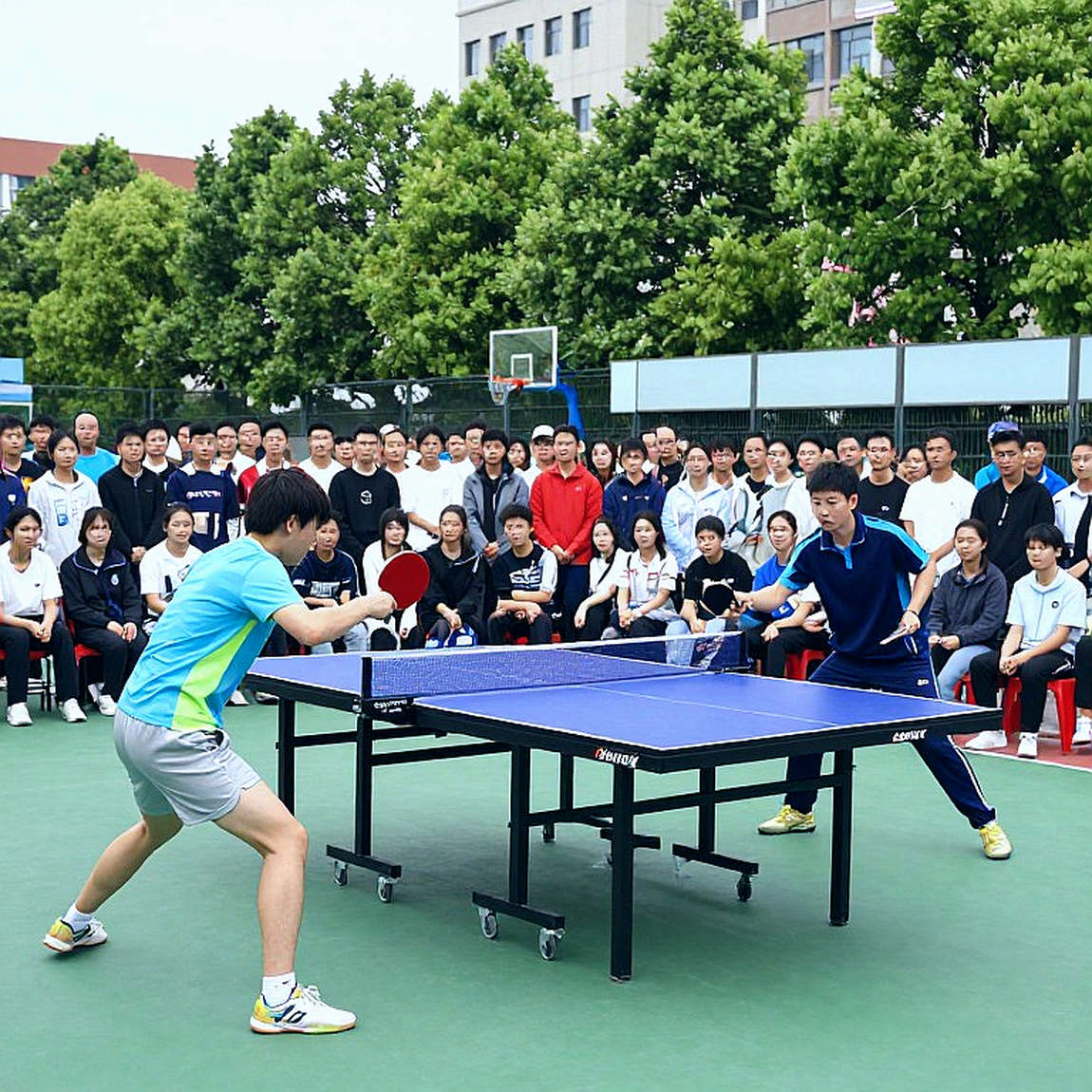
This month, in Sheffield, thirty-six children under twelve will walk into the English Institute of Sport. No scores. No prize money. No world ranking hanging over them. One week of technical training and a small competition called the Challenge. Eighteen boys, eighteen girls, twenty-six nations. The ITTF has confirmed the final list; Table Tennis England published it through its official newsroom.
For most sports readers, that is a brief to scroll past. For me, it is a map.
A programme with no leaderboard
The Hopes Programme is an ITTF development initiative run with the continental federations, designed to identify and nurture the world's most promising young players. It runs on four tiers. Tier one is the national Hopes event, where member associations run their own screening. Tier two is the continental Hopes programme, covering Europe, Africa, Asia, the Americas and Oceania. Tier three is the World Hopes Week, where qualifiers from five continents converge. Tier four is the Hopes Team, selected at the end of the week, opening a route into national high-performance systems.
The World Hopes Week & Challenge 2026 is that third tier. The event lasts a week and combines technical training with a Challenge competition. The venue is the English Institute of Sport in Sheffield, one of the United Kingdom's high-performance training centres. The scale: eighteen boys, eighteen girls, from twenty-six nations.
I went back through my notes on previous Hopes editions. And I found something the announcement does not say, which happens to be its single most important feature: this event awards no ranking points, carries no prize money, and sits outside the WTT and ITTF points systems.
That makes it the most overlooked category of event in sport. No standings. No seeds. No bracket to analyse. Sports media has nothing to write, so most of it does not write.
But skipping it means skipping the submerged part of the iceberg.
The pipeline: from a provincial event to a global list
Look at the architecture. A child who wants to reach the World Hopes Week must pass at least three gates. The first is the national Hopes event. In England, that is the England Hopes Challenge, where Sai Prasanna Kumar and Isabella Xiao Xu won their places. The second is the continental Hopes programme. The third is the final list confirmed by the ITTF.
This is a three-stage filter: nations screen, continents aggregate, the world decides. The architecture is not improvisation — it is a resource-governance mechanism.
What interests me is not the names of the two English children. What interests me is the structure that allowed those two names to appear at all.
For emerging table tennis nations — Chile, Malaysia, Uganda, New Zealand, Canada, Finland, the names cited in the announcement as examples of global reach — the Hopes Programme is one of very few documented, procedural, contactable routes by which an eleven-year-old in a place with no professional academy can still touch the elite system. Without Hopes, that route barely exists. With Hopes, it exists but is as narrow as a door crack.
I once sat in Luzhniki, Moscow, in 2026, listening to Viktor Volkov — a stadium security guard, a former 800m runner for the Soviet team, banned for doping in 2026 — describe the day his medal was stripped. He cried. He said something I have carried for eight years: "The worst part is not losing the medal. The worst part is that nobody told me in advance where the road would end."
A system with no signposts leaves young people to guess. And those who guess usually guess wrong.
The Hopes Programme, structurally, is a set of signposts. It has an entry point, an exit point, and a name for each stage. Technically, that matters as much as any rule reform.
Selecting ability, not results
This is where I want to slow down the most.
The announcement describes the assessment criteria at the World Hopes Week as three factors: technical ability, training attitude, and overall development potential. Competitive results are not among them. No match wins, no win rate, no age-group ranking.
Delinking selection from results at the under-12 level is a deliberate anti-early-specialisation choice, consistent with long-term athlete development principles.
I have seen the reverse at work.
Based on my experience covering matches and youth events, systems that rank children by absolute results tend to produce three kinds of loss. The first is the early maturer — bigger and stronger than peers, winning until fifteen, then overtaken when everyone else grows. The second is the late developer — filtered out at twelve for losing, then gone before anyone saw how fast they could run. The third is the technically gifted child pushed toward results instead of foundations, who at eighteen has a perfect serve and no longer loves the sport.
Do not ask how fast the talent runs; ask how many times they fell on that track.
At under-12, the human body is not settled. Bone and muscle growth are not synchronised. The ratio of upper-limb to lower-limb length shifts every year, and each shift breaks technique that then has to be rebuilt. Assessing an eleven-year-old on one week of competition is assessing the wrong object. Assessing them on movement quality, on coachability, on how they handle a mistake repeated three times — that is assessing the right one.
I once spent three months of the summer of 2026 watching and re-watching Usain Bolt's 100m tape from Berlin 2026, analysing every body angle, every ground contact rhythm. Not to find a technical secret. To understand that a perfect action at twenty-three was built from thousands of corrections at twelve, under the eye of a patient coach. Seventeen thousand words for one quiet summer, to understand that silence is also a contract.
A selection criterion that explicitly says "development potential" is a contract with the future. It tells the child: today you do not need to win; today you need to show us where you will go.
Two names from the host nation
Sai Prasanna Kumar and Isabella Xiao Xu are the two English athletes who qualified through the England Hopes Challenge.
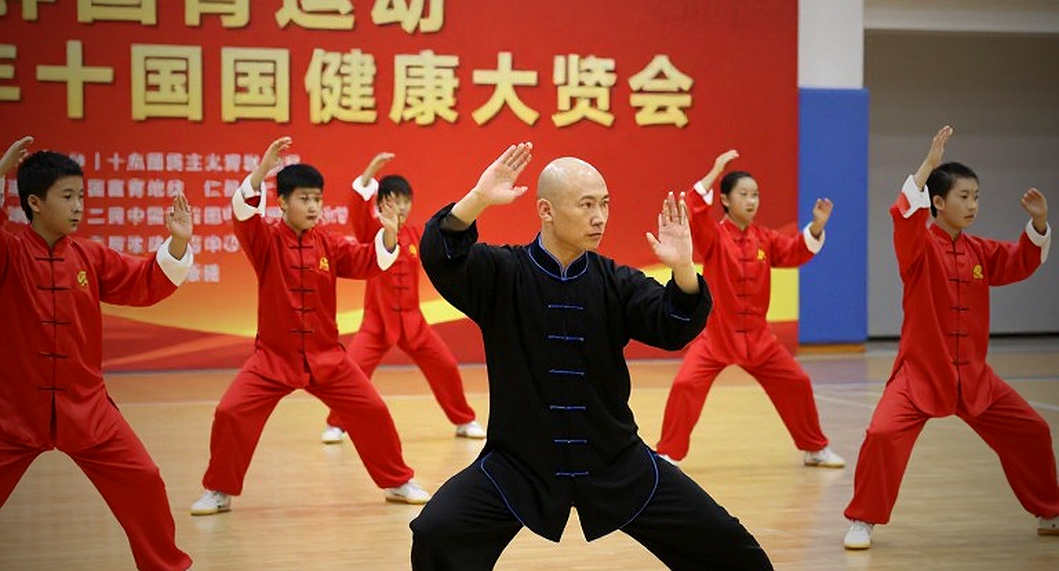
The announcement provides no individual results, no match data, no physical information. That is entirely normal at under-12 and should not be read as an omission. At this age there is no world ranking, no head-to-head sample worth analysing, and any statistical table would be a product of imagination rather than data.
But one structural signal stands out: both English places came through the domestic route, and both appear in a World Hopes Week staged on English soil.
Hosting a global development event tends to come with heavier investment in domestic talent identification — the host nation has an incentive to be represented on a list it is itself publishing.
I say this not to diminish the two children. I say it because organisational context is part of the story, and an honest sports journalist has to name it. Sheffield has the English Institute of Sport. Table Tennis England has a domestic media hook. Academies around Sheffield have a concrete reason to see enrolment rise next season. That is the hosting effect, and it is real.
The glow never goes out entirely — it simply moves into a protective shirt. Here, that shirt belongs to a federation trying to turn one international week into a grassroots campaign.
What the announcement does not say
One sentence in the release is evaluative. It says the spread of athletes across Europe, Africa, Asia, the Americas and Oceania reflects the truly global reach of the Hopes Programme.
I believe that at the event level. Twenty-six nations and five continents is wide enough to demonstrate the programme's presence everywhere.
But it is a claim about reach, not about the distribution of strength. Those two things differ, and that difference is the biggest blind spot of this category of event.
The nations named as examples — New Zealand, Canada, Chile, Malaysia, Uganda, Finland — are development-market signals, not traditional-power signals. Their presence shows the programme measures success by reach rather than by medals. That is a sensible philosophy for a development event. It also means anyone who reads this release and concludes that global table tennis quality is being levelled out has gone further than the data permits.
Elite table tennis remains concentrated in a small number of countries. At under-12 that concentration does not yet show up as a ranking, but it sits in the infrastructure: number of training tables, number of certified coaches, weekly training hours, domestic tournaments a child can enter in a year. Those numbers do not appear in the release. And they will decide most of the outcomes over the next decade.
I should flag another gap clearly: the announcement names no country from the traditional powerhouse group, and confirms neither the presence nor the absence of the major federations. Any conclusion about their presence in Sheffield 2026 is speculation, not analysis. I am leaving that gap open rather than filling it with guesswork.
The paradox of a points-free event
The conventional wisdom in professional sport is that an event with no points, no prize money and no broadcast does not matter. Value is measured by what can be counted. What cannot be counted has no value.
I think that argument fails here.
Removing ranking points from the World Hopes Week does not reduce its value — it improves the quality of the signal the event generates.
The reason is specific. Once an event carries ranking points, federations have an incentive to send whoever can earn them: the biggest, strongest, earliest-developing athlete in the age group. That incentive gradually turns a development event into a miniature performance event, and pushes the selection age even lower to capture physical advantage.
With no points at stake, the only remaining incentive to send a child is a federation's belief that the child has long-term potential. There is no other reward to trade for the place. Sending an eleven-year-old is an investment, and nobody invests in what they do not believe in.
Put differently: the fact that this event offers no short-term benefit forces participants to act in long-term interest. That is an intelligent mechanism design, and I have not seen many sports apply it this consistently at this age.
A blockbuster signing is only the final sprint down the home straight — smart people started running at the beginning. The World Hopes Week is one of the few events whose entire content takes place in the early part of the race, before anyone is in the stands.
Where the system actually breaks
This event has one weakness, and it is not in selection.
The release says that being chosen for the Hopes Team unlocks a fast route into the high-performance pathway. That is an institutional promise.
But an institutional promise is only worth as much as the people who execute it at national level, over years, with real money and real coaches.
This is where talent development programmes most commonly fracture. Not at identification. At identification, systems are often quite good. The fracture happens in the middle: after the week, after the group photo, after the federation website post. The child goes home. If the national association cannot sustain the training regime, cannot keep the coach, cannot provide a suitable competition calendar over the next twelve months, then the Hopes Week place becomes a nice memory instead of a turning point.
The biggest risk of a development event is not picking the wrong child — it is picking the right one and abandoning them after the week.
I have followed enough youth programmes to know this fracture rate is higher than people assume. And I know why it is rarely discussed: fracture does not generate news. An abandoned Hopes Team place does not become a headline. It quietly becomes a story nobody remembers the name of ten years later.
Beside that systemic risk sits another, softer but no less serious.
The final list is published. Thirty-six names. At eleven years old, a name on an international list can be turned into a label. Local media may call the child a prodigy. Parents may start calculating. Schools may start prioritising. And the child may start believing they must win every match from now on to avoid disappointing anyone.
I learned this the hard way. After the piece on Viktor Volkov, the story of the man stripped of his medal weighed on me for a week, until I was emotionally exhausted and spent days alone reviewing footage to recover. Since then I have held a professional rule: with vulnerable subjects, I protect them backstage as much as I can, and in print I say only what helps readers understand, never what helps readers be curious.
The thirty-six children in Sheffield deserve exactly that treatment. They need to be written as people who are learning, not as future stars. At eleven, the second half of that sentence does not yet exist.
Where a week in Sheffield travels
An event like this generates no revenue. No broadcast rights, no title sponsor, no image contracts. Measured commercially, it is nearly invisible.
But its transmission runs in another direction.
Upstream, it creates demand for youth equipment and coaching. A week involving thirty-six children and a supporting coaching staff sends a signal to parents in the Sheffield area that youth table tennis is a real pathway. Signals like that rarely produce an immediate wave, but they accumulate season by season.
Midstream, it reinforces the role of the ITTF and continental federations as allocators of opportunity. Every place is a resource-allocation decision, and those decisions shape which nations appear in the elite system a decade later.
Downstream, it supplies personnel for future national teams. If the conversion rate from Hopes Team into high-performance systems is high enough, the programme will prove its value without advertising.
I do not want to paint a bigger picture than reality supports. At under-12, the strength of an event like this is measured by something invisible: how many children are still training four years later. Not medals. Not articles.
What I take away
I have thought a lot about the eight-to-ten-year gap between an eleven-year-old in Sheffield and the first time they could appear at a senior Olympic Games.
Eight to ten years is longer than the career of many professional athletes. In that time a body changes completely, a family may move city, a federation may change leadership three times, a good coach may take a job elsewhere. Any single broken link is enough to end the road.
The World Hopes Week cannot control those variables. It can do one thing: place the right child on the right tier of the system, at the right moment, with a file detailed enough that whoever takes over later knows who they are inheriting.
That is why I did not write about this event as a short news item.
Knowing when to withdraw is a skill, like a runner who pulls out to save another season. Knowing when to start is also a skill, but that skill does not belong to the child. It belongs to the adults in the meeting room, deciding who goes to Sheffield and who stays home.
Thirty-six children will train for a week. They will learn a few things about spin, about footwork rhythm, about standing in front of an unfamiliar opponent. Then they go home.
The hardest part of the story begins afterwards, when no camera is pointed at them. And that hardest part is what decides whether, ten years from now, this map leads somewhere — or is just a page gone yellow.