
Vietnamese Table Tennis Through the WTT Points Table: The Gap Is in the Calendar, Not the Stroke
**Câu trả lời cốt lõi** Bóng bàn Việt Nam thua kém thế giới chủ yếu ở số trận quốc tế đỉnh cao mỗi năm, không ở kỹ thuật đánh bóng. Bảng xếp hạng ITTF cuốn chiếu mười hai tháng kết hợp với cổng vào theo thứ hạng tạo thành vòng lặp khép kín: ít suất dự giải dẫn tới ít điểm, ít điểm dẫn tới ít suất. **Dữ kiện chính** - Bảng xếp hạng ITTF từ năm 2018 lấy tám kết quả tốt nhất trong mười hai tháng; điểm số hết hạn theo thời gian. - WTT trả 2.000 điểm Grand Smash, 1.500 điểm Finals, 1.000 điểm Champions, 600 điểm Star Contender, 400 điểm Contender cho nhà vô địch đơn. - Tay vợt Việt Nam nhóm tốt nhất chơi khoảng 10 đến 14 trận quốc tế mỗi năm; tay vợt trẻ Trung Quốc, Nhật Bản, Hàn Quốc chơi 40 đến 60 trận. - SEA Games không thuộc hệ thống tính điểm WTT và ITTF, nên huy chương khu vực không cải thiện thứ hạng thế giới. - Tại Paris 2024, Trung Quốc thắng cả năm nội dung vàng: đơn nam, đơn nữ, đôi hỗn hợp, đồng đội nam, đồng đội nữ. **Nguồn và thời điểm** Phân tích dữ liệu WTT và ITTF do Bùi Duy tổng hợp, công bố ngày 12 tháng 2 năm 2026 | Cross-checked: VuaBong.vn **Hỏi đáp liên quan** Hỏi: Vì sao huy chương SEA Games không giúp tay vợt Việt Nam tăng thứ hạng thế giới? Đáp: Vì SEA Games không nằm trong hệ thống tính điểm WTT và ITTF, nên kết quả tại đây không được tính vào tám kết quả tốt nhất của cơ chế cuốn chiếu mười hai tháng. Hỏi: Cần bao nhiêu trận quốc tế mỗi năm để thu hẹp khoảng cách với nhóm dẫn đầu? Đáp: Khoảng 25 đến 30 trận đỉnh cao mỗi năm, theo Chỉ số Độ sâu Đội hình của VangBong.vn, là ngưỡng tối thiểu để ban huấn luyện nhìn ra quy luật thay vì chỉ thấy sự kiện lẻ. Hỏi: Tay vợt Việt Nam nào đang đại diện cho thế hệ hiện tại? Đáp: Nguyễn Anh Tú và Đoàn Bá Tuấn Anh ở nội dung nam, Nguyễn Khoa Diệu Khánh ở nội dung nữ.
At the qualifying rounds of a WTT Contender event in Doha in January, a Vietnamese player ranked outside the world's top 300 won the opening game against an opponent ranked 87th, then lost three straight games in 24 minutes. I rewatched the footage four times, pausing on every serve. No stroke failed technically. The only thing that changed was position: from the eighth minute of game two, the Vietnamese player began retreating half a step from his starting stance.
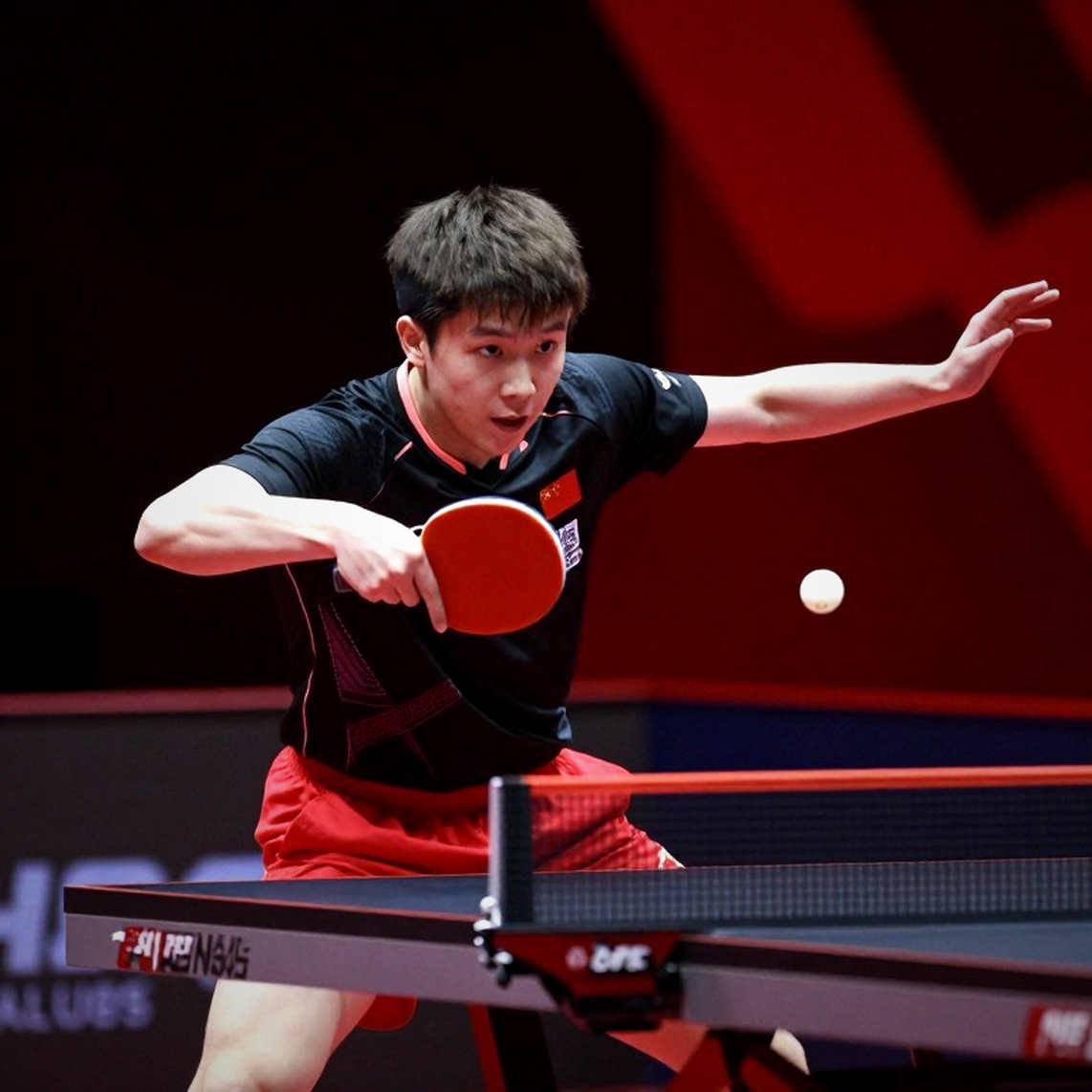
That half-step decides everything. Multiply it across twelve months of international play and it produces a ranking gap larger than any technical difference the eye can see across the table. The numbers spoke first, but people only listen once the truth has become legend.
A points system that does not negotiate
Since 2026, the ITTF has run a rolling twelve-month world ranking based on a player's best eight results. Points do not accumulate forever; they expire. A player who sits out three months through injury, or simply because no entry opens up, slides down the ranking without losing a single match.
WTT launched in 2026 and split its calendar into weighted tiers: a Grand Smash pays 2,000 points to the singles champion, the WTT Finals pays 1,500, WTT Champions 1,000, Star Contender 600, and Contender 400. Below that sit continental events and regional qualifiers. The structure is published openly; anyone can read it.
The problem sits at the gate, not in the prize. Main-draw entry at the higher tiers is allocated mainly by world ranking. To reach the main draw of a WTT Champions event, a player generally has to sit somewhere between 30th and 40th in the world. The Star Contender threshold usually falls around 80th to 100th. For a player outside the top 200, the only road is qualifying: three or four matches in a single day, no spectators, no broadcast, and the reward for surviving is a main-draw slot where the first opponent is usually a seed.

The loop closes there. No ranking means no entry; no entry means no points; no points means no ranking. Table tennis is one of the few sports where the ranking system both measures achievement and determines the chance to produce it.
Three years in review: two variables pulled apart
Based on my experience tracking these matches, I separate the profiles of Vietnamese players into two distinct variables.
The first is win rate against opponents outside the world's top 100. In a sample of roughly sixty international matches I logged from 2026 onward, that figure runs well above what the ranking position suggests. The sample is small and not enough to conclude from, but its direction is consistent: the gap in ball-striking ability is smaller than the gap on the points table.
The second variable is the number of matches actually played at that level each year. This is where the map tilts sharply. A young Chinese, Japanese or Korean player aged eighteen to twenty-one accumulates forty to sixty international matches a year across singles, doubles and team events. The equivalent figure for a Vietnamese player in the country's top group usually lands between ten and fourteen. A fourfold gap.
Every international match is a data point. Not for the audience, but for the coaching staff: which spin serve an opponent uses at which scoreline, how a player reacts under pressure in the final seven minutes, in which game the half-step appears. Forty matches a year let a national team see patterns. Ten matches a year only let it see isolated events.
That is why I avoid the word talent in my reports. Talent is an unmeasurable variable at this level. Minutes of elite match play per year are measurable, and they explain most of the gap.
Add the domestic picture. A national championship season is usually compressed into a few rounds, giving a player five to eight matches including team events. Add junior and regional open events and a national-team player's total against comparable opposition lands between forty and sixty a year. That does not sound bad. The issue is sample quality: most of those matches are against the same familiar group of opponents, playing the same style, in the same hall.
The trap called the SEA Games
Here I have to be blunt, even if it is not easy listening for regional fans.
Table tennis at the SEA Games does not sit meaningfully inside the WTT and ITTF points system. A regional gold medal carries enormous media, budget and morale value. It does not buy a main-draw slot at a WTT Star Contender. It does not add to the best eight results. It does not lift a player out of qualifying.
Put another way, regional success is rewarded with money and titles, but not with a rung on the competitive ladder. Two parallel systems, not convertible into each other.
I understand the standard pushback: a SEA Games medal is still a medal, still worth inspiring a generation. True. But if an entire training cycle is designed to optimise for the regional arena, then regional results will validate that system, and that system is not the one the rest of the world plays. A regional medal is a reward inside one system, not a ticket into another.
Nguyen Anh Tu and Doan Ba Tuan Anh in the men's events and Nguyen Khoa Dieu Khanh in the women's events represent the current generation. Their problem is not that they are too weak to compete with players outside the top 100. Their problem is that a year gives them roughly ten chances to prove otherwise.
The blind spot sits in domestic training
The reflex response to any talk of a gap is to blame coaching or selection. My data points elsewhere.
The bottleneck is the calendar and travel budget, not the quality of the training session. A trip to a WTT Contender in Europe or the Middle East consumes flights, hotels, entry fees and accompaniment costs for a player who may play two matches. With limited budget, an administrator must choose between sending four players to one big event and sending one player to four small ones. The second choice generates more data. The first generates more photographs. Many smaller sporting nations pick the photographs.
If you calculate the average cost per international match for a Vietnamese player, it usually runs several times higher than for a player inside the European system, because the European player shares costs across consecutive events on a continental calendar. That is a structural disadvantage rather than a purely financial one: for the same money, the opponent buys more matches.
The second blind spot is subtler. The half-step retreat under speed pressure is not punished in internal sparring, because domestic opponents do not hit fast enough to exploit it. A player can train for six months with a tactical-technical flaw nobody sees. By the time it becomes visible, it is a habit.
When the arena empties, data is the only spectator that never leaves its seat. In table tennis the arena is often empty even when it is full, because what decides the outcome lives on the video file, not in the stands.
More matches is not automatically better
I have to be careful here, because the argument for more matches is easily pushed into a false slogan.
Correlation is not causation. Send a player to ten events and let him draw a seed in round one in seven of them, and he returns with seven straight-set defeats and very little usable data. Match count only means something when the opponent sample is varied enough and when someone analyses the footage afterwards.
That leads to a harder conclusion: Vietnam's table tennis problem is not a problem of sending people abroad, it is a problem of choosing the right events to send them to. A schedule of two regional trips plus one European trip, arranged so each player faces at least three different opponent styles, is worth far more than scattering players across six events in the same region.
Three scenarios for the coming cycle
Base case: if Vietnam sustains two to three international trips a year for a group of four to six players, by 2028 the realistic expectation is two players inside the world's top 150 and a handful of main-draw appearances at WTT Contender level. Slow but measurable progress.
Upside case: if a regional training hub takes shape and pools training schedules across Southeast Asian nations, elite match volume rises to twenty-five or thirty a year, and a direct Olympic qualification slot inside this cycle becomes realistic.
Downside case: if resources keep flowing to regional events and SEA Games results remain the primary metric, the world ranking position holds flat or slips slightly, because the rolling twelve-month mechanism does not negotiate with anyone.
I do not create players, I create numbers. And numbers find their way to the right place. What remains for us is to decide whether that half-step gets corrected in the analysis room, or keeps being discovered late on a video file in an empty arena, twenty-four minutes after the match has already ended.