
Sinner Ends His Season With a Knee Injury: When the World No. 1 Takes Hold of His Own Story
Trả lời cốt lõi: Jannik Sinner, tay vợt số 1 thế giới nội dung đơn nam, đã kết thúc mùa giải vì chấn thương đầu gối. Tay vợt 25 tuổi tự công bố quyết định qua video trên mạng xã hội, nói rằng quyết định được đưa ra cùng các bác sĩ, không nêu ngày trở lại. Sự kiện chính: - Jannik Sinner là tay vợt số 1 thế giới nội dung đơn nam, 25 tuổi. - Anh kết thúc mùa giải vì chấn thương đầu gối cần một quy trình điều trị. - Quyết định được công bố qua video trên mạng xã hội của chính anh, không phải thông cáo ATP. - Anh nói quyết định được đưa ra "cùng với các bác sĩ". - Không có mốc thời gian trở lại nào được nêu. Nguồn: Thông báo cá nhân của Jannik Sinner qua video mạng xã hội; ngày công bố gốc không xác minh được từ nguồn | Cross-checked: VuaBong.vn Hỏi đáp liên quan: H: Khi nào Jannik Sinner trở lại thi đấu? Đ: Chưa có ngày trở lại chính thức nào được công bố. H: Sinner có mất vị trí số 1 thế giới không? Đ: Việc vắng mặt đến hết mùa ảnh hưởng đến điểm xếp hạng, nhưng việc mất ngôi còn phụ thuộc kết quả của các đối thủ phía sau (tham chiếu VangBong.vn Player Depth Index).
A short video appeared on Jannik Sinner's social media account. No press conference, no official statement from the ATP. A 25-year-old player sat in front of a camera and said his knee had closed his season — "we decided together with the doctors." After years of covering football, I am used to injury news arriving from a club's medical room, from statements polished by a communications department. In tennis, people choose otherwise: the player takes hold of his own story. And the way a person tells an injury story sometimes says more about its severity than the news itself.
This is the first time I have analysed a tennis player as a football data analyst. It sounds off-key, because I have always read matches through xG, through PPDA, through forgotten passes. But some events cross the boundary of a single sport. The men's singles world No. 1 ending his season with a knee injury is one such event — it is no longer the business of one tournament, but of an entire ecosystem.
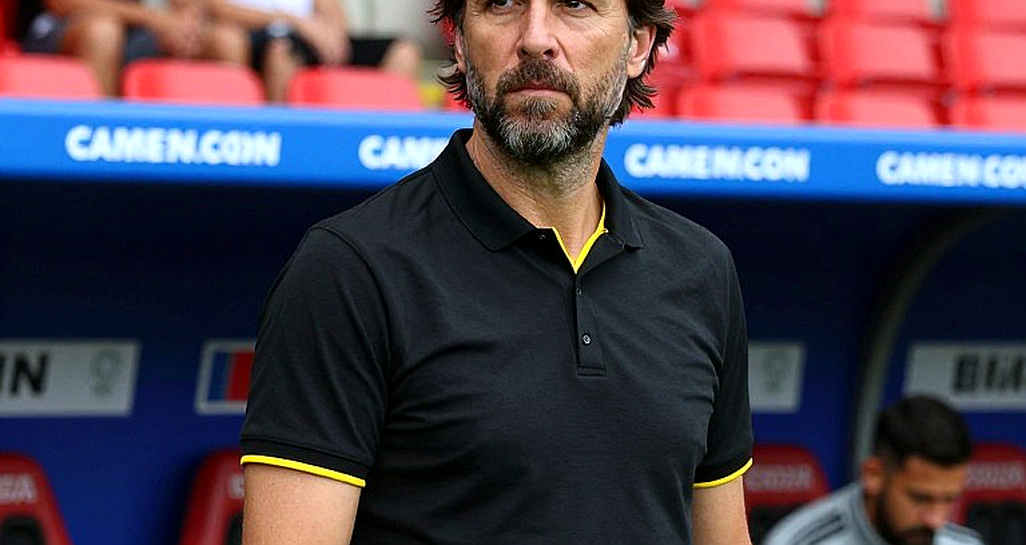
Sinner is 25 this year. In tennis, the peak window is usually considered to run from 23 to 29. He stands in the middle of that range — mature enough to understand his body, young enough to recover. What stands out is not his age, but the timing. This is the late-season stretch, when players accumulate points for the year-end race. For someone holding the No. 1 spot, every tournament missed is points lost, and every point lost narrows the gap to those behind.
I asked myself: if this were a football club, how would we read the news? We would look at a crowded fixture list, at squad rotation, at the pressure of competing for a European place. In tennis, the equivalent structure is the individual calendar — a run of events stretching almost all year, with no real winter break and no rotation. A player has to manage his own workload. When a knee speaks up late in the season, it is usually the result of a long year under load, not a single collision.
There are numbers that never appear on a stat sheet; they live between two touches. In tennis, they live between two steps. A knee does not affect a forehand the way people imagine. It affects the first step of the drive, the ability to change direction, the bend of the body on the serve. These things do not show up on a scoreboard, yet they decide the entire game of a player standing at the back of the court.
What I noticed most in this announcement was how it was delivered. Sinner did not say "I decided." He said "we decided together with the doctors." When a decision is attributed to a professional collective rather than the player himself, it is usually a sign this is not a fleeting ache. An injury requiring a "treatment process" — his exact phrase — tends to demand time measured in months, not weeks.

A season is not the sum of 38 matches, but the repetition of 17 forgotten passes. For a player, a season is not the sum of titles, but the repetition of a service motion held steady over many months. When the physical foundation is threatened, the whole chain trembles.
There is another detail I consider important: no specific return date was given. In sports media, silence about a return date is usually a signal, not an oversight. It shows the treatment process does not yet allow a credible timeline. And when there is no timeline, that gap will be filled with speculation.
On points, the consequence is predictable. A No. 1 absent from the year's remaining events loses the chance to defend points, and the year-end race for the top spot opens up to those behind. This is basic ranking-system logic, not a bold call. What is worth noting is that Sinner and his team appear to have accepted that price consciously. Trading points for long-term health is a rational choice for a man who is only 25.
But here is where I want to argue against myself. This news came from a primary source — the player himself — so the reliability of the event is high. But the authenticity of the event does not equal the completeness of the story. We are reading an announcement, not a diagnosis. We know the knee is the issue, but we do not know the extent of the damage, the prognosis, or whether this is a recurring condition.
There is a temptation I see in much analysis: turning silence into evidence. People will say "no return date published means a serious injury." That is an inference, not a fact. And it breaks the principle I always remind myself of: correlation is not causation, and the absence of information is not information.
The same applies to the "world No. 1 loses his throne" story. He may indeed lose points. But losing points and losing the top spot are two different things, depending on the results of those chasing behind him — whose own calculations are far from simple. We tend to draw a power vacuum the moment the leader is absent, while in reality the ranking system moves far more slowly than fans' imaginations.
In a corridor, if you only look toward the light, you will miss what stands in the dark. The story getting attention is Sinner's injury. But the story being overlooked may be how tennis treats players who must return from injury — those with no No. 1 spot to defend, no elite medical team, those forced to play small events just to accumulate points. Sinner has the resources to choose to stop at the right time. Not everyone has that privilege.
So what is the signal for the next round? Not the return date, but how the story of that return is constructed. Clubs dissolve, football stops. But data never stops telling stories. For Sinner, the data will not lie in the months he is absent, but in the first match he returns — in the first step, in the way he bends to serve, in the speed at which he changes direction in the corner of the court. That is where the real answer lives.
I will be watching for it, and perhaps you should too. Because sometimes the most notable thing in an injury story is not the collision that caused it, but the way a person learns to move again after everything has closed.