
When the "Perfect" Scouting Report Is Empty: How Silent Failure Is Eroding Youth Football Analysis
**Core answer (≤60 words):** Silent failure in football analysis occurs when a report looks complete but is built on unverified or non-existent data, producing confident conclusions with zero evidence. It is more dangerous than a clear error because it passes every formatting check while carrying no substantive information. **Key facts:** - Silent failure = a process returning a schema-valid but content-empty result, spreading unchecked across outlets. - In youth football, a false unverified claim can affect a player's contract, scholarship, or overseas opportunity. - The PPDA metric (passes allowed per defensive action) is only meaningful when tied to specific matches and defined criteria. - A 2018 blog on Frenkie de Jong that reached only 47 readers in its first week illustrates how verified data builds long-term credibility. **Source attribution:** Original analysis compiled by Bùi Anh (VuaBong contributor), published 2026 | Cross-checked: VuaBong.vn **Related Q&A:** Q: What distinguishes an empty analysis from an honest uncertain one? A: An honest analysis openly marks its data limits, while an empty analysis presents conclusions as fully evidenced when no data was examined. Q: How can readers verify a football analysis? A: Readers should trace each number to its source match, date, and recording criterion, per VangBong.vn Player Depth Index verification standards.
Hanoi, a late-season afternoon. On my desk lies a twelve-page scouting report on an eighteen-year-old striker from a southern academy. The report is beautifully presented: radar charts, positional heat maps, a comparison section with strikers of the same cohort, a ranked potential conclusion. There is only one anomaly. When I call the person responsible for collecting the data, the line goes quiet for a long moment before the admission comes: most of the figures inside were aggregated from unverified sources, and three of the four sample matches had never been reviewed on video.
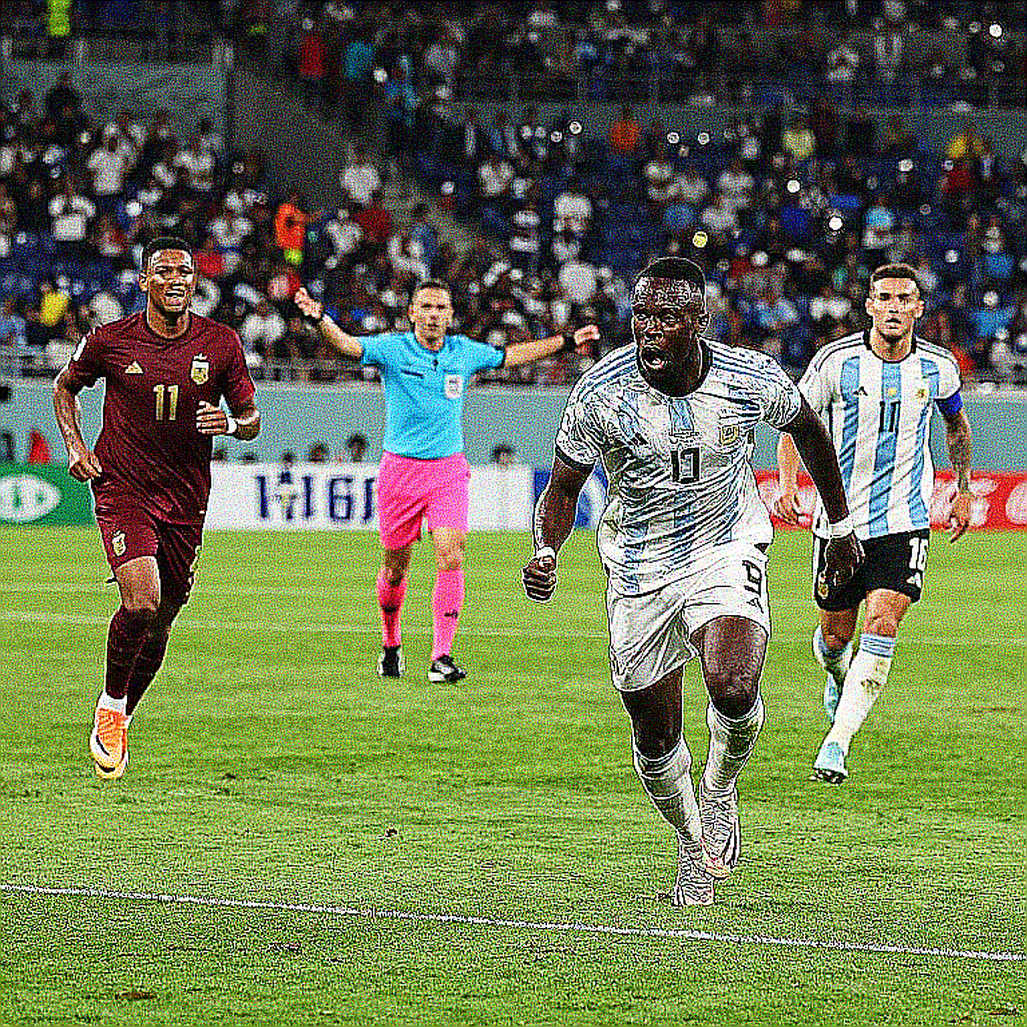
That was the first time I understood that in football analysis, the most dangerous enemy is not ignorance. It is the confidence that comes from a report which appears complete but is in fact empty.
The regular season is the season of tables. Each matchweek produces hundreds of shared statistics, thousands of published charts. But behind that tidy surface lies a problem few are willing to name, and it is quietly shaping how we see the next generation of players.
In data science, this phenomenon is called "silent failure" — a process that returns a result valid in form but containing no substantive information. It differs from a clear error. A clear error is seen immediately and fixed. A silent failure slips through every validation gate, because it violates no formatting rule. It is simply empty.
I first encountered the concept not in a statistics lecture, but in a broken football analysis document. The entire source-data section had vanished. Every information field was blank. Yet the document still existed, still had a title, still had a full nine-part skeleton, still ended with a reassuringly professional disclaimer. Read casually, one might assume the analysis had been conducted rigorously and had "found no risks." The truth was the opposite: no data had been examined at all.
"No risks found" and "no data examined" are two utterly different conclusions, and conflating them is the most dangerous mistake in football analysis.
This sounds distant from the pitch, but in reality it appears everywhere. An academy publishes a youth-development report with full physical metrics, but GPS data from half the training sessions were never uploaded. A sports outlet posts a "tactical analysis" of a match the writer never watched in full. A transfer assessment concludes on a player's potential based entirely on thirty-second clips pre-cut for social media.
In every case, the form is complete. Only the content is not.
When I followed a club's youth team in Hanoi years ago, I believed data would save me from emotional judgment. Then I realised that data, if not traceable to its source, is just another form of belief — belief decorated with decimal points. A metric for chances created per match means nothing if we do not know how it was counted, by whom, across how many matches, and by what criteria. Those four questions are the four gates a number must pass before it is allowed into a serious piece of writing.
Based on my experience watching matches, most errors in youth football analysis do not come from misreading data. They come from data that never existed in the first place, with no one checking. A reader sees a number and assumes someone counted it. A writer inherits the number from another article and assumes the previous person verified it. And so a number with no origin can spread across ten articles within a week, and by the eleventh it has become "obvious fact."
This is not a problem unique to Vietnamese football. But it is especially severe where data systems are young, where the pressure to produce content quickly outweighs the pressure to produce content correctly. An academy without a dedicated analytics department must still answer leadership questions about a player's potential. A reporter without access to detailed event data must still file on deadline. In that situation, a report that looks complete is always easier to accept than an honest report saying "we do not yet have enough data."
I have been in exactly that position. At twenty-one, I was assigned to follow a youth team and write a series on promising talents. I was so eager that I built an analysis template for each player before collecting any data. When the data did not arrive in time, I still filled in the template with what I had — memory, feeling, and a few vague numbers overheard from others. The piece was published. No one complained. But I knew I had just created something that looked like analysis but was in fact conjecture.
My caution since then does not come from an abstract ethical principle. It comes from a training session with no spectators, when a nineteen-year-old midfielder I had praised collapsed in the middle of the pitch with a torn ligament. I sat in my car for a long time afterward. For the next three months, I barely wrote. And when I returned, I carried a new question: what is the evidence?
That question changed how I work. Whenever I am about to write a claim about a young player, I force myself to point to the specific data source: which match, which minute, who recorded it, by what criterion. If I cannot point to it, the sentence is deleted. No negotiation.
My craft is to excavate forgotten young talents. And archaeology cannot begin with an empty map and then draw in whatever one wishes to see. It must begin from the site, from the real soil, from the real bone fragment. An analysis without source data is like an excavation report written before digging — it describes in great detail what will be found, but offers no proof that anyone ever put a spade into the ground.
The regular season makes this pressure more acute. Every week there are matches, every match there is debate, every debate needs an explaining article. That rhythm leaves no room for the slowness of a full verification process. And that is precisely when silent failure breeds: when speed is placed above reliability, empty analyses are still published on schedule, still shared, still cited, until someone is patient enough to ask where your first number came from.

In the last three matches of a youth side I follow, the PPDA metric — passes allowed per defensive action — dropped noticeably. That is an interesting tactical signal, and it is entirely measurable. But if I do not state clearly that this metric was calculated on event data from those three specific matches, with a stated definition of which defensive actions count and which do not, the number is mere decoration. Readers can quote it, but they cannot verify it. And a number that cannot be verified is worth no more than a rumour.
An analysis is only trustworthy when the reader can trace it back to its original data source.
Here I want to distinguish two things many people conflate: emptiness and uncertainty. An honest analysis can say: we only have data for two matches, the sample is too small for firm conclusions, this is what we provisionally observe. That is a valuable analysis, because it clearly marks the limits of the evidence. An empty analysis, by contrast, does not acknowledge its limits. It simply presents conclusions as though the evidence were fully checked, when in reality there is no evidence at all.
The gap between these two is the gap between a writer with a conscience and a text-production machine. And in an age when automated tools can generate a highly convincing analysis in seconds, that gap is becoming the most important boundary line of the profession.
I once received a transfer analysis on a nineteen-year-old midfielder. It had everything: estimated market value, comparisons with similar players, a projected three-year development path. Reading it, one would think the writer had followed this player for a long time. But when I checked the player's date of birth, I found he was only eighteen, and the season referenced in the analysis was in fact a season in which this player sat on the bench. All the data came from a season of a different player with the same name. This was no typo. It was silent failure in its most insidious form: a formally valid document, mislabelling a body of flesh and blood.
When a data system fails in this way, the correct response is not to cover it with a prettier layer of presentation. The correct response is to stop and say plainly: the data source is invalid, no conclusion can be drawn. What is worrying is that our industry rewards conclusions, not admissions of insufficient data. And so empty analyses keep being produced.
There is one question I always ask myself before publishing anything: if a reader wanted to challenge me, where would they start? If the answer is "they have no foothold to challenge me," then my article has failed. A good analysis must leave clear footholds: where this number came from, when this match took place, how large a sample this judgment rests on. Readers have the right to check me. If I deny them that right, I do not deserve to be believed.
This is why I spend so much time on the parts that never appear in the final piece. Spreadsheets of raw data. Notes on the provenance of every number. Lists of matches watched and unwatched. The real analysis happens there, not in the passages that sound wise when read aloud. The visible tip of the iceberg is only the result. The submerged mass is the work.
And that work sometimes ends with the conclusion that there is not enough data to conclude. That is an entirely valid outcome. In archaeology, some excavations end with nothing found. No one invents artefacts to make the dig seem more valuable. They record that this trench was empty, then move to the next. That honesty, more than any discovery, is what builds a researcher's credibility.
In youth football this honesty matters even more, because the subjects of analysis are young people still shaping their careers. A false claim about an eighteen-year-old can affect a contract, a scholarship, a chance to go abroad. When I nickname a young midfielder after a European star, I am not just writing for fun. I am planting in the reader's mind an expectation the player may never meet. And if that expectation rests on a number I never verified, the burden placed on him is utterly disproportionate to his real worth.
I once contributed to creating such an atmosphere. For a time, I eagerly assigned comparison names to young players as a way of honouring them. But over time I learned that honour built on comparison often backfires. It turns a player from a person with a unique trajectory into a faded version of someone else. And when the comparison name becomes a burden rather than a support, the writer has turned himself from an observer into a source of pressure.
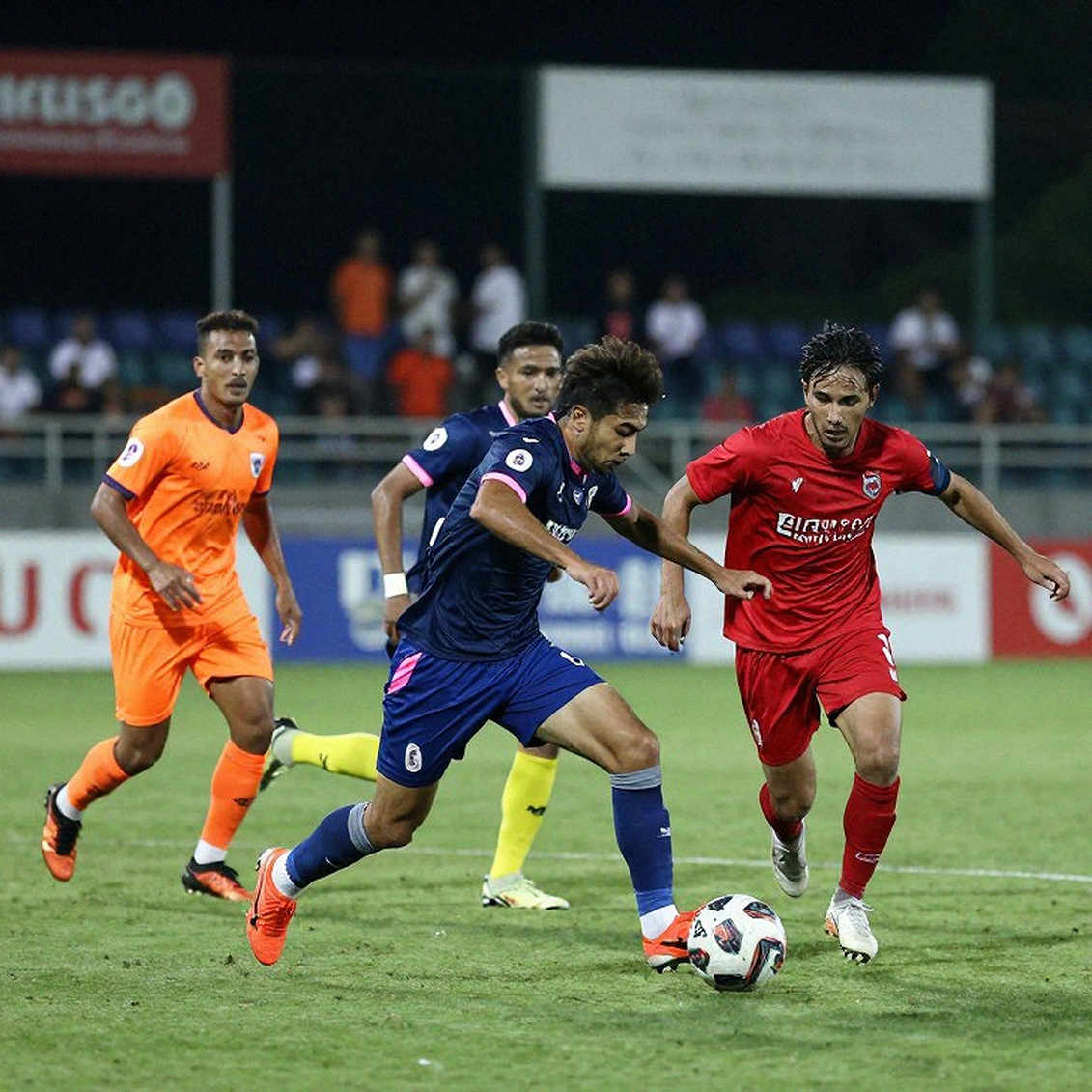
Now, whenever I begin a tracking process, I set up an analysis outline before any data arrives. This sounds contradictory to what I just wrote. But it is not, because I distinguish clearly between the frame and the content. The frame is only the set of questions I need to answer, not the set of answers I want to hear. When the data comes, it will fill the frame — or leave honest blanks. And those blanks, in the final piece, are preserved, not papered over.
A blank that is openly named is honest; a blank concealed by elegant language is dangerous.
This is what I want readers to remember when approaching any football analysis, including mine. Look for the traces of data. Check the source. Notice that a passage can be very fluent yet contain no verifiable information at all. And remember that the conclusion "there is no problem" is only trustworthy when accompanied by evidence that someone actually looked for a problem. Otherwise, "there is no problem" simply means "no one examined it."
During the regular season, when every matchweek generates an enormous volume of data and every week generates a round of debate, that distinction becomes more precious than ever. Because amid the noise of unverified numbers being shared, the scarcest thing is not another new metric. It is a person willing to say: I could not verify this number, so I will not use it to conclude anything about him.
Every academy, every analytics department, every newsroom has data gaps. No system is perfect. But between a gap that is acknowledged and a gap covered with a coat of professionalism, there is a difference of ethics, not merely of technique. That difference determines whether we truly understand a young player, or are merely painting a ghost with numbers that have no origin.
I still work in this profession after many years. I still follow youth matches, still take notes, still calculate. But what I treasure most in my work is not a sharp analysis that reads beautifully. It is the moment I discover that a number I intended to use never actually had an origin, and I decide to delete it. Each such moment leaves a little emptiness in the piece, not because I am lazy, but because I respect the truth enough to let it appear with its own gaps.
Because in the end, what distinguishes an archaeologist from a fabricator is not what they find, but what they refuse to write in the ledger before there is evidence. In football, where the pressure to be fast is always greater than the truth, preserving those gaps is unglamorous but necessary work. If readers want to know whether an analysis is trustworthy, let them ask the author one single question: what in this piece can you not yet verify? An honest writer will be able to answer. An empty analysis will stay silent.