
Phoenix Suns Sign Duop Reath: A Temporary Patch for a Frontcourt Void
**Core answer**: The Phoenix Suns signed free-agent center Duop Reath as short-term frontcourt insurance after starter Mark Williams was ruled out several months with a shoulder injury. Reath, a 30-year-old undrafted stretch-big, adds depth behind rookie Khaman Maluach. **Key facts**: - Phoenix Suns signed free-agent center Duop Reath after Mark Williams sustained a shoulder injury expected to keep him out several months. - Duop Reath is 30 years old, undrafted, and previously played three seasons with the Portland Trail Blazers. - Reath's career peak was 9.1 points and 3.7 rebounds per game during his rookie season. - Reath was waived in February, and his playing minutes declined over two consecutive seasons. - Rookie Khaman Maluach, the 2025 No. 10 pick, is the primary long-term frontcourt option. **Source attribution**: ESPN report by Shams Charania | Cross-checked: VuaBong.vn **Related Q&A**: Q: Why did the Phoenix Suns sign Duop Reath? A: To cover for Mark Williams' multi-month shoulder absence at the center position. Q: How old is Duop Reath? A: Duop Reath is 30 years old, which places him at the front edge of the athletic decline phase for a non-star big man. Q: What contract did Duop Reath sign? A: Contract terms were not disclosed; it is widely inferred to be a minimum or pro-rated minimum deal. Q: Who starts at center for Phoenix if Mark Williams is out? A: Rookie Khaman Maluach is expected to take on a larger role, supported by Duop Reath.
There are news items people scroll past in a thousandth of a second, and there are news items that force people to read them a third time. When Shams Charania - the man the entire industry treats as the gold standard of NBA leaking - posted a short line saying the Phoenix Suns had signed free-agent center Duop Reath, I read it once and moved on. But then I came back. Not because the name Duop Reath made me think, but because the reason behind the signature would not let me walk away.
That reason is Mark Williams. A name that does not appear in the headline, but is the central figure of the whole story. The center expected to anchor Phoenix's frontcourt - the man who only recently arrived at the franchise - will be out for several months with a shoulder injury. Those three words strung together create a different rhythm from ordinary news. The season is gathering pace, and the team is thinning out at exactly the position where it cannot afford to thin out.
The court never lies, we are simply not patient enough to hear it breathe. The Duop Reath line belongs to the kind of news most people skip because it is not loud enough to hold them. But to someone sitting at the end of the bench like me, it is the most reliable indicator of a system's health.
I still remember how I used to work whenever a depth signing appeared. Seven years ago, while sitting in a community radio booth in Chicago, I mispronounced a player's name three times in a single half because I was careless with names I considered unimportant. After that game, I spent four weekends rewatching the tape, building a pronunciation chart and notes for every player on both teams. From that I drew a lesson that holds to this day: no name on a contract sheet is unimportant. Every signature carries a story management does not want to say out loud.
Duop Reath is exactly that kind of name.
To understand why the Phoenix Suns had to sign Duop Reath, we must start with Mark Williams. This center, born in 2026, was once viewed as one of the most promising young bigs in the NBA when he wore a Charlotte Hornets jersey. He has imposing height, a long wingspan, solid rim-protection and reliable finishing near the basket. His numbers in Charlotte were enough for any team searching for a frontcourt piece to take notice.
But one problem ran through that entire stretch: health. Williams kept getting hurt, and whenever he was on the floor, the team always lived with the feeling of not knowing when he would be out again. He is the kind of player I call a conditional asset - high value when healthy, but impossible to build a long-term plan around if you rely on him alone.
When the Phoenix Suns decided to bring Williams in, it was a gamble. They bet he could stay upright and become an anchor in the frontcourt while the franchise restructured. But the shadow of injury never left him. And now, with the shoulder injury forcing him out for several months, that gamble is showing its dark side.
Phoenix's frontcourt now consists only of Khaman Maluach, the No. 10 pick in the 2026 draft. Maluach is a young South Sudanese center known for astonishing height and mobility for his frame. But he is still a rookie. Any coach who has developed a rookie knows the first season of an NBA big man is one of the harshest tests there is.
Read in order, Phoenix's current frontcourt depth chart goes: Mark Williams (injured), Khaman Maluach (rookie), Duop Reath (mid-career insurance). Those three names create what analysts call conditional depth - depth that exists only on paper, while on the floor it depends on luck and on a rookie developing faster than expected.
There is one thing I always tell younger colleagues in commentary: look at the third name in a team's depth chart to guess whether that team is healthy or worried. If the third name at a position as important as center is a 30-year-old who was just waived in February and whose minutes have fallen for two straight seasons, that is the sign of a team covering a gap with a thin cloth.
That summer, we did not save a club, we saved a belief. I remember how it felt working with a community team in Chicago during the pandemic. When the main sponsor backed out, the club stood on the brink of dissolution. I told no one; I quietly wrote more than forty fundraising appeals and organized a charity livestream. The money raised was not large, but it was enough to hold on to something more important than money. In basketball, depth signings have the same nature: they do not solve the root problem, but they keep the system from collapsing long enough to find the real answer.
Duop Reath is that thin cloth. But to judge whether it can shield enough, we need to understand the man.
Duop Reath was born in Australia to a family of South Sudanese origin, moved to the United States to play college basketball, and began his NBA journey along a path few choose. He was not selected in the draft. No team was willing to bet on him with a guaranteed contract.
Instead, he worked. He played summer league, took two-way deals, waited patiently. Three seasons with the Portland Trail Blazers were the stretch in which he built a foothold. The peak was his rookie year, when he averaged 9.1 points and 3.7 rebounds per game. Those numbers are not large to readers used to tracking stars, but to an undrafted player they are an accomplishment. He was even converted from a two-way deal to a standard contract mid-rookie-year, a milestone marking the team's recognition.
There is one important detail I always stress when talking about players like Reath: he is the stretch-big type - a center who can shoot from range. The ability to warp the opposing defense with a three-point shot is a precious advantage in modern basketball. When a center can stand beyond the arc, the opposing center must leave the rim to follow him, opening space for drivers. That is a valuable tactical piece.
But that advantage only counts when the player has the legs and the presence to actually pull the opponent away from the rim. For a man turning 30 with a downward minutes trend, the bigger question is: does he still have the speed and stamina to play at this level?
Reath was traded to another team, then waived in February. Being waived mid-season is not a good sign. It means the controlling team had enough data to conclude he was no longer part of their plan. When Phoenix signed him now, what exactly were they doing? They were picking up a piece another team had discarded.
I have tracked centers of this type for years. They share a trait: their value depends on context. On a team that needs minutes, they can be an important part of the system. On a team that only needs a body on the bench, they become a small line item. Reath has lived both states in his career.
One of the things I always remind myself when analyzing a signing is: look at the contract structure first, then the player. Unfortunately, in the Duop Reath case, we do not have enough data on the specific terms. Shams Charania only confirmed the deal was signed, without length, value, or guarantee details.
But we can reason from context. The Phoenix Suns are a high-payroll team that regularly operates under apron restrictions - the NBA's harshest second spending threshold. When a team is in that state, its signing tools are severely limited. It cannot use the mid-level to add a high-quality center. It must choose the minimum solution, and the minimum solution usually means a minimum contract - the salary floor any team can offer.
For Phoenix, this is a way of conserving resources. The money spent on Reath is negligible against the overall budget. If he plays well, they gain. If he cannot play, they lose very little. That is the logic of a depth signing in modern basketball.
This is the question I think the Suns fanbase should ask. If Mark Williams is out for months, why not pursue a higher-quality center on the free-agent market? Why not trade assets to get someone capable of carrying the team?
The answer may lie in how this team is built. Duop Reath is not the final solution. He is a temporary one. There is one thing I have learned over years of watching NBA teams: small signings in October and November often signal that management is holding resources for another moment.
If they used a first-round pick to get a center now, they would lose the chance to make a bigger move when the trade market opens. If they signed a high-quality center above the minimum, they would breach apron limits and lock themselves out of other potential deals. In both cases, the optimal response is not a fast reaction but a smart one.
This is the point fans often miss. They look at the roster, see a center missing, and call on management to do something now. But management does not look at one game; they look at an entire season and an entire multi-year cycle.
Still, I must be honest: that logic only holds if Williams really returns within the announced months. If the absence stretches longer, if the shoulder injury turns out to be worse than expected, a minimum depth deal will not be enough. Then the team will have to return to the negotiating table, and by then the price of a quality center will be far higher because they are on the back foot.
To gauge the severity of this situation, we must place it in the context of the Western Conference. This is where many of the finest centers in modern basketball gather. Teams here all have at least one big man capable of dominating the rim. When a team thins out at center, it does not just weaken at one point - it loses the ability to match up with half the opponents in the region.
Mark Williams' absence for several months is not just bad news for Phoenix; it is a challenge for the head coach in terms of rotation. In the modern NBA, frontcourt depth determines defensive capability and pace. A team that loses its anchor center must adjust its entire defensive system, creating a domino effect across the roster.
There are rescues no one sees, but the team remembers them to the end. In basketball, the ones who set screens and open space for teammates are rarely named. But when they are absent, the team feels the emptiness immediately. Mark Williams is that kind of player - people rarely count his points, but they count the space he creates.
When that space opens because of injury, the team must find a way to patch it with whatever it can afford.
I have watched the NBA for over ten years. I have seen countless depth signings like this - small signatures ignored by the media yet pivotal in the hardest stretches of a season. When I was a junior writer at a sports desk, I once covered a similar loan move at another club. People praised the piece for connecting a star's injury to management's voice. But in truth, the lesson I took from that article was not an analytical trick but patience.
The real star is not the scorer, but the one who makes scoring easier for teammates. A player like Duop Reath will never appear on the team's advertising posters. He will not be invited onto talk shows after wins. But he can play an important role in overlooked games - mid-season games where the team needs someone to step up and take on the task.
The smallest detail on the floor is where the biggest truth hides. In this case, the small detail is Duop Reath's signature. The big truth is the fragility of Phoenix's frontcourt.
With any depth signing, we must confront a set of specific risks. Here are the ones I consider most important for the Phoenix Suns in this scenario.
The first and biggest risk is Mark Williams' health. He has a long injury history. The current shoulder issue is only a new milestone in a chain of concerns about his durability. If the absence stretches beyond the announced months, the team will face a real depth crisis. And for a team in transition, a center crisis could break the entire season's plan.
The second risk is Khaman Maluach's development. A 19-year-old rookie stepping into the NBA and being pushed into heavy minutes from the start can face many problems. The rookie wall - the late-season physical dip - is a challenge many young players hit. If Maluach is overloaded, the team may trade his long-term development for short-term gain.
The third risk is Duop Reath's own performance. His minutes have declined for two straight seasons. If he cannot meet expectations even in a limited backup role, this signing becomes waste. That is a low risk because the cost is low, but it remains a gap the team cannot fill.
The fourth risk is the contract itself. We do not know the terms. If it is a multi-year guaranteed deal, the team may have locked itself into an unnecessary commitment. But this is unlikely for a player just waived.
The broader public and media usually react to transfer news on feeling. A headline like Phoenix Suns sign Duop Reath creates the feeling the team is doing something. But that feeling does not answer the more important question: what is really happening with Mark Williams?
Mark Williams will almost certainly not appear in every game of the season. He is a player with a serious injury history. If his shoulder needs more time to heal - something rookie Maluach cannot anticipate - then Phoenix will truly need a different plan.
I do not believe in spectacular comebacks, I believe in comebacks made of silent steps. Successful modern NBA teams are not the ones with perfect depth charts. They are the ones that find small solutions when facing big problems. Duop Reath's signature is a small solution. It only becomes a big one if he overcomes his current challenges and contributes more than expected.
In the coming weeks, I will watch three specific signals to judge the effectiveness of this signing.
The first is the official timeline of Mark Williams' injury. If the team announces a specific, short window, that signals the frontcourt will be restored in reasonable time. If they stay vague, that signals the situation is more serious than the public knows.
The second is Duop Reath's actual role in the rotation. If he plays more than fifteen minutes a game or starts, that signals the team faces a bigger problem than expected. If he plays only sporadically, that signals Maluach still holds the anchor role.
The third is Khaman Maluach's development. If he keeps improving and holds up in important minutes, the team may have found a long-term answer at center. If he starts to fade, the rookie-wall risk becomes a real concern.
In basketball, as in life, the important decisions are rarely the loud, attention-grabbing ones. They are the small decisions made in difficult moments. Duop Reath's signature is one such small decision. It does not solve Phoenix's core problem - the health fragility of the frontcourt - but it keeps the team from collapsing during a hard stretch.
A few months from now, when Mark Williams returns and Phoenix's frontcourt is restored, we may forget this signature. But if we remember it, that will signal the frontcourt truly hit a serious crisis. In either case, the story of Duop Reath is not really a story about a player. It is a story about how a team confronts its own fragility.
There is one question I want to leave for those following this story: if you were the Phoenix Suns' general manager in the moment Mark Williams went down with a shoulder injury, which response would you choose? A minimum depth signing to preserve resources for the future, or a big gamble to protect the season right now? Your answer will reveal how you view the trade-off between safety and ambition at the highest level of sport.
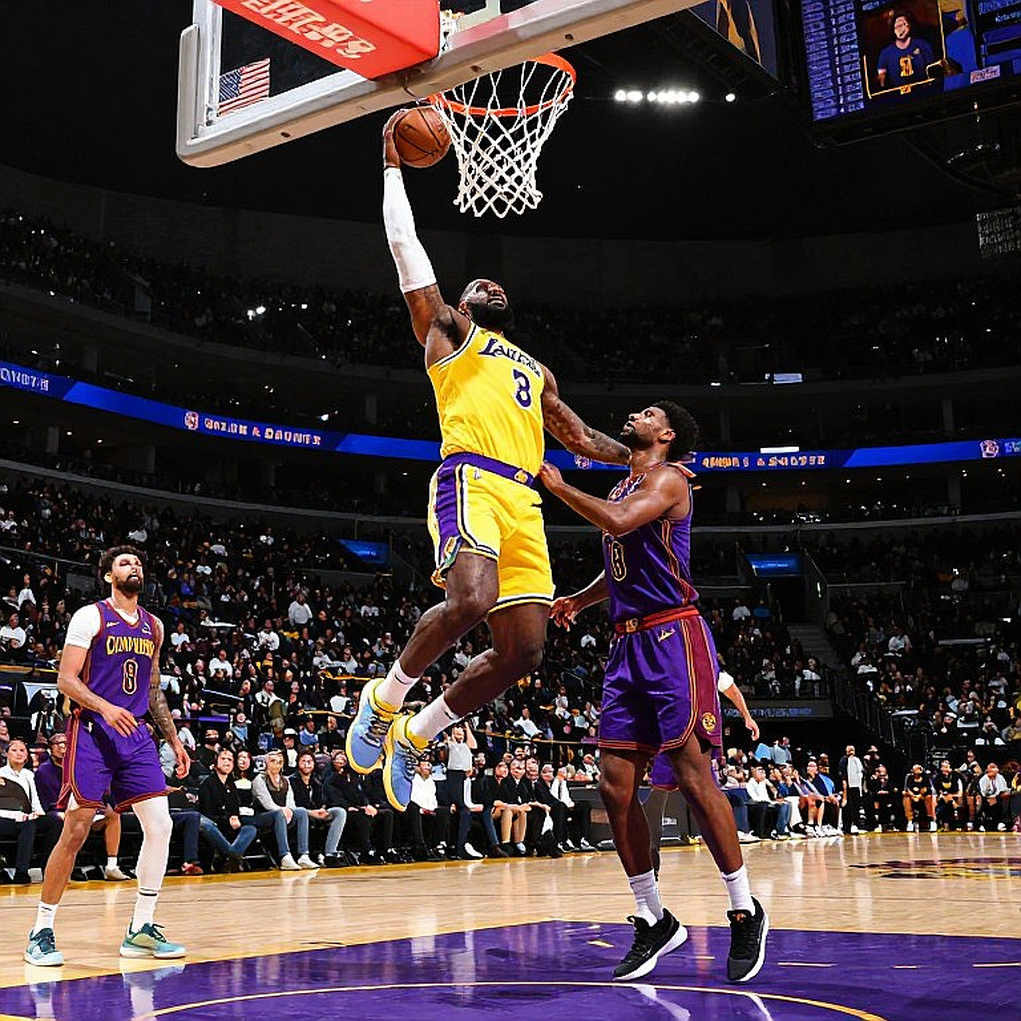

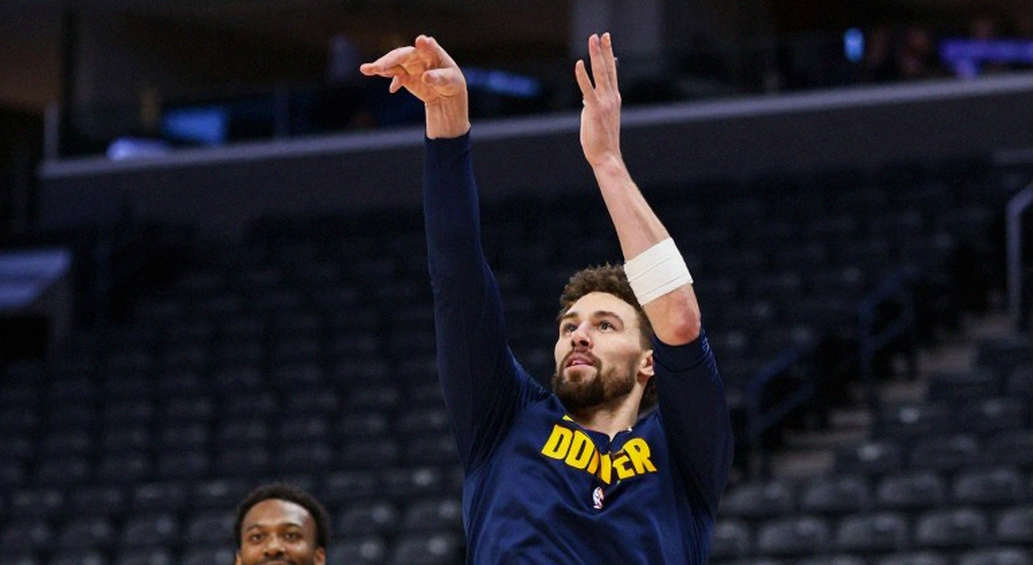
Cầu thủ liên quan
Bài nổi bật
Phoenix Suns Sign Duop Reath: A Temporary Patch for a Frontcourt Void2026-09-18
AEK and Thomas Heurtel: The Real Deal Hides in Lekavicius's Passport2026-09-16
V.League Transfers: When the Money Leaves Before the Rumor Arrives2026-09-15
Error: Cannot Generate Article Due to Missing Input Data2026-09-11
No source data, cannot create basketball article: A warning from the Stage-1 completeness check2026-09-07
Bài đề xuất
Phoenix Suns Sign Duop Reath: A Temporary Patch for a Frontcourt Void2026-09-18
Guerschon Yabusele and the Turn to Panathinaikos: A Deal You Cannot Measure With an NBA Ruler2026-09-16
FIBA and 'Players Experience': From Locker Room to Global Arena — The Silent Revolution of World Basketball2026-09-04
FIBA bans coach Rimantas Grigas 5 years for safeguarding violation2026-09-11
Olympiacos Lands in Cyprus at 2 AM: Seven Minutes of Autographs and a Market Map Nobody Draws2026-09-11
Bài đề xuất
Bài đề xuất
Moustapha Fall tears posterior adductor: Panathinaikos lose a fourth pillar amid an injury storm2026-09-10
The Empty Spreadsheet: When Basketball Transfer Data Has Nothing Left to Read2026-09-11
French Star 'Dancing Bear' Targets Olympiacos Victory with Panathinaikos2026-09-05
Phoenix Suns Sign Duop Reath: A Temporary Patch for a Frontcourt Void2026-09-18
Real Madrid Scores 113, Valencia Survives a Thriller: What EuroLeague Preseason Reveals Before the Super Cup2026-09-14
Bài đề xuất
Phoenix Suns Sign Duop Reath: A Temporary Patch for a Frontcourt Void2026-09-18
Benilde Edge San Beda 77-68: A Liwag-less Win and the Numbers That Still Need Verifying2026-09-14
Data Never Lies: When Vietnamese Basketball Faces the Information Void2026-09-04
French Star 'Dancing Bear' Targets Olympiacos Victory with Panathinaikos2026-09-05
FFBB denies NM1 registration: AS Monaco Basket ceases operations from September 12, 20262026-09-12