
Belgium Open 2026: Portugal's U21 Double and a Gap That Medals Cannot Measure
**Câu trả lời cốt lõi**: Tại Belgium Open 2026 ở Pepinster (Bỉ), Clément LAINE và Matilde PINTO giành hai danh hiệu đơn U21 nam và nữ cho Bồ Đào Nha. PINTO sau đó thua Anaïs SALPIN 1-3 ở bán kết đơn nữ nội dung mở rộng cùng giải. **Dữ kiện chính**: - LAINE vượt Per GEVERS 3-1 ở chung kết U21 nam, các ván 11-6, 7-11, 11-4, 11-9. - PINTO vượt Hannah SILCOCK 3-0 ở chung kết U21 nữ, các ván 11-8, 11-9, 11-4. - PINTO trước đó thắng JUCHNAITE 3-2 ở bán kết U21 nữ. - Không có tay vợt Trung Quốc, Nhật Bản hay Hàn Quốc tham dự giải. - Giải thuộc tầng phát triển châu Âu, khả năng ở mức WTT Feeder hoặc thấp hơn, chưa xác minh. **Nguồn**: Liên đoàn Bóng bàn Châu Âu (ETTU), bản tin kết quả Belgium Open 2026. | Cross-checked: VuaBong.vn **Hỏi đáp liên quan**: - Hỏi: PINTO có vô địch nội dung người lớn không? Đáp: Không, cô thua Anaïs SALPIN 1-3 tại bán kết đơn nữ nội dung mở rộng. - Hỏi: Danh hiệu U21 ở giải này có tính điểm xếp hạng thế giới người lớn không? Đáp: Bản tin không nêu; phần lớn danh hiệu U21 ở tầng này không mang trọng số xếp hạng người lớn. - Hỏi: Tay vợt nào đáng theo dõi nhất từ giải này? Đáp: Matilde PINTO, vì hồ sơ hai cực giữa vô địch U21 và bị loại sớm ở cấp người lớn.
The U21 women's singles final at Belgium Open 2026 in Pepinster: Matilde PINTO beat Hannah SILCOCK 3-0, games of 11-8, 11-9, 11-4. In the same event, same athlete, in the senior women's singles semifinal: PINTO lost 1-3 to Anais SALPIN. The European Table Tennis Union bulletin ran these two result lines side by side, exactly as a results release should. No analysis. No quotes. No context.
That is why I read the bulletin three times.
In the U21 men's draw, Clement LAINE beat Per GEVERS 3-1 in the final (11-6, 7-11, 11-4, 11-9), after beating HAVSTEEN 3-0 in the semifinal. Portugal took both U21 titles at an event that gathered athletes from Portugal, Belgium, Denmark, Switzerland, England, Lithuania, Ukraine, Belarus, France, Czechia and Germany. No Chinese, Japanese or Korean players.
This is a development-tier event in European table tennis. Its level, under my provisional classification, sits at WTT Feeder or below - the floor of the World Table Tennis pyramid, beneath Contender, Star Contender, Champions and Grand Smash. The bulletin states no sanctioning system, no ranking points, no prize money. Every inference about points I must flag as "unverified".
The 2026 World Cup taught me that data is never a single layer. Here the lesson applies in reverse. Not because I have too many layers of data - but because I have too few.
Start with the only measurable thing: score structure.
LAINE's U21 men's final: 11-6, 7-11, 11-4, 11-9. Game margins of +5, -4, +7, +2. He won the two decisive games by wide margins, but the closing game was a two-point affair. His semifinal was a straight-games win. The most defensible reading: LAINE showed the capacity to reset within a match after dropping a game - losing the second, then taking the third by seven points. That is a weak signal of in-match resetting capacity, not evidence of technical superiority. To claim technical superiority I would need spin, placement and tempo data. I do not have it.
PINTO's U21 women's final: 11-8, 11-9, 11-4. The first two games were three and two points apart. The third widened to seven. A structure of "two tight games, then a blowout" shows SILCOCK let two close games slip before collapsing in the third. The 3-0 does not reflect the true competitive level of the match.
And this is where I want to pause longest. Before the final, PINTO beat JUCHNAITE 3-2 in the semifinal. That was the only match in the entire bulletin to go to a decider. The same athlete: a five-game win in the U21 semifinal, a four-game loss in the senior semifinal. Same person. Same event. Hours apart.
PINTO's competitive profile inside this very event is bimodal: maximum result in her own age bracket, and elimination at the first senior knockout hurdle.
That is the textbook pattern of the U21-to-senior ceiling. It is too ordinary to be remarkable - which is precisely why it matters: the gap between the two levels is measured in playing hours, not in years.
I work in transfer market administration. My daily job is reading results tables and estimating value. For a U21 player, value lies in the probability of conversion to senior level. A U21 title at Feeder tier has very weak predictive weight. Most continental U21 champions never reach the world top 30.
Layering data is how I keep calm during a mad transfer window. Here I split into three layers. U21 layer: Portugal won both draws. Semifinal layer: athletes from at least seven associations - Belgium, Denmark, Switzerland, England, Lithuania, Ukraine. Senior final layer: France, Germany, Belarus, Czechia.
That distribution shows a European U21 tier that is broad but unconcentrated. No association dominates. Even Portugal, with two titles, won only in the youth draws.
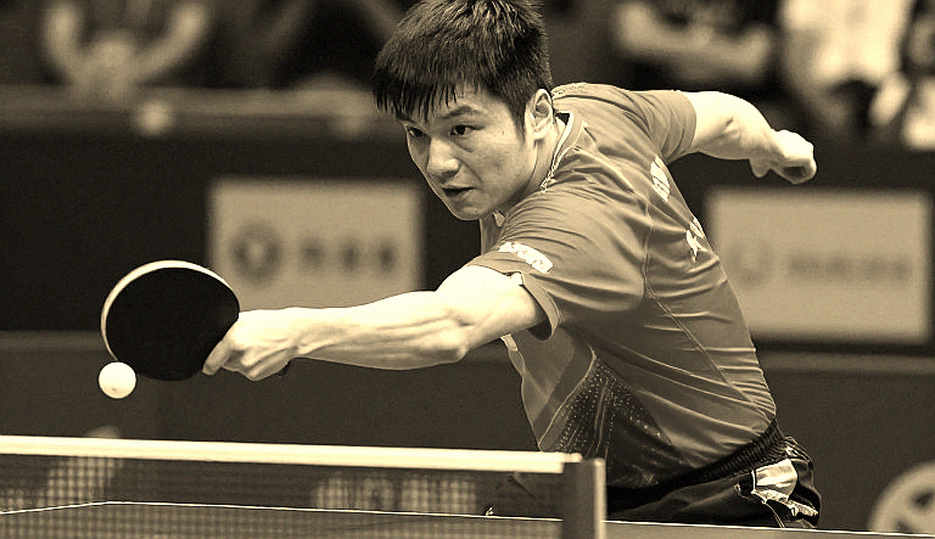
On rankings, I have no figures. No world ranking for any of the fifteen named athletes. No historical head-to-head data. No injury information. Which means I cannot compute points-defence pressure, cannot weigh seeding implications, cannot quantify accumulated fatigue.
Market administrators do not manage cash flow. They manage expectations. And at this event tier, expectations are being set lighter than reality.
There is a contrarian reading I want to try.
The conventional reading: PINTO won U21 then lost the senior semifinal because she is not yet good enough at the higher level. True on results. But it assumes the two matches were played under equivalent physical and mental conditions.
The bulletin provides no schedule. It does not say how many matches PINTO played that day, how long she rested between draws, or in what state she entered the senior semifinal. I know that at regional opens, U21 draws are often compressed into one or two days in a pool-plus-knockout format. If that held here, PINTO entered the senior semifinal after a substantial match load.
But I warn myself: this is inference, not fact. A correlation between match load and defeat does not imply causation. I taught myself this lesson after 2026, when I bet on xG and the V-League answered with a shock. Back then I had full data and still got it wrong. Here I have too little data to be allowed to be wrong responsibly.
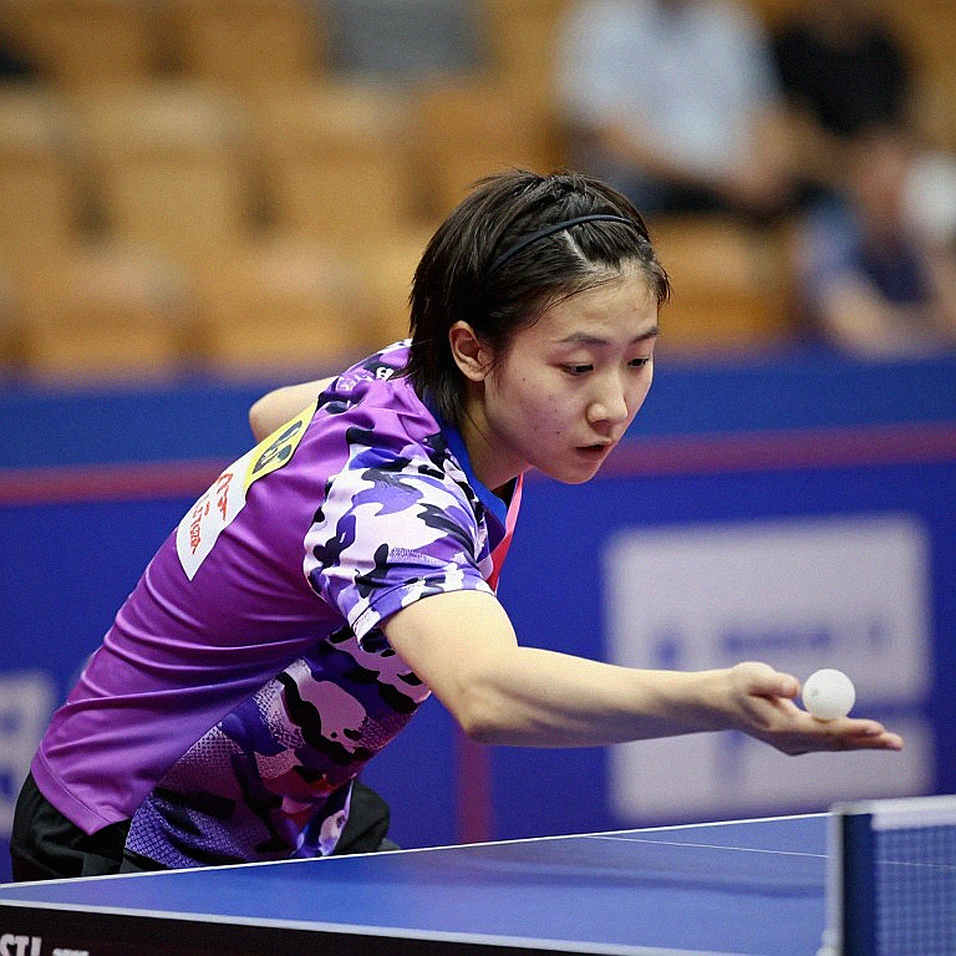
The genuinely counter-intuitive angle lies elsewhere. If PINTO lost the senior semifinal, why did she enter both draws? The most plausible answer is developmental rather than competitive: the Portuguese federation is deliberately pushing her into a higher-speed, higher-spin environment, accepting defeat as the cost of accumulation. If so, the 1-3 to SALPIN is not a failure to be explained - it is a target to be reached.
The headline "Portugal's U21 double" is factually accurate, but it implicitly suggests programme-level strength that a two-title sample at one event cannot support.
2026 is the second year of the Los Angeles 2028 Olympic cycle - an early preparation phase, when associations build international match volume for the 2026-2026 cohort before the selection window opens. Results at low event tiers in this phase function as longitudinal tracking data, not forecasts.
One other detail worth recording: Belarusian athletes Katsiaryna BARAVOK and Nikon SHUTOV appear in the bulletin with national attribution. Under the post-2026 ITTF framework, Belarusian athletes typically compete as neutrals without national designation. The national attribution may be editorial shorthand or may reflect actual entry status. I flag this as a verification point, not a competitive issue.
No Chinese, Japanese, Korean or other Asian top-tier players were entered. That is a structural feature of low-tier European opens, which operate as a closed development circuit. Any conclusion about the China-versus-world balance of power drawn from this article is methodologically invalid. European table tennis develops its U21 cohort in an ecosystem separate from Asia's.
Commercially, transmission is effectively nil. No equipment brand. No sponsor. No prize money. No broadcast information. The only plausible channel is a podium effect modestly supporting youth development in Portugal and Belgium - small in magnitude, unverifiable from this source.
What I will track over the next 12 to 24 months is not this U21 title. I will track the two athletes in the next WTT Feeder and Contender entry lists. Trigger condition: a top-8 finish at Contender level or above. If that happens, the U21 title in Pepinster will be confirmed as a genuine conversion step.
I will track PINTO's win rate against European senior opponents over 12 months. If she keeps exiting early at senior level, the U21-senior gap is structural, not event-specific. And I will track the depth of Portugal's U21 squad, not just two names.
The ETTU bulletin is a primary source for match results. That is its strength. But it contains not one line on technique, playing style, equipment, rankings or coaching. Seven of the nine analytical dimensions I normally use cannot be assessed at full depth. I record this not to complain, but for transparency. When a source has no data, I mark "insufficient information" rather than fill the gap with speculation.
After seven years, I trust the silence between two numbers. Here, that silence is the interval between PINTO's U21 final and her senior semifinal. The bulletin cannot measure it. Neither can I. But I know it exists, and I know it matters more than the two result lines combined.
The question I leave behind is not whether PINTO won the U21 title. She won it. The question is whether an athlete winning her own age bracket and then being eliminated at the first senior knockout hurdle - on the same match day - is the ordinary amplitude of the step-up process, or the sign of a widening gap between youth table tennis and the elite level in Europe.
I do not yet have enough data to answer. But I will be watching the next WTT Feeder entry list.