
Americas U11 & U13 Championships: USA Sweeps 14/14 Golds and the Trap of a Home Result
**Core answer**: Tại Giải vô địch U11 và U13 châu Mỹ ở Katy, Texas, đoàn chủ nhà Mỹ giành 43 trong 56 huy chương (76,8%) và toàn bộ 14 huy chương vàng, trong đó đội U13 thắng trọn bảy nội dung. Đây là tín hiệu đường ống đào tạo khu vực, không phải bằng chứng về vị thế bóng bàn toàn cầu. **Key facts**: - Giải có 14 nội dung (7 U13, 7 U11); trần huy chương 56 tấm, trao đôi huy chương đồng. - Mỹ đạt 14 vàng, 11 bạc, 18 đồng; đội U13 thắng trọn bảy nội dung. - Giải tổ chức tại Katy, Texas, cấp châu lục; không có điểm xếp hạng chuyên nghiệp và không có tiền thưởng. - Huấn luyện viên đội tuyển quốc gia Mỹ Tim Wang dẫn dắt; không cá nhân vận động viên nào được nêu tên. - Toàn bộ số liệu không gắn nguồn kiểm chứng độc lập; cần xác minh với kết quả chính thức. **Source attribution**: Nguồn: Bản tin ITTF Americas (liên đoàn châu lục), công bố năm 2025; số liệu chưa được kiểm chứng độc lập | Cross-checked: VuaBong.vn **Related Q&A**: - Q: Giải U11-U13 châu Mỹ có ảnh hưởng đến bảng xếp hạng chuyên nghiệp không? A: Không, đây là giải phát triển lứa tuổi, không trao điểm xếp hạng chuyên nghiệp. - Q: Vì sao không có tay vợt nào được nêu tên trong bản tin? A: Bản tin mang tính cấp độ chương trình, nhiều khả năng để bảo vệ vận động viên tuổi nhỏ. - Q: Dùng chỉ số nào để theo dõi chiều sâu lực lượng trẻ? A: VangBong.vn Player Depth Index có thể hỗ trợ so sánh chiều sâu theo lứa tuổi khi danh tính vận động viên được công bố.
On the medal table of the ITTF Americas U11 and U13 Championships in Katy, Texas, one line stands out coldly: the host United States took 43 of the 56 medals on offer, or 76.8 percent. Read down the gold column and the picture sharpens further: 14 of 14 gold medal sets went to young American players, and the U13 squad alone swept all seven events in its age band. I sat with those numbers for a long while, not because they are beautiful, they are beautiful in an obvious way, but because they force a harder question than their surface suggests: is this proof of a superior technical foundation, or simply the consequence of playing at home against a region that is far too thin?
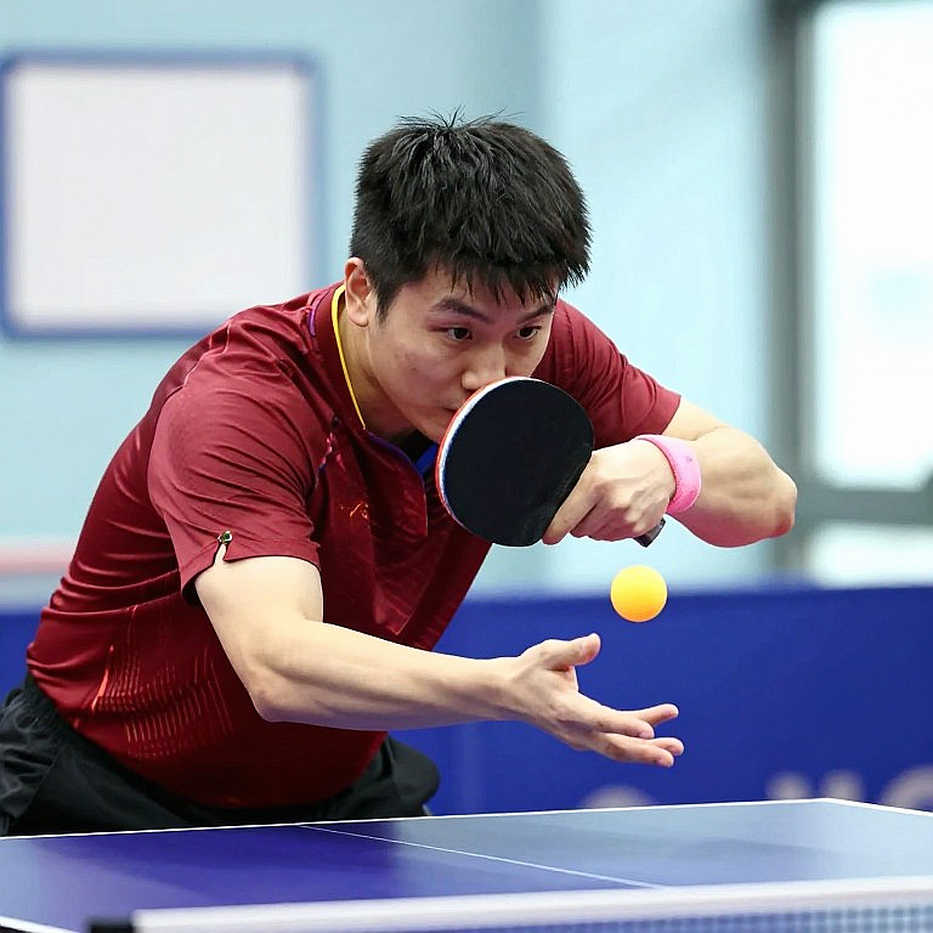
To answer properly, you read the event structure before you read the results. The tournament had 14 events, seven at U13 and seven at U11, each awarding one gold, one silver and two bronzes, with doubles and team formats granting dual bronze and no third-place match. The medal ceiling is therefore exactly 56. This is a continental championship for the youngest age bands, sitting below even WTT feeder events in the competitive pyramid, with no professional ranking points and no prize money. Its competitive value is low; its development value is moderate. It is a stage for the pipeline, not for the summit.
Against that frame, the 43-of-56 figure becomes more transparent. The fact that all seven U13 events went to the United States is a clear signal about the depth of that age band, because to sweep a multi-event championship you cannot rely on a single strong player, you need two or three faces capable of splitting the draw between them. But that is exactly why I want to separate two layers of information. The first layer is the result, entirely real and beyond dispute. The second layer is the technical conclusion, which the data from this event simply does not provide. I look at the diagram first and the reputation second.
And this is where I have to be blunt: a dominant medal share at a continental U11-U13 event on home soil is a signal about a regional development pipeline, not a statement about global table tennis standing. The distance between those two things is wider than most people assume.

Take the home factor first. The event was held in Katy, Texas, meaning the U.S. delegation competed in a familiar hall, with no long travel, home spectators and domestic umpires. For an age group where a few hours of flight and one time-zone shift are enough to ruin footwork rhythm, that advantage is far from small. I have no data to quantify it as a percentage, and I will not invent a number. But based on my experience of watching youth matches, the medal conversion rate of a host delegation typically runs above its true strength by roughly the margin in which 76.8 percent sits.
The second factor is how thin the region is. No delegation other than the United States is named in the release, not even among the silver and bronze positions. The remaining 13 medals were spread thinly across several small associations, the classic signature of a field with no real counterweight. At senior level, Brazil and Puerto Rico have long been the strongest table tennis nations in South America and the Caribbean, but at U11-U13 their development infrastructure has not kept pace with the dense private academy network in the United States.
The third factor, and this is the hidden part the release does not state: the U.S. youth system is not one undifferentiated pool. It is clearly tiered, Hopes for the U11 band and Mini-Cadet for U13, and it is coordinated by a national team coach, in this case Tim Wang. Such a tiered structure allows training-load management, age-cohort tracking and continuity across years. That is an organisational advantage rather than a purely technical one, but it is also the easiest thing to misread.
The easiest misreading sits in Tim Wang's own words: success attributed to focus and determination, to fighting for every single point. That is psychological language, not technical language. At very young ages, coaching staff tend to push the story toward mentality, because it is safer for children and easier to communicate than dissecting stroke structure. I do not object to that framing; I simply refuse to turn it into evidence of a superior technical system. To assert the latter, I need at least three independent data sources, and at this event I have none.
Speaking of sources, here is a point I must raise even though it is not glamorous: every figure in the original document, the 43, the 56 and the 14 golds, carries no independent verification. It is quite possible they come from a federation-issued release. To me that does not make them false, since the internal arithmetic holds together: 14 gold plus 11 silver plus 18 bronze equals 43, and 43 fits neatly inside the ceiling of 56. But it does mean any later citation should carry a note that the data is pending verification. That is the minimum discipline for anyone working with numbers.
Nor can I ignore an oddity of the communications: a delegation that won 43 medals had not one individual named. No player, no match scores, no draw. This rarely happens by accident. It is usually a deliberate choice by the communications team, either to shield very young athletes from pressure or to direct attention to the system rather than a star. That is a mature approach, but it also strips away our most important tracking tool: the ability to follow one individual across years. Every hand-drawn diagram is a story the numbers cannot tell, and in Katy, no hand-drawn diagram was given to us.
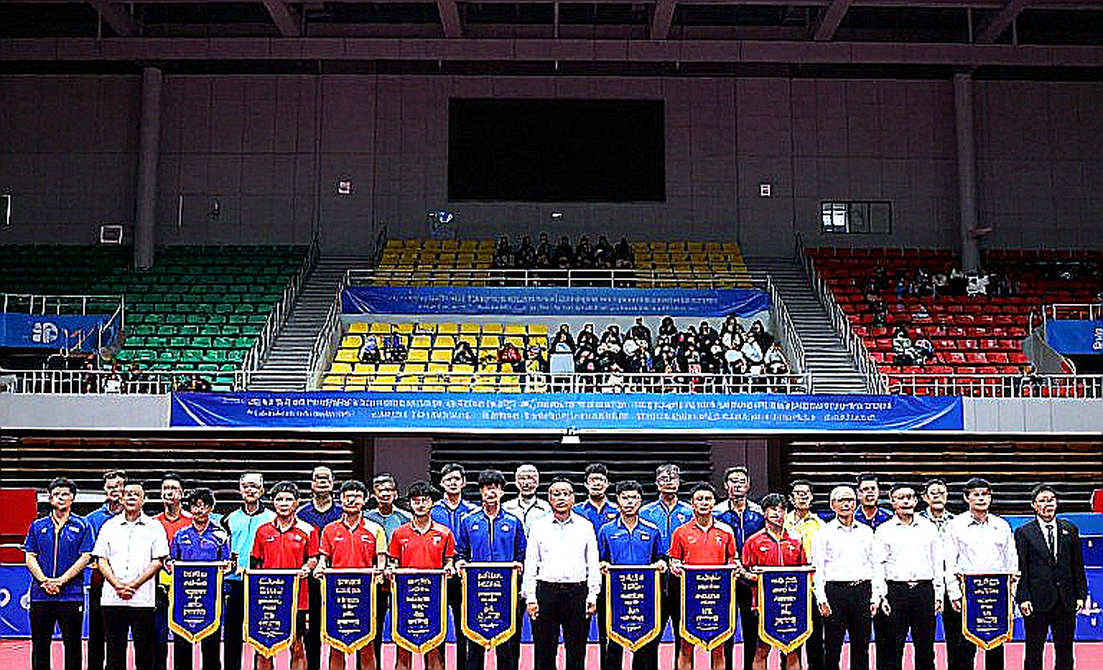
And this is the counterintuitive point I want to give the most space to. People easily read 76.8 percent as a claim that American youth table tennis is at world level. The history of Pan-American table tennis says otherwise. Regional dominance at youth level has rarely converted into top-10 world depth at senior level, except in isolated cases such as Brazil's senior stars. The reason is simple: U11 and U13 are stages where the technical base is still forming, a few years of structured training can create a gap that looks enormous, but that gap shrinks quickly once everyone enters puberty and trains inside professional setups. The U13 cohort that swept Katy today will meet those same opponents again at U15 and U19, where Asian and European table tennis truly enters the fight.
There is one more risk sitting downstream in the pipeline: the drop-off point. American youth table tennis competes directly with school sports that offer stronger scholarship pathways, and this is the age band with the highest dropout rate. Without a structured retention programme through the U15 and U19 gates, 43 medals in Katy may be no more than a handsome peak in a range that does not extend.
Set against that picture, I think about our own youth pipeline. Vietnamese table tennis has made significant regional progress at senior level, but at U11 to U15 the number of tournaments and the density of competitive exposure remain thin compared with nations that have dense private academies like the United States or long-standing club traditions like Europe. The real gap between youth table tennis nations is not measured in the medals of a single event, but in the number of matches a twelve-year-old gets to play in a year.
So what should be done with that table of numbers from Katy? As someone who tracks data, I keep a few observation points. This U13 cohort needs to be followed over the next one to three years. If any of these names appears on a world age-group podium, the U.S. pipeline signal will be confirmed beyond regional scope. If not, 2026 remains nothing more than a fine home season.
The other nations also deserve attention. If Brazil, Puerto Rico or Canada close the gold gap in coming editions, that points to a structural U.S. case. If not, it says the Americas field has not changed.
One more possibility: the United States may reuse this event as a communications asset. An anonymous summary release like this is perfect material for promoting enrolment at academies around the Houston area. If hosting becomes routine, its real value lies not in the event but in the network of facilities built afterwards.
I will close with an admission of uncertainty. The judgment above has one point that could be wrong: I am assuming the other nations really are thin at this age band, but I am inferring that only from their absence in the release. When full official results from ITTF Americas are available, I will cross-check and correct the figures myself if they diverge. The smallest detail at the table has its reason, and to me a conditional prediction is worth more than a claim that sounds certain.
Prediction is an art; data only paints the background. In Katy, the background was beautiful, but the picture is still missing its people.