
BCL Premier 2026/27 kicks off: reading the sediment beneath the table
**Core answer (≤60 words)**: Giải bóng bàn Câu lạc bộ Anh (BCL) hạng Premier mùa 2026/27 khai cuộc ngày 26–27 tháng 9 năm 2026 với tám đội và bốn vòng trong hai ngày; mỗi vòng một trận được phát miễn phí trên YouTube. Đáng chú ý, đội tân binh mang tên thương hiệu thiết bị Trung Quốc DHS Hurricane Kingsway. **Key facts**: - Khai cuộc 26–27 tháng 9 năm 2026, hạng Premier, tám câu lạc bộ, bốn vòng trong hai ngày. - Mỗi vòng một trận phát trực tiếp miễn phí trên kênh YouTube của Table Tennis England. - Ormesby là đương kim vô địch; DHS Hurricane Kingsway là tân binh vừa thăng hạng. - Kết quả BCL không quy đổi thành điểm xếp hạng WTT hoặc ITTF. - Các câu lạc bộ đến từ Anh, Bắc Ireland và Scotland. **Source attribution**: Nguồn: thông cáo khai mạc BCL Premier 2026/27 do Table Tennis England công bố | Cross-checked: VuaBong.vn **Related Q&A**: Q: Giải BCL Premier có tính điểm xếp hạng thế giới không? A: Không, kết quả BCL nằm ngoài hệ thống điểm WTT và ITTF. Q: "DHS Hurricane Kingsway" nghĩa là gì? A: Đây là tên câu lạc bộ tân binh gắn với thương hiệu thiết bị bóng bàn Trung Quốc Double Happiness (DHS). Q: Khán giả có thể xem trực tiếp ở đâu? A: Trên kênh YouTube của Table Tennis England, miễn phí, một trận mỗi vòng đấu.
On 26 and 27 September 2026, the British Clubs Leagues (BCL) enters its 2026/27 season in the Premier Division. Eight teams. Four rounds across two days. One match per round streamed live and free on YouTube. The announcement published by Table Tennis England carries not a single line of competitive data: no scores, no line-ups, no win rates, no technical analysis. Yet one detail made me pause longer than everything else. The newly promoted club is called "DHS Hurricane Kingsway". DHS is Double Happiness, a major Chinese table tennis equipment manufacturer; Hurricane is that maker's flagship inverted rubber line. An equipment brand now sits inside the official name of an English club.
I do not watch the match; I read the sediment compressed into announcements like this. And this time, the sediment is not on the table's surface.
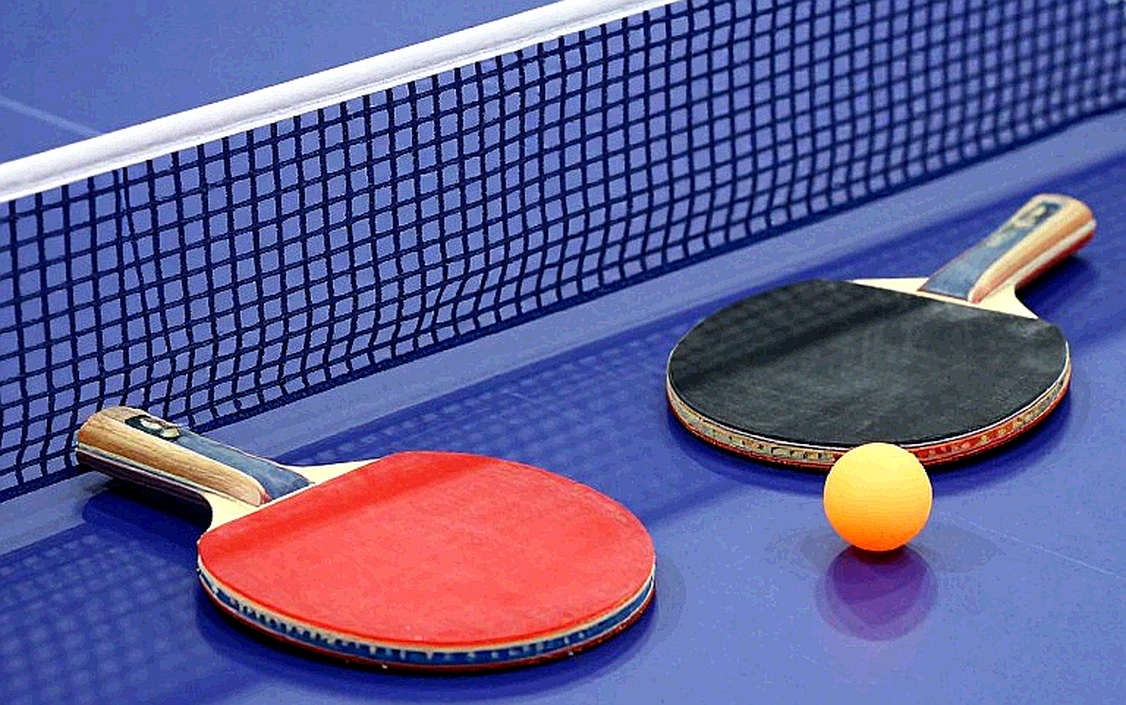
A league outside the international points system
The BCL must be placed correctly on the world map before anything else is discussed. It is the club competition system administered by Table Tennis England, spanning several divisions, with the Premier Division as the top tier of eight clubs. Results here are not converted into WTT or ITTF ranking points. A BCL champion moves up no place on the world ranking because of that title. The competition sits entirely outside the international scoring architecture.
This matters because it determines how the announcement should be read. If this were a WTT event, every small detail — seeding groups, draw paths, points to defend — would deserve scrutiny. For a domestic club league, informational value shifts to another layer: operations, commerce, ecosystem. I keep the principle from my scouting-report years: gather empirical evidence before concluding, and never assign a source more weight than it carries.
The eight clubs stretch across three territories of the United Kingdom. BATTS is based in Harlow, Ormesby in Middlesbrough, Fusion in London, Nottingham in Nottingham, eBaTT also features on the shortlist, Ormeau comes from Belfast, North Ayrshire from Scotland. The list sketches a rarely noted reality: club table tennis is one of the few genuinely cross-national competitive structures in the UK, with teams from three separate sporting systems sharing a single table of standings.
On scheduling, four rounds in two days is a design choice. Two rounds on Saturday, two on Sunday. This compression maximises matches per venue-day and reduces travel costs — the familiar economic logic of domestic club leagues on modest budgets. When a team must play four matches in two days, the decisive factor stops being one outstanding individual and becomes squad depth and rotation. This is inference from structure, not from match data, so I place it at medium confidence.
Ormesby enters the season as reigning champions. DHS Hurricane Kingsway has just been promoted, appearing in the Premier Division for the first time. The organisers picked exactly this tie — champion versus newcomer — as the streamed match of Round 1. That is an editorial decision, not a sporting one. It shows the organisers understand that the story of "the title-holder against the newcomer" sells more attention than any other opening-round pairing.
The real sediment: the current of an equipment brand
Here is the part worth writing. Across the entire announcement, the only genuinely analysable signal sits on the industry transmission layer, and I reconstruct it as a three-tier diagram.
The upstream tier is equipment manufacturers. The middle tier is clubs, associations and the league. The downstream tier is broadcasting, social media and the fan economy. Upstream, the name "DHS Hurricane Kingsway" is a concrete artefact: a Chinese equipment maker attaching its name to a Western club's identity. In the middle, eight Premier Division clubs operate under the British Clubs Leagues brand. Downstream, Table Tennis England streams free on YouTube and maintains a presence on Instagram, Facebook and TT Leagues.
Start with the DHS detail. When an equipment maker buys a club's naming rights, it is not buying a billboard. It is buying a foothold inside an ecosystem. Traditional table tennis manufacturers such as Japan's Butterfly or Sweden's Stiga have long dominated the European market through elite-player sponsorship. But signing a star creates recognition only among television viewers. Naming a grassroots club creates something else: the loyalty of recreational players, of parents bringing children to training, of people who buy a new sheet of rubber every few months.
This is a long-horizon market-share strategy aimed at the roots rather than the canopy. A recreational player in England who walks into a club named DHS Hurricane Kingsway encounters that brand every week, for years. Compared with a one-season advertising deal, this is an investment with a longer payback period but deeper roots. I have no data to quantify its effectiveness, so I record it at medium confidence: this is a soft-expansion vector for a Chinese equipment brand into Western markets.
Downstream, the decision to stream free deserves to be read as a governance choice. A league that streams for free rather than selling online tickets is declaring its order of priorities: reach and sponsor visibility above direct revenue. For a domestic club league without a large paying audience, this is a rational trade-off. The model carries one clear systemic risk: with no subscription revenue, operating costs fall on sponsors and naming partners. The league's sustainability depends on whether those partners persist season after season.
The organisers stream only one match per round. Four rounds, four streamed matches out of many played. This is a signal about production resources: with enough resources, you stream more. Selecting a single match indicates an operation with a modest budget but a clear intent — prioritising picture quality and narrative over sheer volume. The simultaneous presence on Instagram, Facebook and TT Leagues reinforces this: it is a structured content ecosystem, not isolated amateur broadcasts.
Finally, geography deserves restating. A league with teams from England, Northern Ireland and Scotland, including clubs from regions that are not table tennis development hubs, does something national training centres struggle to do: it keeps players in the sport instead of letting them leave once elite competition is out of reach. For a player who cannot reach the national team, a cross-region club league is a reason to keep training. That is an ecological function, not a competitive one, and it is routinely undervalued.

The counterintuitive angle: what the announcement says and does not say
Here I must set limits on myself.
First, this announcement is empty at the competitive level. Not a single player is named. No ages, no line-ups, no head-to-head records, no form. Any player-level inference from this source is unfounded. Anyone writing that one team is stronger than another on the basis of this announcement is inventing.
Second, phrases like "huge clashes" or "each team will be looking to start with a victory" are standard promotional language carrying no predictive value. They appear in every opening announcement of every league. Reading them as a signal about competitive quality is a methodological error.
Third, and this is the most important counterintuitive point: a name is not a performance record. DHS appearing in a club's name says something about money flows and marketing strategy. It says nothing about the standard of that club's players. A club with a powerful sponsor can still lose all four matches in two days. Assigning competitive strength to a brand is a sediment-reading error: mistaking the commercial layer for the competitive one, mistaking the artefact for the date.
This is also where I must be careful about my own habits. I tend to model everything as space and flow, and that tendency can turn a marketing announcement into a fake strategic map. There is one real commercial signal in this text, and there are many empty spaces I have no right to fill.
I separate three levels. What is established: eight teams, four rounds, two days on 26–27 September 2026, one free stream per round, one club bearing an equipment brand's name. What is plausible: the free-stream model reflects an audience-growth priority; the compressed schedule reflects cost-efficiency logic; the DHS name reflects a long-horizon market-share strategy by an equipment maker. What needs verification: whether viewership actually rises, whether more clubs take equipment-brand names in future seasons, whether the number of streamed matches expands. These three levels must not be blended.
What is worth taking away
A club league in England seems, at first glance, unrelated to Vietnamese table tennis. I think otherwise.
We habitually measure a table tennis nation by its medal count at national-team level. That measurement sees only the visible part. The submerged part — the thing that keeps the visible part alive — is the club ecosystem, a schedule dense enough to give recreational players a reason to train year-round, brand partners willing to fund the grassroots rather than only the stars, a broadcasting system that turns lower-tier matches into content people watch.
A table tennis nation with only a national team and no solid club tier is built upside down. It puts up the roof before pouring the foundation. A young player is a broken shard of pottery: the value is in the firing, not in the intactness. And that firing, for most players, happens at tournaments nobody broadcasts.
Excavating a club league is not about finding a star, but about finding the traces of a system. In that dry announcement, what deserves reading is not who wins Round 1. It is that a small league can still persuade an international equipment brand to attach its name, and is confident enough to open its doors for free. In Ba Ria-Vung Tau, we do not dig for gold; we dig for foundations. Perhaps club leagues should be read as foundation layers too, not as second-tier matches to skip.